
About Karl Minnigerode
Lived 1814 – 1894 (aged 80). Karl Minnigerode was a German and American university teacher and classical scholar.
Charles Frederick Ernest Minnigerode (born Karl Friedrich Ernst Minnigerode, August 6, 1814 – October 13, 1894) was a German-American revolutionary, professor, and Episcopal clergyman. He is credited with introducing the Christmas tree tradition to Williamsburg, Virginia, and served for thirty-three years as rector of St. Paul's Episcopal Church in Richmond, Virginia, which was known during the Civil War as the "Cathedral of the Confederacy." Among his parishioners were Confederate president Jefferson Davis, whom Minnigerode baptized in 1862, and General Robert E. Lee. He was a professor of Latin and Greek at the College of William & Mary from 1842 to 1848, and later served on the college's Board of Visitors from 1871 to 1893.
Early life and revolutionary activity Minnigerode was born on August 6, 1814, in Arnsberg, Westphalia (in present-day Germany), and grew up in the nearby city of Darmstadt, in the Grand Duchy of Hesse. He was confirmed in the Lutheran Church and received his first communion at the age of fifteen. He received a classical education and at fourteen entered the Gymnasium in Darmstadt, where he became acquainted with the future playwright Georg Büchner.
In 1832, Minnigerode entered the University of Giessen, where he studied law. There he renewed his friendship with Büchner, who was by then deeply involved in radical politics. Both became members of a secret society that Büchner helped found. In 1834, Büchner and the Butzbach pastor Friedrich Ludwig Weidig wrote the inflammatory political pamphlet Der Hessische Landbote (The Hessian Courier), which called for revolution against the Grand Duke of Hesse-Darmstadt. On August 1, 1834, a police informant exposed the society. Minnigerode was found in possession of copies of the pamphlet and arrested.
He spent the next several years in various prisons, denied all reading material except the Bible, which he later recalled having read eight times during his incarceration. Büchner, who had escaped to Switzerland, wrote in 1839 that he had heard Minnigerode was "being tortured to death." In fact, Minnigerode had been released after approximately eighteen months, first to house arrest at his brother's home, then at his father's, owing to deteriorating health.
Academic life in Williamsburg The St. George Tucker House, where Minnigerode introduced Williamsburg's first Christmas tree in 1842
Happy Years at William & Mary In July 1842, the Board of Visitors of the College of William & Mary selected Minnigerode for its professorship of classical humanities—defeating approximately thirty other candidates—on the basis of his extraordinary credentials. William and Mary President Thomas R. Dew wrote that Minnigerode "seems to be a very amiable little gentleman, & is deeply embrued with all the German literature."
The Troubles of 1848 In the summer of 1846, William & Mary president Thomas R. Dew unexpectedly died. By a single vote, a divided Board of Visitors chose Robert Saunders Jr., chair of mathematics, as the new president of the college. They next hire was easy: George Frederick Holmes, a native of British Guyana, was appointed to take over Dew's responsibilities for political economy and history.
Post-war ministry and relationship with Jefferson Davis After the war, during Davis's imprisonment at Fort Monroe, Minnigerode visited him periodically to offer spiritual encouragement and to administer communion. When Davis was released in May 1867, Minnigerode personally escorted him from Fort Monroe to Richmond's Spotswood Hotel. He was buried in Hollywood Cemetery in Richmond, Virginia. Beverley Randolph Tucker, another descendant, included an account in his 1942 book Tales of the Tuckers. Colonial Williamsburg continues to commemorate his introduction of the tradition each holiday season at the St. George Tucker House.
Second, as rector of St. Paul's for more than three decades—spanning the lead-up to the Civil War, the war itself, and the Reconstruction era—Minnigerode occupied a singular position at the center of Confederate religious and political life. A 2015 article in The Virginia Magazine of History and Biography examined his photographic portrait history and described him as "the Virginia capital's most notable nineteenth-century preacher."
In Addio, piccola mia, a 1979 East German film about playwright and revolutionary Georg Büchner, a young Minnigerode is played by German actor Lars Jung.
Personal Life In May 1843, less than a year after his arrival in Williamsburg, Minnigerode married Mary Carter, daughter of Commander William Carter of North Carolina, at Bruton Parish Church.
Don’t just read it —
keep it.
Full-length biographies made to live with: read them, listen on the way to work, watch them tonight.
- E-book
- Audio
- Video
Instant download · yours to keep · every purchase keeps this site free
Important facts
People in Karl Minnigerode's life
Named in this biography and alive at the same time
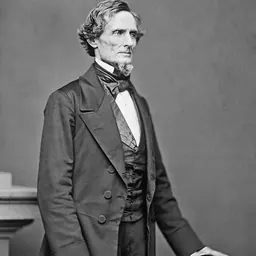



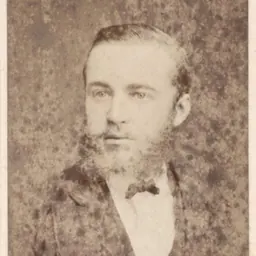

Related people
Same field, nearest in time

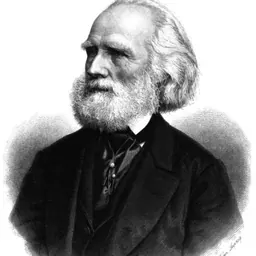
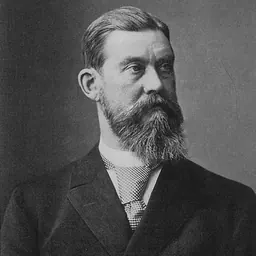


Contemporaries
People whose lives overlapped Karl Minnigerode's




Frequently asked questions
Who was Karl Minnigerode?
German university teacher (1814-1894)
When was Karl Minnigerode born?
Karl Minnigerode was born on 6 August 1814 in Arnsberg.
When did Karl Minnigerode die?
Karl Minnigerode died on 13 October 1894 in Alexandria.
What was Karl Minnigerode's occupation?
Karl Minnigerode was a university teacher and classical scholar.
What nationality was Karl Minnigerode?
Karl Minnigerode was German and American.
Sources & further reading
· DBpedia: Charles Minnigerode
Cite this page
APA: Biography.guide. (2026). Karl Minnigerode. https://biography.guide/karl-minnigerode/
MLA: "Karl Minnigerode." Biography.guide, https://biography.guide/karl-minnigerode/.
Chicago: "Karl Minnigerode." Biography.guide. https://biography.guide/karl-minnigerode/.
Data last updated: 2026-09-20 · Spot an error? Report a correction.
Page generated 2026-09-27 05:32 UTC