
About Karl Lehrs
Lived 1802 – 1878 (aged 76). Karl Lehrs was a German classical philologist, university teacher and writer.
Karl Lehrs (born Kaufmann Levi; January 14, 1802 – June 9, 1878) was a German classical scholar, known for his foundational contributions to the study of the Greek grammarians, especially Aristarchus. A lifelong resident of Königsberg and a prominent figure of its philological circle, he has been described as "with Bernhardy and Bernays one of the great Jewish classicists of the pre-Wilamowitzian generation".
Biography Lehrs was born in Königsberg, the son of merchant Pinkus Kaufmann Levi (Lehrs since 1812) and Fanny Jacob. He studied under Karl Lachmann at the Friedrichskollegium and Christian August Lobeck at the University of Königsberg, becoming friendly with both men and maintaining a long-term correspondence with Lachmann. Career considerations, coupled with Lachmann's influence and his own family's fading religious sentiment, prompted him to convert from Judaism to Christianity in 1822, adopting the first name Karl after his conversion. He obtained his doctorate at Königsberg in 1823; after some years' employment as a schoolteacher, during which he had occasion to meet and work with August Meineke, he completed his Habilitation in 1831 with a dissertation on Aristarchus.
In 1835 Lehrs was appointed professor extraordinarius of classical philology at the University of Königsberg. He nevertheless continued to work as a schoolmaster until 1845, the increased workload taking a toll on his health which would take years to recover. In 1845 he was promoted to professor ordinarius, a position he held until his death. His students at Königsberg include Arthur Ludwich, Ludwig Friedländer and . He turned down an appointment to the Leipzig chair (previously held by Gottfried Hermann) in 1849; he instead led a quiet life in East Prussia, which he never left after 1844. He died of a bladder disease in Königsberg in 1878.
Lehrs emerged as the head of what Conrad Bursian termed the "Königsberg School", a circle of scholars who attached special importance to: Greek grammatical studies of the Hellenistic, Roman and Byzantine periods; the language and meter of archaic and later Greek epic; and Greek religious views, with a focus on the perceived ethical content of the myths. His 1833 monograph —called his magnum opus by Sotera Fornaro—concerned Aristarchus' critical and exegetical approach to the Homeric poems, making use of the evidence preserved in the A-scholia to the Iliad and published by Villoison in 1788. Though limited by the contemporary lack of critical editions of the Homeric scholia, Lehrs laid the foundation for modern Aristarchean scholarship. He coined the term to indicate a major source underlying the A-scholia, which was translated into German as by Ludwich.
Selected publications Academic works
2nd ed., 3rd ed.
2nd ed.
Correspondence
Don’t just read it —
keep it.
Full-length biographies made to live with: read them, listen on the way to work, watch them tonight.
- E-book
- Audio
- Video
Instant download · yours to keep · every purchase keeps this site free
Important facts
People in Karl Lehrs's life
Named in this biography and alive at the same time


Related people
Same field, nearest in time


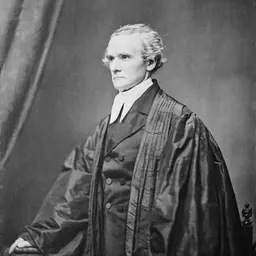
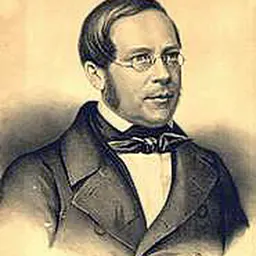

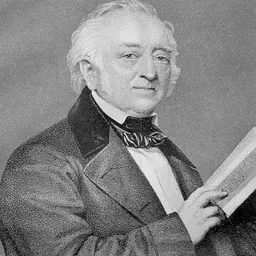
Contemporaries
People whose lives overlapped Karl Lehrs's





Frequently asked questions
Who was Karl Lehrs?
German classical philologist (1802-1878)
When was Karl Lehrs born?
Karl Lehrs was born on 14 January 1802 in Königsberg.
When did Karl Lehrs die?
Karl Lehrs died on 9 June 1878 in Königsberg.
What was Karl Lehrs's occupation?
Karl Lehrs was a classical philologist, university teacher and writer.
What nationality was Karl Lehrs?
Karl Lehrs was German.
Sources & further reading
Cite this page
APA: Biography.guide. (2026). Karl Lehrs. https://biography.guide/karl-lehrs/
MLA: "Karl Lehrs." Biography.guide, https://biography.guide/karl-lehrs/.
Chicago: "Karl Lehrs." Biography.guide. https://biography.guide/karl-lehrs/.
Data last updated: 2026-09-20 · Spot an error? Report a correction.
Page generated 2026-09-27 05:17 UTC