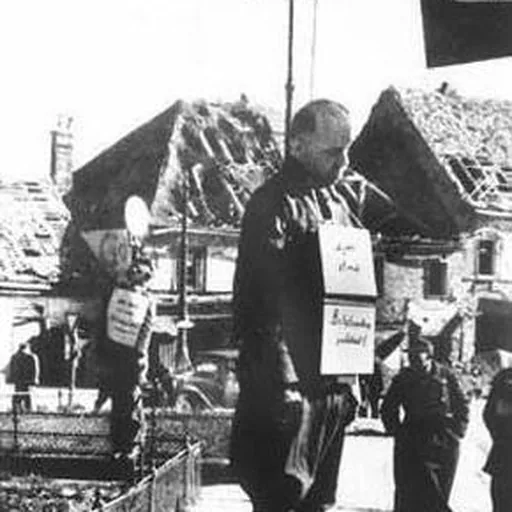
About Karl Biedermann
Lived 1890 – 1945 (aged 54). Karl Biedermann was an Austrian and Hungarian military personnel and resistance fighter.
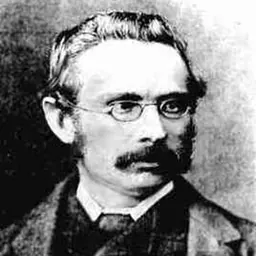
Karl Biedermann (11 August 1890 – 8 April 1945) was the commander of the Austrian Heimwehr, a major in the Wehrmacht and a member of German resistance to Nazism.
Life Biedermann was born in Miskolc, Austria-Hungary. After visiting the cadet corps in Traiskirchen, Karl Biedermann served from 1910 in the Common Army. In World War I, he served as an officer. He was released from Bundesheer (1. Republic) in 1920 with the rank of captain. His civil profession was official of the "Österreichische Postsparkasse" (Austrian post savings bank). In February 1934 Biedermann was commander of a company of the "Freiwilligen Schutzkorps", consisting of units of Heimwehr and helping troops of the Bundesheer. In this function, he participated in the Austrian Civil War at the conquest of Vienna Karl-Marx-Hof. Biedermann was also an illegal member of the Nazi Party.
After the Anschluss to Nazi Germany in March 1938, Biedermann joined the Wehrmacht. In 1940, he was promoted to major. During World War II he participated in the Battle of France, the Balkan Campaign and the Eastern front.
Biedermann joined the resistance group of Austrian Wehrmacht people led by Major Carl Szokoll. In spring 1945, this group planned "Operation Radetzky", to support Red Army in the liberation of Vienna and to prevent further destruction, to avoid the blowup of bridges.
However, "Operation Radetzky", planned for 6 April 1945, was discovered. Biedermann was arrested the night from 5 to 6 April 1945 and brought to a drumhead court-martial and sentenced to death. On 8 April 1945 Biedermann was hanged together with two other resistance fighters, captain Alfred Huth and Rudolf Raschke in public at Floridsdorfer Spitz in Vienna. The chief of "Sicheitspolizei and SD", Rudolf Mildner personally took command at the hanging place.
Biedermann was buried 2 August 1945 in Vienna on Hietzingen cemetery in an honorable grave (group 66, row 19, number 5). In the same grave were buried also Alfred Huth and Rudolf Raschke.
In 1995, in Wien-Floridsdorf, the Karl-Biedermann-Gasse was named after him (Karl-Biedermann-Alley).
Literature Carl Szokoll: Die Rettung Wiens 1945. Mein Leben, mein Anteil an der Verschwörung gegen Hitler und an der Befreiung Österreichs. Amalthea-Verlag, Wien 2001 . Michael Krassnitzer: Widerstand in Hietzing. Freiheitskampf 1934–1938 und 1938–1945 am Beispiel eines Wiener Bezirks. Edition Volkshochschule, Wien 2004.
Don’t just read it —
keep it.
Full-length biographies made to live with: read them, listen on the way to work, watch them tonight.
- E-book
- Audio
- Video
Instant download · yours to keep · every purchase keeps this site free
Important facts
People in Karl Biedermann's life
Named in this biography and alive at the same time


Related people
Same field, nearest in time



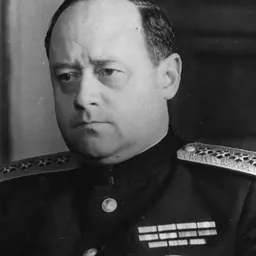


Contemporaries
People whose lives overlapped Karl Biedermann's


Frequently asked questions
Who was Karl Biedermann?
German officer (1890–1945)
When was Karl Biedermann born?
Karl Biedermann was born on 11 August 1890 in Miskolc.
When did Karl Biedermann die?
Karl Biedermann died on 8 April 1945 in Vienna.
What was Karl Biedermann's occupation?
Karl Biedermann was a military personnel and resistance fighter.
What nationality was Karl Biedermann?
Karl Biedermann was Austrian and Hungarian.
Sources & further reading
Cite this page
APA: Biography.guide. (2026). Karl Biedermann. https://biography.guide/karl-biedermann/
MLA: "Karl Biedermann." Biography.guide, https://biography.guide/karl-biedermann/.
Chicago: "Karl Biedermann." Biography.guide. https://biography.guide/karl-biedermann/.
Data last updated: 2026-09-23 · Spot an error? Report a correction.
Portrait: Wikimedia Commons · author & licence
Page generated 2026-09-27 05:06 UTC