
About Karl Aagard Østvig
Lived 1889 – 1968 (aged 79). Karl Aagard Østvig was a Norwegian opera singer.
Karl Aagaard Østvig (sometimes Germanized to Oestvig) (17 May 1889 – 21 July 1968) was a Norwegian operatic tenor, opera director, and voice teacher. The Norwegian Music History Archive states that he is the greatest dramatic tenor in Norwegian history, and that he was particularly admired for his portrayals in operas by Giacomo Puccini, Richard Strauss and above all Richard Wagner. His voice was described by soprano Lotte Lehmann as “a dazzling meteor.” Although he toured internationally in concerts, operas, and recitals, his singing career was mainly centered in Austria and Germany from his debut in 1914 up until his retirement from the stage in 1933. From 1932 on he lived in Oslo where he was primarily active as an opera director and singing teacher. He made only a few recordings during his career, all for Polydor Records.
Life and career Born in Oslo, Østvig studied singing privately with Wilhelm Cappele Kloed in Germany, and at the Cologne University of Music with Fritz Steinbach and Franz Wüllner. He made his professional opera debut at the Staatsoper Stuttgart in 1914 where he was a resident artist for the next five years. While there he notably created the role of the Lay Brother/Giovanni de Salviati in the world premiere of Max von Schillings's Mona Lisa in 1915. He appeared as a guest artist at Theater Basel in 1917 and at the Bavarian State Opera in 1919.
In 1923, Østvig embarked on his first extended concert tour in Europe and North America. He continued to perform regularly in recital for the remainder of his career. In 1926 he was invited to star in operetta productions at the Carltheater. However, the director of the VSO demanded that he reject this offer, and a conflict ensued which ended in Østvig resigning from his position at the VSO. Later that year he appeared as a guest artist at the Hungarian State Opera House and at the Hamburg State Opera. He took a position at the Deutsche Oper Berlin in 1927, working there through 1930 and again as a guest artist for his final opera appearance in 1933. On 16 June 1928 his performance of Max in Jonny spielt auf was interrupted by Nazi demonstration.
In 1932, Østvig moved with his wife to Oslo where they both worked as singing teachers. That year he began directing opera productions in the city, and from this point on his career began to shift away from singing. In 1941, during the German occupation of Norway, he took over the management of the opera house in Oslo. After the war, he was sentenced to two years in prison as a collaborator, and he later lived in retirement in Oslo until his death there in 1968. One of his notable students was tenor Arne Hendriksen.
Don’t just read it —
keep it.
Full-length biographies made to live with: read them, listen on the way to work, watch them tonight.
- E-book
- Audio
- Video
Instant download · yours to keep · every purchase keeps this site free
Important facts
People in Karl Aagard Østvig's life
Named in this biography and alive at the same time

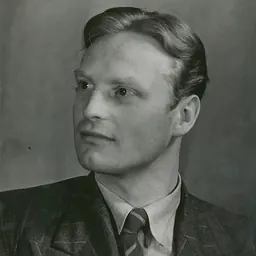


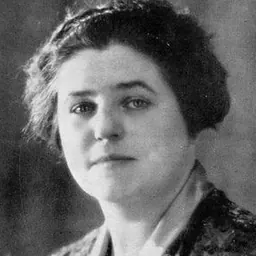


Related people
Same field, nearest in time
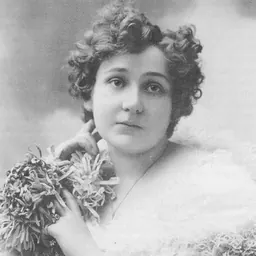

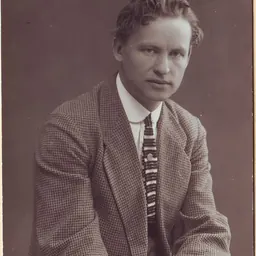


Contemporaries
People whose lives overlapped Karl Aagard Østvig's

Frequently asked questions
Who was Karl Aagard Østvig?
Norwegian singer (1889-1968)
When was Karl Aagard Østvig born?
Karl Aagard Østvig was born on 17 May 1889 in Christiania.
When did Karl Aagard Østvig die?
Karl Aagard Østvig died on 21 July 1968 in Christiania.
What was Karl Aagard Østvig's occupation?
Karl Aagard Østvig was an opera singer.
What nationality was Karl Aagard Østvig?
Karl Aagard Østvig was Norwegian.
Sources & further reading
· Wikipedia: Karl Aagard Østvig
· DBpedia: Karl Aagaard Østvig
Cite this page
APA: Biography.guide. (2026). Karl Aagard Østvig. https://biography.guide/karl-aagard-ostvig/
MLA: "Karl Aagard Østvig." Biography.guide, https://biography.guide/karl-aagard-ostvig/.
Chicago: "Karl Aagard Østvig." Biography.guide. https://biography.guide/karl-aagard-ostvig/.
Data last updated: 2026-09-20 · Spot an error? Report a correction.
Page generated 2026-09-27 05:29 UTC