
Karim Khan zand
King of the Lurs and founder of the Luri Zand dynasty empire
About Karim Khan zand
Lived 1705 – 1779 (aged 73).
Mohammad Karim Khan Zand (; c. 1705 – 1 March 1779) was the founder of the Zand dynasty, ruling all of Iran (Persia) except for Khorasan and Balochistan from 1751 to 1779. He also ruled over some of the Caucasian lands and occupied Basra for some years.
While Karim was ruler, Iran recovered from the devastation of 40 years of war, providing the war-ravaged country with a renewed sense of tranquillity, security, peace, and prosperity. The years from 1765 to Karim Khan's death in 1779, marked the zenith of Zand rule. During his reign, relations with Britain were restored, and the East India Company allowed to have a trading post in southern Iran. He made Shiraz his capital and ordered the construction of several architectural projects there.
Following Karim Khan's death, civil war broke out once more, and none of his descendants was able to rule the country as effectively as he had. The last of these descendants, Lotf Ali Khan, was executed by Qajar ruler Agha Mohammad Khan Qajar, who became the sole ruler of Iran.
Background and early life Karim Beg belonged to the Zand tribe, a small and little-known tribe of Laks, a branch of Lurs Following the Islamic Revolution of 1979, the names of the past rulers of Iran became taboo, but the citizens of Shiraz refused to rename the two main streets of Shiraz, one of which being the Karim Khan Zand Street (the other one being the Lotf Ali Khan Zand Street).
In the words of John Malcolm, "The happy reign of this excellent prince, as contrasted with those who preceded and followed him, affords the historian of Persia that kind of mixed pleasure and repose, which a traveler enjoys on arriving in a beautiful and fertile valley during an arduous journey over barren and rugged wastes. It is pleasing to recount the actions of a chief who, though born of an inferior rank, obtained power without crime, and who exercised it with a moderation that, for the times in which he lived, was as singular as his humanity and justice."
In "Iran: A Modern History": "His rule of more than two decades marks one of the most tranquil in Iran’s early modern history, a remarkable example of how the ruler’s personal qualities, rather than the institutional framework within which he operated, determined political stability, the well-being of subjects, and cultural florescence."
Government, policies, and society The bureaucracy The bureaucracy remained small during the reign of Karim Khan, due slightly to the ruler's own desires and slightly to the earlier clutters and subsequent bureaucratic collapse that had occurred. He was backed by a vizier and a chief revenue officer (mustaufī), who, however, had minimal influence and authority, due to Karim Khan's practice of rigidly handling the political affairs by himself.
Relations with the tribal clans of Iran
Provincial administration
During Karim Khan's reign, provincial administration followed the same model of the Safavid one; beglerbegis were appointed to govern provinces. A city was under the rule of a kalantar and darugha, while its quarters was under the rule of the kadkhuda. Governorship of provinces went for the most part to tribal chieftains from Fars and its surroundings—a minister who was experienced in the administration and the income of tax regularly escorted the governor. Karim Khan also created two new posts regarding the tribes: He appointed an ilkhani as the leader of all the Lur tribes and an ilbegi as the leader of all the Qashqai tribes that roamed Fars.
Military During the dynastic wars and the conflict with the Qajars that took place after the death of Karim Khan, the Zand army disintegrated into several segments, which joined the several Zand princes who fought for the throne, but ultimately the majority of the segments changed their allegiance to the Qajar ruler Agha Mohammad Khan Qajar.
Karim Khan's standing army of Fars during the period 1765–1775 No. of personnel Lur, Kurd, Lak (Feylis, Zand, Zanganeh, Kalhor, etc.; cavalry) 24 000 Bakhtiari (cavalry and tofangchi infantry) 3 000 Iraqi, i.e. from Persian Iraq (Persian tofangchi infantry) 12 000 Fars (including Khuzestan and Dashtestan: Persian tofangchi infantry, Arab and Iranian cavalry) 6 000 Total 45 000
Construction
Karim Khan rebuilt much of Shiraz, and had many new buildings erected, such as his famous castle, and several gardens and mosques. Furthermore, he also had a new city wall, several baths, a caravanserai, and a bazaar built. Many of these, have, however, been destroyed, either during Agha Mohammad Khan Qajar's capture of the city in 1792, or during the 20th-century metropolitan restructuring.
Karim Khan had the burial places of the prominent Muzaffarid ruler Shah Shoja (r. 1358–1384), and the celebrated Persian poets Hafez and Saadi renovated. Many of the pastoral Lur and Lak families were given homes in Shiraz, which eventually resulted in the city having a larger population (ca. 40,000-50,000) than Isfahan, which drew the attention of many poets, craftsmens, and even foreign traders from Europe and India, who were warmly received.
Religious policies Unlike the Safavids, Karim Khan did not seek the approval of the ulama (clergy), who were "formerly the bulwarks of the shah's authority as viceroy of God and the Imams".
In art Karim Khan is the main character of a melodrama composed by the Italian musician Nicolò Gabrielli di Quercita. The work, entitled L'assedio di Sciraz (The siege of Shiraz) was first performed at La Scala theatre in Milan during Carnival 1840.
Don’t just read it —
keep it.
Full-length biographies made to live with: read them, listen on the way to work, watch them tonight.
- E-book
- Audio
- Video
Instant download · yours to keep · every purchase keeps this site free
Important facts
Family & relationships
People in Karim Khan zand's life
Named in this biography and alive at the same time

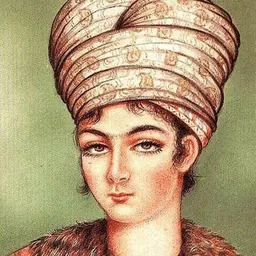

Contemporaries
People whose lives overlapped Karim Khan zand's




Frequently asked questions
Who was Karim Khan zand?
King of the Lurs and founder of the Luri Zand dynasty empire
When was Karim Khan zand born?
Karim Khan zand was born on 23 May 1705 in Pari.
When did Karim Khan zand die?
Karim Khan zand died on 1 March 1779 in Shiraz.
Sources & further reading
Cite this page
APA: Biography.guide. (2026). Karim Khan zand. https://biography.guide/karim-khan-zand/
MLA: "Karim Khan zand." Biography.guide, https://biography.guide/karim-khan-zand/.
Chicago: "Karim Khan zand." Biography.guide. https://biography.guide/karim-khan-zand/.
Data last updated: 2026-09-25 · Spot an error? Report a correction.
Page generated 2026-09-27 05:12 UTC