
About Kara Kemal
Lived 1868 – 1926 (aged 57–58). Kara Kemal was a Turkish politician.
Kara Kemal Bey (1875 – 27 July 1926) was a Turkish–Ottoman activist, CUP party boss, and capitalist. He was a prominent figure in the Committee of Union and Progress and key ally of Talât Pasha. In World War I, using confiscated Armenian property, he helped to establish a bourgeoisie of Muslims at a time when Christians and Westerners conducted most economic activity in the Ottoman Empire. After the signing of the Armistice of Mudros, he became one of the founders of the Karakol Society, which smuggled weapons, ammunition, and officers in the Turkish War of Independence. After the war, he was leader of a rump CUP independent of Mustafa Kemal Pasha's movement. In 1926, he was accused of attempting to assassinate President Mustafa Kemal Pasha and sentenced to death.
Early life Ahmed "Kara" Kemal was born in Istanbul in 1875 as the son of the Telegraph Director of the Secretariat of the Ottoman Sultan, Arif Bey Kısakürek. He earned his nickname for his dark complexion and mysterious personality. The Kısaküreks could trace their ancestry to the Turkish dynasty Dulkadirids. He had two siblings.
Activism He joined the Ministry of Post and Telegraph as a postal worker, and worked in Istanbul, Edirne, Izmir, Serres, and Kastamonu. In Serres, an important partnership was formed when he met Talât Bey and joined the CUP. He used his position to distribute banned Young Turk literature to Istanbul residents. In 1907 he founded the CUP's Istanbul Branch. Kemal was a regular in coffeehouses due to his fondness of hookah, which led him to develop relationships with the capital's artisans, organizing valuable networks for the CUP in Istanbul. His contacts with the bakers, greengrocers, shoemakers, and boatmen associations -most especially the porters- turned them into street muscle for the committee. However he held this position only two months, as the Ottomans would sign cease-fire terms in the Armistice of Mudros.
Turkish war of independence Following the Armistice of Mudros, he stayed in Istanbul when CUP leaders like Talât, Enver, Cemal, and Şakir fled the capital on a German torpedo boat. He founded the Karakol Society with Baha Said Bey and Kara Vasıf Bey. The organization helped to distribute arms, ammunition, intelligence, and recruits for the Turkish National Movement. Kara Kemal's guildsmen formed the core of Karakol, while Turkish-Muslim capitalists, enriched during World War I, financed the Turkish War of Independence. However Mustafa Kemal Pasha, the eventual leader of the Turkish National Movement, remained aloof from Karakol as he did not want his movement to become a Unionist movement.
On 5 November 1918, he was arrested over allegations of corruption while in charge of military contracting of food stuffs, but he was released the next day. On 13 November he was questioned by the Fifth Branch of the Parliamentary Investigation Commission on charges of corruption in rationing and establishing guilds and companies by obtaining illicit profits from government support for certain individuals and organizations. He categorically denied the accusations, stating that "neither he nor his friends had ever put a penny in their pockets."
On 16 March, 1920, he was imprisoned in the Bekirağa Division by the British when they militarily occupied Istanbul and was subsequently exiled to Malta and tried for war crimes. On 6 September, 1921, he managed to escape from Malta with fifteen other exiles, fleeing to Germany first before returning to occupied Istanbul, where he settled in the Mesadet Han. He occupied himself with retaking ownership of his companies, some of whose assets had been transferred to the Freedom and Accord Party by Damat Ferid Pasha's government during his exile. He also had to regain control over leadership of local tradesmen's associations. The exile had done much damage to his finances and street relationships.
He also spearheaded the revival of the CUP in Istanbul, at a time when most ex-Unionists subordinated themselves under Mustafa Kemal's leadership. Mustafa Kemal was known as "Sarı" Kemal (Kemal the blonde), whereas Ahmed Kemal was known as "Kara" Kemal (Kemal the dark/brunette). In this context, he was attacked by Velid Ebüzziya, editor-in-chief of the Tasvîr-i Efkâr, and Yakup Kadri Karaosmanoğlu, the Istanbul press representative of the Anatolian and Rumelian Defense of Rights Society (A–RMHC), founded by Mustafa Kemal Pasha. Mustafa Kemal met with him in İzmit on January 16, 1923. Kara Kemal agreed to subordinate his movement under the A–RMHC and turn a new page of the country's history under Mustafa Kemal. Leading the CUP during the Republic Kara Kemal and other non-conforming Unionists like Cavid Bey organized the CUP's final Congress in Istanbul on 12–13 April 1923. A decision was made not to participate in the 1923 general election and support Mustafa Kemal's candidates, though an election program was prepared. Mustafa Kemal rejected the program and warned the Unionists to stay out of politics. Consequently, some Unionists competed in the elections under the Defense of Rights Group list and were elected members of parliament, but a popular revival of the party was met without success. When Istanbul was retaken by nationalist forces in October of 1923, Kara Kemal's assets and activities were left unmolested, though he had been under surveillance from Mustafa Kemal for years at that point.
When Turkey's first opposition party, the Progressive Republican Party, was founded in 1924, former Unionists led by Kara Kemal supported it.
Izmir plot and death In the summer of 1926 as President Mustafa Kemal Pasha was conducting a nation-wide tour and about to visit Izmir a conspiracy of assassination was uncovered. According to later testimony of the Ankara Independence Tribunal, Kara Kemal, Cavid, Ziya Hurşit, Hafız Mehmet, and others organized an assassination attempt on the president. Kara Kemal was identified as the mastermind of the plot, who hoped to overthrow of the government to return the CUP to power.
In a series of trials the Progressive Party and the Unionists were accused of involvement. On 13 June 1926 eleven individuals were sentenced to death, including Kara Kemal and six Progressive Party deputies. He was a fugitive for a time until a police raid discovered his dead body from possible suicide in a Cerrahpaşa flat. He was buried in Topkapı Cemetery.
Further trials and investigations into the plot lead to the state ruling the illicit finances of his foundations, companies, and banks warranted their confiscation and liquidation. The purges of 1926 served to destroyed any chance for a revival of the CUP for good.
In popular culture He is the main character of Kemal Tahir's novel Kurt Kanunu, which tells the story of the struggle between Mustafa Kemal's Turkish revolutionaries and the Unionists.
Don’t just read it —
keep it.
Full-length biographies made to live with: read them, listen on the way to work, watch them tonight.
- E-book
- Audio
- Video
Instant download · yours to keep · every purchase keeps this site free
Important facts
People in Kara Kemal's life
Named in this biography and alive at the same time


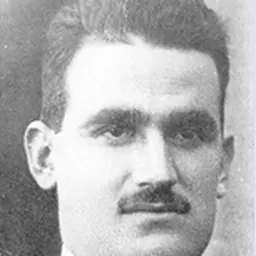

Related people
Same field, nearest in time





Contemporaries
People whose lives overlapped Kara Kemal's


Frequently asked questions
Who was Kara Kemal?
Turkish statesperson (1868–1926)
When was Kara Kemal born?
Kara Kemal was born in 1868.
When did Kara Kemal die?
Kara Kemal died in 1926 in Istanbul.
What was Kara Kemal's occupation?
Kara Kemal was a politician.
What nationality was Kara Kemal?
Kara Kemal was Turkish.
Sources & further reading
Cite this page
APA: Biography.guide. (2026). Kara Kemal. https://biography.guide/kara-kemal/
MLA: "Kara Kemal." Biography.guide, https://biography.guide/kara-kemal/.
Chicago: "Kara Kemal." Biography.guide. https://biography.guide/kara-kemal/.
Data last updated: 2026-09-27 · Spot an error? Report a correction.
Page generated 2026-09-27 05:17 UTC