
About Kamal Salibi
Lived 1929 – 2011 (aged 82). Kamal Salibi was a Lebanese archaeologist, historian, writer, university teacher and religious studies scholar.
Kamal Suleiman Salibi (2 May 19291 September 2011) was a Lebanese historian, professor of history at the American University of Beirut (AUB) and the founding Director (later Honorary President) of the Royal Institute for Inter-Faith Studies in Amman, Jordan.
Career Born to a Protestant family in Beirut, Salibi's family came from the Lebanese village of Bhamdoun in French Mandatory Lebanon. After studying at French missionary schools in Bhamdoun and Broummana, he completed his secondary education at the Prep School in Beirut (now International College), and his BA in History and Political Science from AUB, before moving to the School of Oriental and African Studies, SOAS (University of London) where he earned his PhD in history in 1953 under the supervision of historian Bernard Lewis. His dissertation was subsequently published under the title Maronite Historians of Mediaeval Lebanon.
After his graduation from SOAS, Salibi joined AUB as bibliographer of the Arab Studies Program. He then became professor in the Department of History and Archaeology where he joined other prominent and already established historians such as Nicholas Ziadeh and Zein Zein. In 1965, he published The Modern History of Lebanon, which was subsequently translated into Arabic, Russian, and French.
In 1982 Salibi finalised his book, The Bible Came from Arabia, during the Israeli invasion of Lebanon. It was translated into German at the same time as the original English version was being published in London. Salibi wrote subsequent works on biblical issues using the same etymological and geographic methodology. Some of his books are today considered classics, notably A House of Many Mansions: The History of Lebanon Reconsidered (1988) and The Modern History of Jordan (1993). In 1994, Salibi helped found the Royal Institute for Inter-Faith Studies He retired from the Department of History and Archeology at the American University of Beirut in 1998, and became professor emeritus. He moved to Amman in the early 1990s and became director of the Institute for Interfaith Studies there from 1994 to 2003. He believed Lebanon's Christian community had an important role to play in building a Lebanon distinct from its Islamic ambiance, but did not share the fanaticism about Lebanon's Christian nature shown by many of his Maronite colleagues. He dismantled the foundational myths which many of Lebanon's communities were attached to, and replaced them with a complex portrait of the nation as an intricate mosaic of disparate but interconnected communities, over which no one group exerted dominance. He was strongly opposed to sectarian politics, believing that it had been the ruin of his country, and was one of the first Lebanese to remove his religious denomination (math-hab) from the Lebanese census records. He pinned a copy of his new ID, which has 'I' for his math-hab outside his apartment in Ras Beirut.
He was a lifetime bachelor, who devoted his life to books.
Arabian Judah theory Kamal Salibi wrote three books advocating the controversial "Israel in Arabia" theory. In this view, the place names of the Hebrew Bible actually allude to places in southwest Arabia. As the Arabian Hebrews migrated and many resettled in Palestine where they established the Hasmonean kingdom under Simon Maccabaeus in the second century B.C.. According to the theory, the place names in the Bible were gradually reinterpreted to refer to places in this new region. In this new Israel, the Jewish peoples switched from Hebrew to Aramaic. It was this switch in language that created the confusions which led to the distortion of the immigrants' stories. He also argued that 'Lebanon' itself in high antiquity was a place in the Southern Arabian peninsula.
The location of the Promised Land is discussed in chapter 15 of "The Bible Came from Arabia". Salibi argued that the description in the Bible is of an extensive tract of land, substantially larger than Palestine which includes a very varied landscape, ranging from well-watered mountain-tops via fertile valleys and foothills to lowland deserts. In the southern part of Arabia there are recently-active volcanoes, near to which are, presumably, the buried remains of Sodom and Gomorrah.
The theory is considered to be a fringe theory. According to Itamar Rabinowitz, the theory allegedly embarrassed many of his colleagues. Rabinowitz discounts antisemitism as the impetus for the book because Salibi "was not a sworn enemy of Israel or Zionism." He speculates, however, that it might've been "an intellectual exercise" for Salibi, whom he considers a "top historian."
Works Maronite Historians of Mediaeval Lebanon, Beirut, AUB Oriental Series 34, 1959 The Modern History of Lebanon, London, Weidenfeld & Nicolson, 1965 Crossroads to Civil War, Lebanon 1958-1976, Beirut, Caravan Books, 1976 Syria under Islam: Empire on Trial 634-1097, Beirut, Caravan Books, 1977 A History of Arabia, Beirut, Caravan Books, 1980 The Bible Came from Arabia, London, Jonathan Cape, 1985 Secrets of the Bible People, London, Saqi Books, 1988 Who Was Jesus?: Conspiracy in Jerusalem, London, I.B. Tauris, 1988 A House of Many Mansions: The History of Lebanon Reconsidered, London, I.B. Tauris, 1988 The Historicity of Biblical Israel, London, NABU Publications, 1998 The Historicity of Biblical Israel (second edition), Beirut, Dar Nelson, 2009 The Modern History of Jordan, London, I.B. Tauris, 1993 A Bird on an Oak Tree (Arabic طائر على سنديانة), Amman, Ashshoroq Publishers, 2002
Don’t just read it —
keep it.
Full-length biographies made to live with: read them, listen on the way to work, watch them tonight.
- E-book
- Audio
- Video
Instant download · yours to keep · every purchase keeps this site free
Important facts
People in Kamal Salibi's life
Named in this biography and alive at the same time

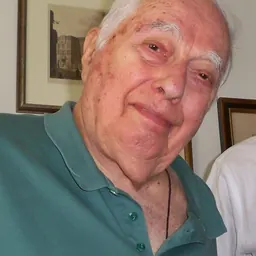


Related people
Same field, nearest in time


Contemporaries
People whose lives overlapped Kamal Salibi's



Frequently asked questions
Who was Kamal Salibi?
Academic, writer, historian, researcher
When was Kamal Salibi born?
Kamal Salibi was born on 2 May 1929 in Beirut.
When did Kamal Salibi die?
Kamal Salibi died on 1 September 2011 in Beirut.
What was Kamal Salibi's occupation?
Kamal Salibi was an archaeologist, historian, writer, university teacher and religious studies scholar.
What nationality was Kamal Salibi?
Kamal Salibi was Lebanese.
Sources & further reading
Cite this page
APA: Biography.guide. (2026). Kamal Salibi. https://biography.guide/kamal-salibi/
MLA: "Kamal Salibi." Biography.guide, https://biography.guide/kamal-salibi/.
Chicago: "Kamal Salibi." Biography.guide. https://biography.guide/kamal-salibi/.
Data last updated: 2026-09-22 · Spot an error? Report a correction.
Page generated 2026-09-27 05:17 UTC