
About Kálmán Mihalik
Lived 1896 – 1922 (aged 26). Kálmán Mihalik was a Hungarian composer and physician.
Kálmán Mihalik (21 February 1896 – 6 September 1922) was a Hungarian physician and composer, best known for setting the music of the Székely Himnusz.
Early life and studies Mihalik was born in Oravicabánya (now Oravița) to a Székely woman from Csík County and a burgess from Kassa (now Košice). He absolved his high school studies in the Piarist and the Unitarian grammar school of Kolozsvár (now Cluj-Napoca), making his matura in 1915. Subsequently, Mihalik was enrolled at the Franz Joseph University, however, his studies were interrupted by the World War I, forcing him to spend several years on the front. In the final period of the war, after the Romanian forces took over Kolozsvár, the university moved first to Budapest and later to Szeged, where Mihalik followed them. After finishing his studies he remained in the university, became the assistant lecturer of Béla Reinbold and worked as a medical researcher.
Composer of the Székely Himnusz
In 1920, together with four others, György Csanády founded the Association of Székely University and College Students (Székely Egyetemista és Főiskolai Hallgatók Egyesülete; SZEFHE), a self-help organization that aimed to create a sense of belonging of those who had to fled their home after the war, and whose homeland was ceded to Romania by the Treaty of Trianon. In 1921, Csanády wrote a poem for students in exile, for which Mihalik, a long-term friend of Csanády, composed the music. The song written for girls choir was first performed on 22 May 1922 at the annual meeting of SZEFHE, under the title Kantáté.
Mihalik died in the autumn of 1922. In his obituary, presumably written by Csanády, the song was already called Székely Himnusz, under which name it became well known later. Although after the World War II it was banned both in the Communist Hungary and Romania, the song remained popular and turned into a symbol of resistance and togetherness,
Death and legacy Mihalik died of typhus on 6 September 1922 and was buried in the Inner City Cemetery of Szeged.
Don’t just read it —
keep it.
Full-length biographies made to live with: read them, listen on the way to work, watch them tonight.
- E-book
- Audio
- Video
Instant download · yours to keep · every purchase keeps this site free
Important facts
People in Kálmán Mihalik's life
Named in this biography and alive at the same time


Related people
Same field, nearest in time
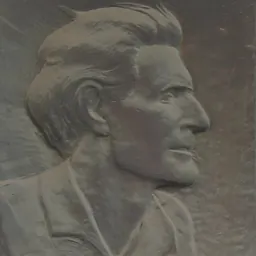

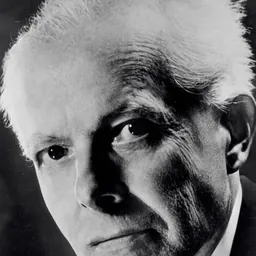


Contemporaries
People whose lives overlapped Kálmán Mihalik's

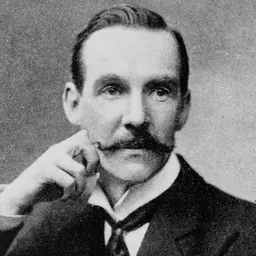
Frequently asked questions
Who was Kálmán Mihalik?
composer (1896–1922)
When was Kálmán Mihalik born?
Kálmán Mihalik was born on 21 February 1896 in Oravița.
When did Kálmán Mihalik die?
Kálmán Mihalik died on 6 September 1922.
What was Kálmán Mihalik's occupation?
Kálmán Mihalik was a composer and physician.
What nationality was Kálmán Mihalik?
Kálmán Mihalik was Hungarian.
Sources & further reading
Cite this page
APA: Biography.guide. (2026). Kálmán Mihalik. https://biography.guide/kalman-mihalik/
MLA: "Kálmán Mihalik." Biography.guide, https://biography.guide/kalman-mihalik/.
Chicago: "Kálmán Mihalik." Biography.guide. https://biography.guide/kalman-mihalik/.
Data last updated: 2026-09-20 · Spot an error? Report a correction.
Page generated 2026-09-27 05:05 UTC