
About Kálmán Giergl
Lived 1863 – 1954 (aged 91). Kálmán Giergl was a Hungarian and German architect.
Kálmán Giergl (born as Koloman Giergl, 29 June 1863 in Pest, Hungary, Austrian Empire – 10 September 1954 in Verőce, Hungary), was a Hungarian-German architect and a significant figure in the Austro-Hungarian eclectic architectural style. A member of the Györgyi-Giergl artistic family.
Family background Giergl's family originated from the Tyrol region but for generations were known for their artistic endeavors in Pest. His father Henrik Giergl (1827–1871) was a famous glass artist and among his cousins were Géza Györgyi (hu) (1851–1934) who was an architect and Kálmán Györgyi (hu) (1860–1930) who was an expert on applied arts.
Career Giergl finished his studies at Budapest Technical University and the Berlin University of the Arts. He also began his career working for the Gropius and Schmieden company of Martin Gropius and Heino Schmieden in the Berlin. Upon his return to Budapest, he came to work under Alajos Hauszmann at the Budapest Technical University. This is the period when he also began to work with the other rising star of the Hauszmann office, Flóris Korb (1860–1930). They both took part in working on major commissions such as the Palace of Justice, New York Palace and the extension to the Buda Palace all in the capital. In 1893 the two established their own partnership, their first major work being the Pesti Hirlap headquarters and also some of the many now demolished pavilions for Hungary's 1896 Millennial Exhibition. They built the twin Klotild Palaces on the approach to the Elizabeth bridge in 1901 and won the competition for the Music Academy building. This building, built between 1904 and 1907, is their major work. Subsequent projects include the Maria street eye clinic and Üllői street wound and general clinics. It is unclear when they finished working together: some sources say 1906, others 1909 or even 1914. Giergl traveled extensively throughout Europe, America and the near and far East. Notes of his travels and collections of applied arts from these areas are housed in the Budapest Museum of Applied Arts.
Works
New York Palace, Budapest (with Hauszmann & Korb, 1894) Palace of Justice, Budapest Klotild Palace, Budapest (with Korb, 1901) Király Apartment, Budapest (with Korb, 1902) Liszt Ferenc Academy of Music, Budapest (with Korb, 1907)
Don’t just read it —
keep it.
Full-length biographies made to live with: read them, listen on the way to work, watch them tonight.
- E-book
- Audio
- Video
Instant download · yours to keep · every purchase keeps this site free
Important facts
People in Kálmán Giergl's life
Named in this biography and alive at the same time

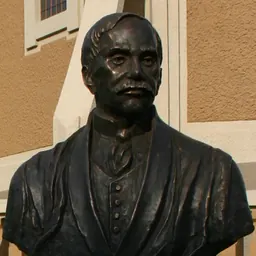



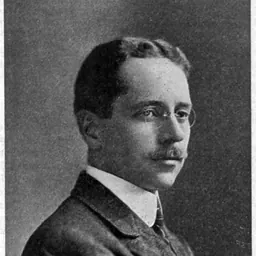
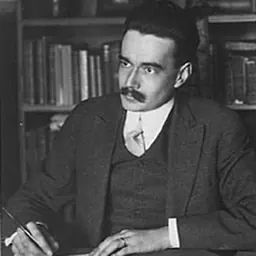
Related people
Same field, nearest in time



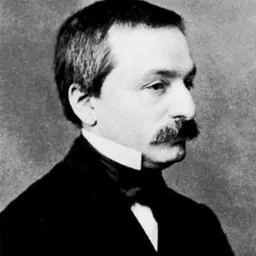
Contemporaries
People whose lives overlapped Kálmán Giergl's



Frequently asked questions
Who was Kálmán Giergl?
Hungarian architect (1863-1954)
When was Kálmán Giergl born?
Kálmán Giergl was born on 29 June 1863 in Pest, Budapest.
When did Kálmán Giergl die?
Kálmán Giergl died on 10 September 1954 in Verőce.
What was Kálmán Giergl's occupation?
Kálmán Giergl was an architect.
What nationality was Kálmán Giergl?
Kálmán Giergl was Hungarian and German.
Sources & further reading
Cite this page
APA: Biography.guide. (2026). Kálmán Giergl. https://biography.guide/kalman-giergl/
MLA: "Kálmán Giergl." Biography.guide, https://biography.guide/kalman-giergl/.
Chicago: "Kálmán Giergl." Biography.guide. https://biography.guide/kalman-giergl/.
Data last updated: 2026-09-20 · Spot an error? Report a correction.
Page generated 2026-09-27 05:05 UTC