
About Kalifala Sidibé
Lived 1900 – 1930. Kalifala Sidibé was a painter.
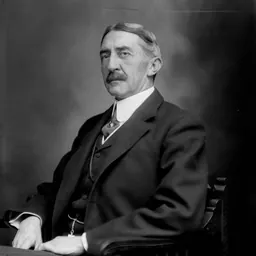
Kalifala Sidibé (c. 1900-1930) was a painter who lived and worked in French Sudan, the modern-day Mali. He toured Europe, and an exhibition catalogue with an introduction by Le Corbusier was produced for his 1929 show in Paris. The Smithsonian has a collection of his color illustrations.
Biography Kalifala Sidibé was born in Kankan, French Sudan, in 1900. He had a wife and three children.
Without ever being exposed to art, Sidibé taught himself to paint, using jute sacks and dye from the cotton factory where he worked. He claimed to have been driven to paint by "the Devil", and was ejected from his tribe for painting. Sidibé's work was first shown in a group exhibition at the Galerie Georges Bernheim in Paris in October 1929. Though only four pieces sold, Sidibé received positive feedback. The press focused largely on Sidibé as an "authentic" black painter whose style was developed independent of European influence. Sidibé then exhibited forty-two paintings at Gummensons Konsthall in Stockholm and twenty paintings at the Neue Gallerie in Vienna in 1930, as well as thirty paintings at Galerie Alfred Flechtheim in Berlin in 1931, one year after his death. Modernist architect Le Corbusier saw Sidibé's work as neither modern nor traditional. In a note that appeared in the catalogues of both the Gummensons Konsthall and Galerie Alfred Flechtheim exhibitions, he traced the style to Asian influence, writing:"This Negro gives me the impression [of] belonging to some race, which through Arabia, seems to have been in contact with Persians and Hindus. I even believe that in the olden days India belonged to the Negro. This painter is loaded with Asian characteristics, expressed partly through the tone of his poetry, partly through his style as a painter." Some critics dismissed Sidibé's artistry, with one reviewer describing the exhibition of his work in Europe as "a war cry from a savage in the middle of an elegant and eloquent discussion". Others saw his style as a show of "innocence" from an African uninfluenced by Western values. Sidibé died in 1930. His death was mentioned in Beaux-Arts in December 1930. Because he signed his name in Arabic, many of his works are lost.
Don’t just read it —
keep it.
Full-length biographies made to live with: read them, listen on the way to work, watch them tonight.
- E-book
- Audio
- Video
Instant download · yours to keep · every purchase keeps this site free
Important facts
People in Kalifala Sidibé's life
Named in this biography and alive at the same time

Related people
Same field, nearest in time



Contemporaries
People whose lives overlapped Kalifala Sidibé's




Frequently asked questions
Who was Kalifala Sidibé?
Sudanese artist
When was Kalifala Sidibé born?
Kalifala Sidibé was born in 1900.
When did Kalifala Sidibé die?
Kalifala Sidibé died in 1930.
What was Kalifala Sidibé's occupation?
Kalifala Sidibé was a painter.
Sources & further reading
Cite this page
APA: Biography.guide. (2026). Kalifala Sidibé. https://biography.guide/kalifala-sidibe/
MLA: "Kalifala Sidibé." Biography.guide, https://biography.guide/kalifala-sidibe/.
Chicago: "Kalifala Sidibé." Biography.guide. https://biography.guide/kalifala-sidibe/.
Data last updated: 2026-09-20 · Spot an error? Report a correction.
Page generated 2026-09-27 05:15 UTC