
About Kalanag
Lived 1903 – 1963 (aged 60). Kalanag was a German film producer, magician and production manager.
Kalanag, born Helmut Ewald Schreiber, (23 January 1903, in Backnang – 24 December 1963, in Gaildorf) was a German film producer and magician in the German Reich and in the early Federal Republic of Germany. He was known as the "court magician of the Nazis".
Life
Early years
Schreiber was born the second son of the factory owner and cloth merchant Wilhelm Schreiber and his wife Martha née Leuze who was the daughter of a well to do merchant family from Passau. released during the Nazi regime.
in June 1942 he finally became production manager in Bavaria and remained there until the end of the war. As author, cameraman, recording and production manager, Schreiber was responsible for a total of 150 films. Schreiber, who belonged to the NSDAP since 1933, prevented the dissolution of the Magic Circle, which, however, from June 1936 as part of the so-called Gleichschaltung forced to the Reich Chamber of Culture (Reichstheater chamber, section Artistics) affiliated. Schreiber got involved with the National Socialists as president of the Magic Circle (1936–1945), membership was reduced from the originally 1373 members to 400 and prevented the use of Jewish compositions as background music. Without belonging to the circle controlled by Schreiber, magicians in Germany were banned from performing which inevitably affected Jewish magicians. In contrast, after the war, Jewish artists defended Kalanag and pointed out that he still kept Jewish personnel in the service of Bavaria for a long time. In 1936 Schreiber was awarded the Hofzinser Ring, which he passed on to Ludwig Hanemann (stage name Punx) in 1948.
After the Anschluss of Austria, Schreiber extended his influence to there. Schreiber became director of the Bavaria Film in Munich, produced public speeches by Adolf Hitler and in 1939 was a guest at the Berghof am Obersalzberg. Schreiber fostered friendship with Hitler's personal adjutant, SS Gruppenführer Julius Schaub, who sponsored magical events. This would later lead to the magicians controversy.
Magicians and illusionists were accepted by the Nazi regime as long as they followed the regulations and the expression was for entertainment rather than an active belief in the occult . But the definitions were not very clear and led to some difficulties as the Nazi authorities both tried to debunk magic but at the same time permitted it. Schreiber as the president of the Magic Circle complained in a letter
End of the war
Towards the end of the war, Schreiber mediated between the Allies and wanted SS men, who offered free access to the legendary stolen Nazi gold, which is officially largely lost. Later, when the military police wanted to arrest Schreiber on the Bavaria site, he appeared in the presence of high-ranking American military officers who protected him. He was deposed as president of the Magic Circle and received a professional ban from the Allies. After a denazification process, Schreiber fled to the British occupation zone to Hamburg, where he lived with a magic friend who was known as the "king of the black market" and was later convicted of diamond smuggling with a Swiss magician.
Postwar career
Since Schreiber had a professional ban on his previous profession, he turned his hobby into a profession in 1947 – at a time when the postwar period was turning into a postwar boom or economic miracle. With the support of former Tobis people, he entertained British occupation soldiers with his Kalanag revue, consisting of elaborate illusions and lightly dressed showgirls.
The most famous numbers included, among others, the Magic Bar dating back to Jean Eugène Robert-Houdin and made famous by David Devant, where throughout the show out of a single pitcher different drinks were served on demand, as well as after special tricks saying "And we'll do it all with water from India" he poured a spurt of water out of a never-ending carafe onto the stage. As the highlight of each performance, he had a car disappear from the brightly lit stage following an idea by Howard Thurston. An important element of his shows was always his wife and partner Gloria de Vos (Anneliese Voss). As his assistant, with the degree of sex appeal allowed for the time, she gave each performance a special shine. Exoticism was also provided by a cheetah appearing in a box.
Officially it was never known how Schreiber had financed the elaborate show in post-war Germany from scratch. Alone the costs for the disappearing car amounted to the then extraordinary sum of 10.000, – DM. Magicians like Janos Bartl or Fredo Marvelli, whom Schreiber had badly harmed during the time of national socialism, called for the boycott of his shows.
World tours
In the 1950s, Kalanag toured with his 50-member ensemble tours of Britain, Sweden, Denmark, Spain, South Africa, Brazil, the United States, Turkey and Switzerland. In the summer of 1960 he appeared in the Zwickau Groß-Variete Lindenhof. At that time, Kalanag was the only major illusionist in the world who still toured with such an elaborate show. The magic historian Richard Hatch points out that the traveled countries strikingly match the banknotes that had disappeared in 1945 with the Nazi gold. Supposedly, the CIA has therefore observed Kalanags activities throughout his life. Before and after Kalanag, no other German magician has ever taken the economic risk of such costly world tours. At the end of the 1950s interest in variety shows diminished, which also brought Schreiber into financial difficulties.
Germany television GmbH
Schreiber became entertainment director in the commercial Free Television Society. The company served the construction of the Germany-Fernsehen GmbH planned by Adenauer, which should have offered a conservative alternative to the broadcasters of the ARD. However, the project failed due to the 1st Broadcasting Judgment of the Federal Constitutional Court.
The later years
Although Kalanag had achieved a high profile and status, he could not build on his success with a slimmed down version of his revue. In the mid-1950s, Schreiber moved from Hamburg to the Württemberg village of Fornsbach, where his cousin Margarete Sedlmayer owned land and ran a café. Here he built a bungalow with a show stage ("Kalanag Studio"). On 23 January 1963, he celebrated his 60th birthday, but on Christmas Eve 1963 he died of probable heart failure in the Gaildorfer Hospital. According to his daughter Brigitte Löser, "he lived very unhealthily and was very overweight". He left his divorced wife Gloria, a fortune of 500,000 DM. She sought throughout her life a larger treasury from the Nazi gold, which she assumed that Schreiber hid somewhere.
Personal life Schreiber married his first wife Gloria (née Anneliese Vos) in 1942 and the couple had a daughter in 1943;
The documentary "Kalanag - Der Magier und der Teufel" (Hitler's magician) was produced in 2022.
In Spring 2025, the Staatsoperette Dresden announced the world premiere of a new musical theatre Simsalabim – Das magische Leben des Dr. Schreiber, about the life of Kalanag, with composition by Elena Kats-Chernin, book by Dirk Laucke and lyrics by Martin G. Berger.
Selected filmography Alraune (1928) After the Verdict (1929) Cyanide (1930) The Emperor's Sweetheart (1931) Melody of Love (1932) Girls of Today (1933) Stradivari (1935) Signal in the Night (1937) Two Women (1938) The Great and the Little Love (1938) People Who Travel (1938) Adventure in Love (1938) The Stars Shine (1938) The Fourth Is Not Coming (1939) The Golden Mask (1939) Robert and Bertram (1939)
Don’t just read it —
keep it.
Full-length biographies made to live with: read them, listen on the way to work, watch them tonight.
- E-book
- Audio
- Video
Instant download · yours to keep · every purchase keeps this site free
Important facts
People in Kalanag's life
Named in this biography and alive at the same time





Related people
Same field, nearest in time
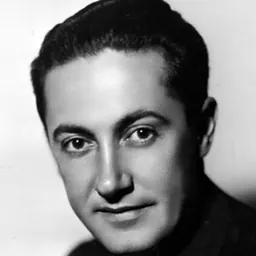



Contemporaries
People whose lives overlapped Kalanag's

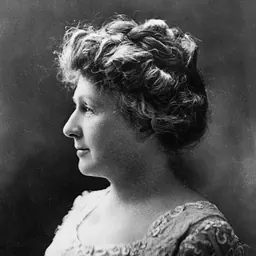
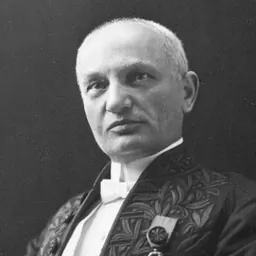
Frequently asked questions
Who was Kalanag?
German film producer and magician
When was Kalanag born?
Kalanag was born on 23 January 1903 in Stuttgart.
When did Kalanag die?
Kalanag died on 24 December 1963 in Gaildorf.
What was Kalanag's occupation?
Kalanag was a film producer, magician and production manager.
What nationality was Kalanag?
Kalanag was German.
Sources & further reading
Cite this page
APA: Biography.guide. (2026). Kalanag. https://biography.guide/kalanag/
MLA: "Kalanag." Biography.guide, https://biography.guide/kalanag/.
Chicago: "Kalanag." Biography.guide. https://biography.guide/kalanag/.
Data last updated: 2026-09-20 · Spot an error? Report a correction.
Page generated 2026-09-27 05:04 UTC