
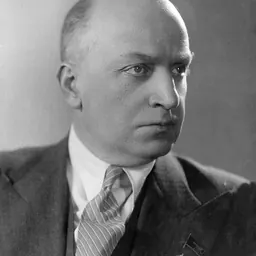
Kadiri Venkata Reddy
Indian film director, screenwriter, and producer
About Kadiri Venkata Reddy
Lived 1912 – 1972 (aged 60). Kadiri Venkata Reddy was an Indian film director, film producer, screenwriter and writer.
Kadiri Venkata Reddy (1 July 1912 – 15 September 1972), commonly known as K. V. Reddy, was an Indian film director, screenwriter, and producer, primarily known for his work in Telugu cinema. Renowned as one of the most influential filmmakers in South Indian cinema, he directed 14 feature films during his career. His contributions earned him several prestigious accolades, including three National Film Awards and a Filmfare Award South.
His filmography includes films based on itihasa-puranas like Mayabazar (1957), Sri Krishnarjuna Yuddhamu (1962), Sri Krishna Satya (1972); fantasy films like Gunasundari Katha (1949), Pathala Bhairavi (1951), Jagadeka Veeruni Katha (1961); historical biopics like Bhakta Potana (1942), Yogi Vemana (1947), and drama films like Pedda Manushulu (1954), Donga Ramudu (1955), Pellinaati Pramanalu (1959).
Pathala Bhairavi was the only South Indian film to be screened at the first International Film Festival of India in 1952. Donga Ramudu was archived in the curriculum of the Film and Television Institute of India. Mayabazar is widely regarded as one of the greatest Indian films ever produced. On the centenary of Indian cinema in April 2013, CNN-IBN included Pathala Bhairavi and Mayabazar in its list of "100 greatest Indian films of all time". In an online poll featuring the films in the list, Mayabazar was voted by the public as the "greatest Indian film of all time."
Early life Kadiri Venkata Reddy was born on 1 July 1912 in a Telugu family in Tellamitta Palle near Tadipatri in Anantapur district in present-day Andhra Pradesh. Later, he started living along with his mother at his maternal uncle's home.
He performed well in academics and actively took part in sports like football and hockey. He was good at mathematics and painting.
He completed his B.Sc degree in Physics in Madras Presidency College.
19421950: Directorial debut and breakthrough
Bhakta Pothana (1943) While working as a production manager at Vauhini, K. V. Reddy prepared the script for a film based on the life of 15th century Telugu poet Pothana. Though it was opposed by various people in the company for K. V. Reddy's lack of directorial experience, Narayana Swamy greenlit the project. The film was titled Bhakta Pothana and featured V. Nagayya in the title role. Narayana Swamy invested the capital required for building the studio while B. N. Reddy took up the responsibility of managing the construction work. Even though B. N. Reddy was to direct the next film for Vauhini as per the agreement, it fell upon K. V. Reddy to direct the next film as B. N. Reddy was busy in the construction work of the studio.
Gunasundari Katha (1949) K. V. Reddy wanted to make a film that was distinct from his previous films and any of the films produced till then by Vauhini. He chose William Shakespeare's play King Lear as the inspiration for the core plot. The film had a scene where the protagonist turns into a bear due to a curse. K. V. Reddy remembered a kind-hearted bear in his childhood which spared him his life and made it a character in the film. The film was later remade in Tamil as Gunasundari (1955) by Vijaya Productions under the direction of Kamalakara Kameswara Rao. Pingali adapted the content and wrote the film's story. Kamalakara Kameswara Rao and Reddy worked on the screenplay. Pingali was also inspired from the story of Aladdin. and the first Telugu film to have a direct run of 200 days. The 1952 Hindi version was also successful. Pathala Bhairavi is considered to be a breakthrough film for both Rama Rao and Ranga Rao.
K. V. Reddy was interested in western literature and films. The Pillars of Society, a 1877 play by famous Norwegian playwright Henrik Ibsen attracted him. They established Annapurna Pictures, named after Madhusudhana Rao’s stepmother. Madhusudana Rao, Nageswara Rao, and few others were its partners. The success of the film established Annapurna Pictures as a leading production house in Telugu cinema. The film was later archived by the curriculum of the Film and Television Institute of India. It was later remade in Hindi as Man-Mauji (1962) and again in Tamil as Vasanthi (1988).
Mayabazar (1957) K. V. Reddy always had a vision of making a film based on itihas with huge sets similar to Hollywood films. He found support from Vijaya Productions founded by Nagi Reddi and Chakrapani. it was the studio's first film on itihas. K. V. Reddy wrote and directed Mayabazar, assisted by Singeetam Srinivasa Rao. It was produced by Nagi Reddi and Chakrapani. Nearly a year was spent on pre-production and casting. Mayabazar was the first of Rama Rao's many appearances as Krishna. During rehearsals, K. V. Reddy timed his actors with a stopwatch, calculating the length of each scene (including songs) to determine the film's length. In addition to the principal technicians and actors, a crew of 400, including light men, carpenters, and painters, worked on Mayabazar during production. Both versions have a film-reel length of . A commercial success, Mayabazar had a theatrical run of 100 days in 24 theatres and went on to become a silver jubilee film with a theatrical run of 175 days (25 weeks) with its audio remastered from monaural to a DTS 5.1-channel system. Mayabazar is considered as a classic in Telugu cinema, particularly in its use of technology.
Pellinaati Pramanalu (1958) K. V. Reddy founded a production company named Jayanthi Pictures, in partnership with P. S. Reddy and Tikkavarapu Pattabhirama Reddy.
Titled Pellilnati Pramanalu, the film starred Akkineni Nageswara Rao and Jamuna, with music composed by Ghantasala. The film was simultaneously made in Tamil as Vaazhkai Oppandham with a slightly different cast that released the following year.
Declining Sita Rama Kalyanam (1961) N. T. Rama Rao's brother N. Trivikrama Rao decided to produce a film based on Ramayana for his company National Art Theatre. Rama Rao's portrayal of the Ravana in Bhookailas (1958) earned him critical acclaim. Also, Ravana's reputation as a renowned Lord Siva devotee, made Rama Rao consider reprising the role in this film with a more layered representation of the character.
Rama Rao approached his mentor K. V. Reddy to direct the film. But, K. V. Reddy wanted Rama Rao to don the role of Lord Rama and S. V. Ranga Rao to play the character of Ravana. Since Rama Rao was adamant about playing Ravana, K. V. Reddy declined the offer, saying that he could not envision Rama Rao playing a demon. Rama Rao then decided to direct the film himself, marking his directorial debut with the film titled Sita Rama Kalyanam (1961). Screenwriter Pingali and K. V. Reddy took the core plot from Jagathala Prathapan, but added new characters, made other changes to the story and prepared the script of Jagadeka Veeruni Katha which made it quite distinct from the 1944 film.
The film stars N. T. Rama Rao as Krishna and Akkineni Nageswara Rao as Arjuna. Initially, Nageswara Rao was not keen on acting in a mythological film alongside Rama Rao. However, he accepted the role due to his respect towards K. V. Reddy for having directed Donga Ramudu (1955), the maiden venture of his own production house Annapurna Pictures.
19641970: Decline
Satya Harishchandra (1965) After the success of Sri Krishnarjuna Yuddhamu based on popular mythological play Gayopakhyanam, K. V. Reddy planned a film based on another mythological play Satya Harishchandra for Vijaya Productions. The songs and poems written by Balijepalli Lakshmikantha Kavi for his magnum opus play Satya Harischandriyamu in 1924 were already popular with the audience. However, due to copyright issues, K. V. Reddy could not use those poems. Pingali wrote new poems and songs for the film. K. V. Reddy also produced the film for Vijaya Productions. The film titled Satya Harishchandra starred N. T. Rama Rao in the title role and S. Varalakshmi as Chandramathi. The film released on 22 April 1965 and was a failure at the box-office. It won the President's silver medal for Best Feature Film in Kannada at the 13th National Film Awards. It also became the third Indian and the first South Indian black-and-white film to be digitally coloured in 2008. Released on 11 January 1968, the film was a commercial failure. The film released on 13 September 1968 and was also a failure at the box-office.
Directing the film and its success gave a lot of satisfaction to K. V. Reddy.
K. V. Reddy died on 15 September 1972. His wife also died three months after his death. Once the script is finalized, he would not make any changes to it during the shooting.
N. T. Rama Rao collaborated with him on eight of his films. Akkineni Nageswara Rao acted in four films of his. Nagayya played the lead role in K. V. Reddy’s first two films Bhakta Potana, Yogi Vemana and later played supporting roles in three films. S. V. Ranga Rao acted in three of his films Pathala Bhairavi, Pellinaati Pramanalu, Sri Krishna Satya. B. Saroja Devi played the female lead in four of his films. Savitri and Jamuna each played the female lead in two of K. V. Reddy’s films.
Legacy
I was 7-8 years old when I first saw it [Mayabazaar] as a kid, I loved it immensely. Later, when I came to the film industry, I kept thinking about how KV Reddy and his team made the film back in those days. I was mesmerised by the visual effects in that film. Later, while making Yamadonga, my VFX supervisor and I spent two days just to figure out how KV Reddy had pulled off such amazing special effects back then. The more I explored the world of Mayabazaar, my respect for KV Reddy kept growing. — S. S. Rajamouli about K. V. Reddy.
A street was named after him in his hometown Tadipatri.
On the centenary of Indian cinema in April 2013, CNN-IBN included Pathala Bhairavi and Mayabazar in its list of "100 greatest Indian films of all time".
Vedantam Sripatisarma, a film critic, wrote of him, "Kadiri Venkata Reddy stands out as one of the most seasoned minds of yesteryears who missed no moment in entertaining the viewer even inside a subject involving melancholy and drama. His style of comedy was absolutely unimaginable. His ways never appeared to be contrived. There was this great ease with which he moved his subjects."
Filmography K. V. Reddy directed 14 feature films. +Directed features Year Title Language Direction Screenplay Story Producer 1942 Bhakta PotanaTelugu 1947 Yogi Vemana 1949 Gunasundari Katha 1951 Pathala Bhairavi TeluguTamil 1954 Pedda ManushuluTelugu 1955 Donga Ramudu 1957 MayabazarTeluguTamil 1958 Pellinaati PramanaluTelugu 1961 Jagadeka Veeruni Katha 1963 Sri Krishnarjuna Yuddhamu 1965 Satya Harishchandra 1968 Uma Chandi Gowri Sankarula Katha 1968 Bhagya Chakramu 1971 Sri Krishna Satya Other roles Satya Harishchandra (1965) (Kannada) - Producer Swarga Seema (1945) - Production manager Devata (1941) - Production manager Sumangali (1940) - Production manager Vande Mataram (1939) - Production manager
Awards National Film Awards National Film Award for Best Feature Film in Telugu - Pedda Manushulu (1955) National Film Award for Best Feature Film in Telugu - Pellinaati Pramanalu (1958) National Film Award for Best Feature Film in Kannada - Satya Harishchandra (1966)
In popular culture K. V. Reddy is portrayed by director Krish Jagarlamudi in the films Mahanati (2018) and NTR: Kathanayakudu'' (2019).
Don’t just read it —
keep it.
Full-length biographies made to live with: read them, listen on the way to work, watch them tonight.
- E-book
- Audio
- Video
Instant download · yours to keep · every purchase keeps this site free
Important facts
People in Kadiri Venkata Reddy's life
Named in this biography and alive at the same time

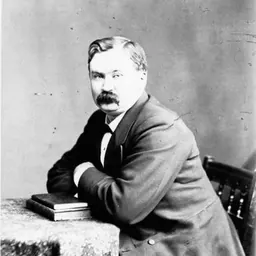
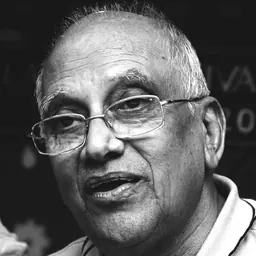
Related people
Same field, nearest in time

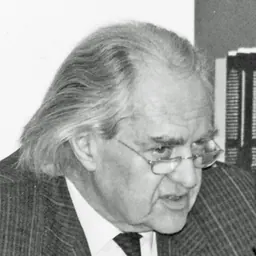
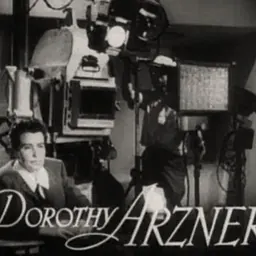

Contemporaries
People whose lives overlapped Kadiri Venkata Reddy's






Frequently asked questions
Who was Kadiri Venkata Reddy?
Indian film director, screenwriter, and producer (1912–1972)
When was Kadiri Venkata Reddy born?
Kadiri Venkata Reddy was born on 1 July 1912 in Tadipatri.
When did Kadiri Venkata Reddy die?
Kadiri Venkata Reddy died on 15 September 1972 in Chennai.
What was Kadiri Venkata Reddy's occupation?
Kadiri Venkata Reddy was a film director, film producer, screenwriter and writer.
What nationality was Kadiri Venkata Reddy?
Kadiri Venkata Reddy was Indian.
Sources & further reading
· Wikipedia: Kadiri Venkata Reddy
Cite this page
APA: Biography.guide. (2026). Kadiri Venkata Reddy. https://biography.guide/kadiri-venkata-reddy/
MLA: "Kadiri Venkata Reddy." Biography.guide, https://biography.guide/kadiri-venkata-reddy/.
Chicago: "Kadiri Venkata Reddy." Biography.guide. https://biography.guide/kadiri-venkata-reddy/.
Data last updated: 2026-09-22 · Spot an error? Report a correction.
Page generated 2026-09-27 05:15 UTC