
About K. Venkataraman
Lived 1901 – 1981 (aged 79). K. Venkataraman was an Indian chemist and university teacher, known for Baker-Venkataraman transformation.
Krishnaswami Venkataraman FNA, FASc, FNASc, FRSC (7 June 1901 – 12 May 1981), popularly known as KV, was an Indian organic chemist and the first Indian director at National Chemical Laboratory (NCL Pune) and University Department of Chemical Technology, Mumbai (UDCT). He was known for the demonstration of an organic chemical reaction involving 2-acetoxyacetophenones which later came to be known as the Baker–Venkataraman rearrangement and for his contributions in developing NCL into one of the leading research centres in organic chemistry. He was an elected fellow of several science academies which included the Royal Society of Chemistry, Academy of Sciences Leopoldina, USSR Academy of Sciences, Prussian Academy of Sciences, Polish Academy of Sciences, Indian Academy of Sciences, and the Indian National Science Academy. The Government of India awarded him the Padma Bhushan, the third highest Indian civilian award, in 1961.
Biography
Krishnaswami Venkataraman was born on 7 June 1901 in Madras (present-day Chennai), Madras Presidency during the British Colonial rule, in a learned Tamil Brahmin family, to P. S. Krishnaswami, a civil engineer, Sanskrit scholar and the translator of Valmiki Ramayana into Tamil, as the middle-born of his three sons. His brothers were K. Swaminathan, a professor of English who was the chief editor of the collected works of Mohandas Karamchand Gandhi and Krishnaswami Srinivas Sanjivi, a noted medical doctor who founded Voluntary Health Services and is considered by many to be the father of the primary health care movement in India. Madhav Sharma, an actor of films and television, is his nephew.
He studied chemistry at Presidency College, Madras and obtained his MA from Madras University in 1923. Subsequently, he moved to England where he joined the University of Manchester on a scholarship from the Government of Tamil Nadu and obtained MSc (Tech) in colour chemistry. He remained in England for his doctoral research, along with another noted chemist, T. R. Seshadri, at the laboratory of Robert Robinson which earned him a PhD and later a DSc from the University of Manchester. After retiring from UDCT in 1957, he became the third director of the National Chemical Laboratory (NCL), Pune, the first Indian director to hold the post. He served as the director of NCL until 1966, but continued his association with the laboratory eve after his retirement. Lovraj Kumar, an Indian civil servant and a former secretary of the ministries of Petroleum and Natural Gas and Steel, was his son-in-law and Radha Kumar, a noted author, historian, feminist and academic was his granddaughter. Venkataraman died on 12 May 1981 at New Delhi, survived by his wife and daughter. This process, a variant of Allan–Robinson reaction, is in use for the synthesis of flavones and chromones. Through his experiments with Artocarpus heterophyllus, commonly known as Jackfruit, he was able to isolate artocarpanone, a tyrosinase inhibitor, as well as eight flavones and later, he isolated similar flavones from Morus alba (White Mulberry). These experiments helped establish the taxonomical relationship between the two species. He also submitted a report to the Government of India for the development of dyestuff and intermediaries industry in India, known as the Pai/Venkataraman report which paved way for the development of the industry in the country, earning him the moniker, the father of the Indian dyestuff industry.
Another of Venkataraman's contributions was his work on lac pigments. B. S. Joshi, Nitya Anand and A. V. Rama Rao. and these nine books remain reference texts in the discipline. Besides, he also published 271 scientific articles.
Venkataraman served as the president of the Indian Academy of Sciences for three terms (1943–46, 1949–55, 1965–67) and as the vice president from 1952 to 1955. He also served as the vice president of the Indian National Science Academy. which became the Royal Society of Chemistry in 1980. He was elected a founding fellow of the Indian Academy of Sciences (FASc) in 1934, and as a Fellow of the National Institute of Sciences of India (FNI, now the Indian National Science Academy in 1939. He was also a fellow of the National Academy of Sciences, India (FNASc). He was also a fellow of the Prussian Academy of Sciences, USSR Academy of Sciences, and the Polish Academy of Sciences. He was also a recipient of the Acharya P.C. Ray Medal of the Indian Chemical Society.
Don’t just read it —
keep it.
Full-length biographies made to live with: read them, listen on the way to work, watch them tonight.
- E-book
- Audio
- Video
Instant download · yours to keep · every purchase keeps this site free
Important facts
People in K. Venkataraman's life
Named in this biography and alive at the same time
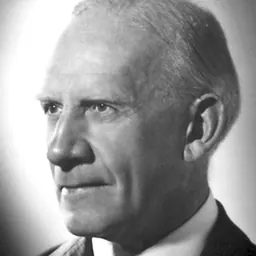





Related people
Same field, nearest in time
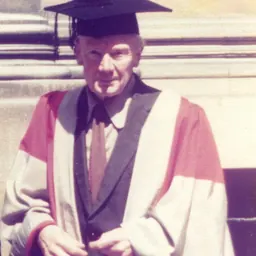

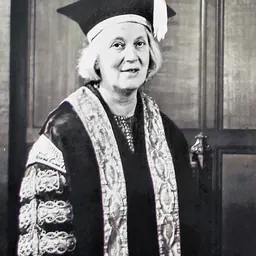
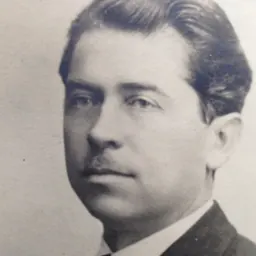
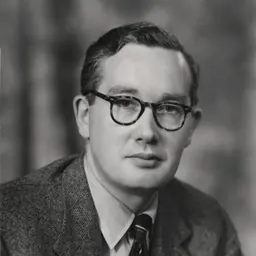

Contemporaries
People whose lives overlapped K. Venkataraman's

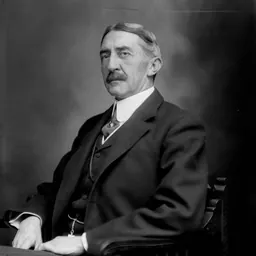

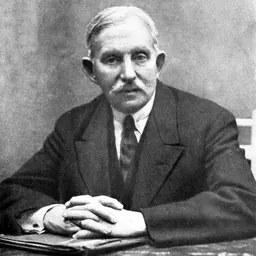

Frequently asked questions
Who was K. Venkataraman?
Indian chemist (1901–1981)
When was K. Venkataraman born?
K. Venkataraman was born on 7 June 1901 in Chennai.
When did K. Venkataraman die?
K. Venkataraman died on 12 May 1981 in New Delhi.
What was K. Venkataraman's occupation?
K. Venkataraman was a chemist and university teacher.
What was K. Venkataraman known for?
K. Venkataraman was known for Baker-Venkataraman transformation.
What nationality was K. Venkataraman?
K. Venkataraman was Indian.
Sources & further reading
· DBpedia: Krishnasami Venkataraman
Cite this page
APA: Biography.guide. (2026). K. Venkataraman. https://biography.guide/k-venkataraman/
MLA: "K. Venkataraman." Biography.guide, https://biography.guide/k-venkataraman/.
Chicago: "K. Venkataraman." Biography.guide. https://biography.guide/k-venkataraman/.
Data last updated: 2026-09-20 · Spot an error? Report a correction.
Page generated 2026-09-27 05:26 UTC