
About Jusuf Prazina
Lived 1963 – 1993 (aged 30). Jusuf Prazina was a Bosnian military leader.
Jusuf "Juka" Prazina (; 7 September 1963 – 4 December 1993) was a Bosnian organized crime figure and warlord during the Bosnian War.
A troubled teen, Prazina's youth allegedly contained numerous stays in various jails and correctional facilities of the former Yugoslavia. By the 1980s, he had become involved in organized crime, eventually heading his own racketeering gang based around his home in the city's Centar municipality.
With the onset of the Siege of Sarajevo in 1992, Prazina expanded his gang into an effective paramilitary fighting force called Juka's Wolves. This force was central in the effort against the besieging Army of Republika Srpska (VRS), and he was rewarded for his contribution to the city's defense by appointment to the head of the government's special forces. Prazina proved problematic for the Army of the Republic of Bosnia and Herzegovina.
Following a warrant for his arrest in October, Prazina stationed himself on Mount Igman and coordinated attacks against the ARBiH until his eventual defeat and expulsion in January of the following year. Prazina moved to Herzegovina where he joined forces with the Croatian Defence Council and committed numerous crimes against civilians in the region. He left Bosnia and Herzegovina a few months later for Croatia, and lived on the Dalmatian coast before traveling through a number of European countries and finally relocating to Belgium.
He was found dead in a canal near the German border by two hitch-hikers on 31 December 1993. In 2001, documents detailing wartime conversations between then president of Croatia Franjo Tuđman and president of the Croatian parliament Stjepan Mesić were declassified. In one part of these documents, Mesić revealed his suspicions that Bosnian Croat extremists were to blame for Prazina’s death. The most concrete links came from an unsuccessful six-year investigation by the Bavarian Criminal Police.
Early life in Sarajevo Prazina was one of five siblings: two of them are, sister Vasvija and brother Mustafa. Growing up, he was known to his educators as a troublemaker and problematic student, spending time in a number of correctional facilities. It was also around this time that he became involved with a local gang on his home street of Sutjeska. As a teenager, he enrolled in a streamlined secondary school focusing on commerce, which perhaps contributed to his eventual involvement in racketeering. His early transgressions were limited to bullying and street brawls.
Shortly before the war, Prazina established and registered a debt collection business. His preferred methods, however, were mostly illegal. Prazina was known to first demand some form of authorization, then threaten a debtor and, if still receiving a negative response, use various forms of violence to force payment. In all this, Prazina developed a sophisticated network of around 300 armed "collectors" under his control.
He wielded great power through this enterprise: in early 1992, after being shot during a pit bull fight, doctors at Koševo hospital were hesitant to perform the necessary operation due to the great risk involved. In response, Prazina's small army besieged the hospital and forced the surgeons to perform the surgery.
They were split into a number of locality-based factions, each under the direct control of one of Juka's close confidants but ultimately responsible to the central base ran by Prazina himself. He was proclaimed a hero by the Bosnian press while the Western media frequently portrayed him as a sort of Robin Hood figure. He resented what he perceived to be the increasing involvement and influence of Bosniaks from Sandžak in the Bosnian army and government (the so-called Sandžak line), and in particular the power held by Sefer Halilović, the man who held his desired position (head of the general staff of ARBiH). The investigation implicated Bosniak gangster Senad "Šaja" Šahinpašić, and was based on tapped phone conversations which showed that Šahinpašić was aware of Prazina's death by 5 December 1993 – well before his body had been discovered. He often exchanged money, people, and prisoners of war with VRS authorities in the occupied territories around Sarajevo. With their support, Prazina was able to effectively run the black market during the siege. In his dealings with the VRS, Prazina even had written permission from the president of the Republika Srpska, Radovan Karadžić. During the siege, Prazina was also in contact with Radovan's son, Saša. Post-war revelations of these activities have served to sour Prazina's legacy among the Bosniak citizens of Sarajevo, who once considered him among the most positive figures of the Bosnian war.
War crimes in Sarajevo Prazina was accused of committing various war crimes over the course of the war. An order from president Izetbegović placed Prazina beyond the control of the military police, and his men were known to take prisoners of war from government prisons for their own purposes. Many regular residents of Sarajevo were also treated harshly; members of his unit were involved in extortion, looting and rape, as well as various instances of violence against civilians. In one case, while on Mt. Igman, Prazina personally beat one fleeing civilian's head against the hood of a car. Within the city, Prazina's Wolves were known for appropriating apartments and abducting and abusing their owners. Furthermore, as part of black market activities, Prazina's unit frequently raided the city's shops and warehouses.
Don’t just read it —
keep it.
Full-length biographies made to live with: read them, listen on the way to work, watch them tonight.
- E-book
- Audio
- Video
Instant download · yours to keep · every purchase keeps this site free
Important facts
People in Jusuf Prazina's life
Named in this biography and alive at the same time
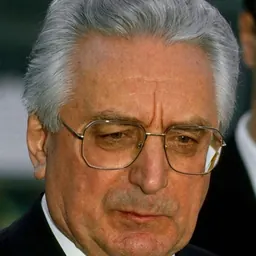
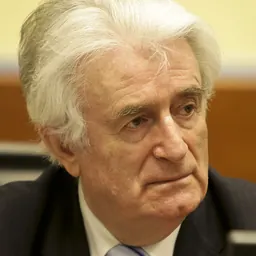


Related people
Same field, nearest in time


Contemporaries
People whose lives overlapped Jusuf Prazina's


Frequently asked questions
Who was Jusuf Prazina?
Bosniak Criminal & Paramilitary Leader (1962–1993)
When was Jusuf Prazina born?
Jusuf Prazina was born on 7 September 1963 in Sarajevo.
When did Jusuf Prazina die?
Jusuf Prazina died on 4 December 1993 in Eupen.
What was Jusuf Prazina's occupation?
Jusuf Prazina was a military leader.
What nationality was Jusuf Prazina?
Jusuf Prazina was Bosnian.
Sources & further reading
Cite this page
APA: Biography.guide. (2026). Jusuf Prazina. https://biography.guide/jusuf-prazina/
MLA: "Jusuf Prazina." Biography.guide, https://biography.guide/jusuf-prazina/.
Chicago: "Jusuf Prazina." Biography.guide. https://biography.guide/jusuf-prazina/.
Data last updated: 2026-09-20 · Spot an error? Report a correction.
Page generated 2026-09-27 05:32 UTC