
About Jürgen Moltmann
Lived 1926 – 2024 (aged 98). Jürgen Moltmann was a German theologian and university teacher.
Jürgen Moltmann (; 8 April 1926 – 3 June 2024) was a German Reformed theologian who was a professor of systematic theology at the University of Tübingen and was known for his books such as the Theology of Hope, The Crucified God, God in Creation and other contributions to systematic theology. His works were translated into many languages.
Moltmann described his theology as an extension of Karl Barth's theological works, especially the Church Dogmatics, and he described his work as Post-Barthian. He developed a form of liberation theology predicated on the view that God suffers with humanity, while also promising humanity a better future through the hope of the Resurrection, which he labelled a 'theology of hope'. Much of Moltmann's work was to develop the implications of these ideas for various areas of theology. Moltmann became known for developing a form of social trinitarianism. He was awarded several international honorary doctorates.
Life and career Youth Moltmann was born in Hamburg on 8 April 1926. His father was a teacher; the family was not religious.
World War II Moltmann took his entrance exam to proceed with his education but instead was drafted into military service in 1943 at the age of 16, during World War II, serving as an Air Force auxiliary in the German Army. "The reading matter which he took with him into the miseries of war were Goethe's poems and the works of Nietzsche." He worked in an anti-aircraft battery during the bombing of his hometown of Hamburg by the Royal Air Force, an attack that killed 40,000 people, including a friend standing next to him. Ordered to the Klever Reichswald, a German forest at the front lines, he surrendered in 1945 in the dark to the first British soldier he met. From 1945 to 1948, he was confined as a prisoner of war (POW) and moved from camp to camp.
In July 1946, he was transferred for the last time to Norton Camp, a British prison located in the village of Cuckney near Nottingham, UK. The camp was operated by the YMCA and here Moltmann met many students of theology. At Norton Camp, he discovered Reinhold Niebuhr's The Nature and Destiny of Man. It was the first book of theology he had ever read, and Moltmann claimed it had a huge impact on his life. His experience as a POW gave him a great understanding of how suffering and hope reinforce each other, leaving a lasting impression on his theology. Moltmann later claimed, "I never decided for Christ, as is often demanded of us, but I am sure that, then and there, in the dark pit of my soul, he found me." In 1958 Moltmann became a theology teacher at the
Personal life Moltmann was married to Elisabeth Moltmann-Wendel, who studied with him
Theological views The early Moltmann can be seen in his trilogy, Theology of Hope (1964), The Crucified God (1972), and The Church in the Power of the Spirit (1975): Theology of Hope was strongly influenced by the eschatological orientation of the Marxist philosopher Ernst Bloch's The Principle of Hope. The Crucified God posited that God died on the Cross, raising the question of the impassibility of God. The Church in the Power of the Spirit explores the implications of these explorations for the church in its own life and in the world.
The later Moltmann took a less systematic approach to theology, leading to what he called his "systematic contributions to theology" that sought to provoke and engage more than develop some kind of set Moltmannian theology.
Moltmann corroborated his ideas with those of Roman Catholics, Orthodox Christians, and Jews in an attempt to reach a greater understanding of Christian theology, which he believed should be developed ecumenically.
Moltmann had a passion for the Kingdom of God as it exists both in the future, and in the God of the present. His theology is often referred to as "Kingdom of God" Theology. His theology is built on eschatology, and the hope found in the resurrected Christ. This theology is most clearly explained in his book Theology of Hope.
Moltmann's theology is also seen as a theology of liberation, though not in the sense that the term is most understood. Moltmann not only viewed salvation as Christ's "preferential option for the poor," but also as offering the hope of reconciliation to the oppressors of the poor. If it were not as such, divine reconciliation would be insufficient.
Systematic contributions Jürgen Moltmann's most significant works consist of two sets of theological work: the first is his Contributions to Systematic Theology and the second is his Original Trinity.
However, because of this hope we hold, we may never exist harmoniously in a society such as ours which is based on sin. When following the theology of hope, a Christian should find hope in the future but also experience much discontentment with the way the world is now, corrupt and full of sin. Sin bases itself in hopelessness, which can take on two forms: presumption and despair. "Presumption is a premature, selfwilled anticipation of the fulfillment of what we hope for from God. Despair is the premature, arbitrary anticipation of the non-fulfillment of what we hope for from God."
In Moltmann's opinion, all should be seen from an eschatological perspective, looking toward the days when Christ will make all things new. "A proper theology would therefore have to be constructed in the light of its future goal. Eschatology should not be its end, but its beginning." This does not, as many fear, 'remove happiness from the present' by focusing all ones attention toward the hope for Christ's return. Moltmann addressed this concern as such: "Does this hope cheat man of the happiness of the present? How could it do so! For it is itself the happiness of the present." The importance of the current times is necessary for the theology of hope because it brings the future events to the here and now. This theological perspective of eschatology makes the hope of the future, the hope of today. Hope strengthens faith and aids a believer into living a life of love, and directing them toward a new creation of all things. It creates in a believer a "passion for the possible" "For our knowledge and comprehension of reality, and our reflections on it, that means at least this: that in the medium of hope our theological concepts become not judgments which nail reality down to what it is, but anticipations which show reality its prospects and its future possibilities." For Moltmann, the eschatological is not merely one element of Christianity, it is the key element. Founded on the resurrection, Christian theology is "at its hard core theology of the cross... Conversely, the theology of the cross is the 'reverse side' of the theology of hope." Christ in this world takes the form of the cross of Christ and the sufferings of Christians, and that cross is an eschatologically open event in which the love of God for the godless is revealed. While Moltmann saw Christian hope, contained in the promise of an eschatological future, as built upon contradiction: (the crucified and risen Jesus, the cross and the resurrection, god-forsakenness and the nearness of God), it is contradiction that contains Jesus' identity within it, not above or beyond it. "The goal of history is an eschatological 'panentheism' in which God will be in everything and everything will be in God."
Liberation theology Moltmann's liberation theology includes an understanding of both the oppressed and the oppressor as needing reconciliation. "Oppression has two sides: on one side there is the master, on the other side the slave... Oppression destroys humanity on both sides." The goal is one of mutual liberation. God's 'preferential option for the poor' should not be exclusive, but rather include the rich; insofar as God holds judgment over them also. The sufferings of the poor should not be seen as equal to or a representation of the sufferings of Jesus. Our suffering is not an offering to God, it is not required of us to suffer. The point of the crucified Christ was to present an alternative to human suffering. Human suffering is not a quality of salvation, and should not be viewed as such. This is not to say that the sufferings of humans is of no importance to God.
This "mutual liberation" necessarily involves a "liberation of oppressors from the evil they commit; otherwise there can be no liberation for a new community in justice and freedom." However, the liberation of the oppressed takes priority and must involve their own agency in order for true justice and reconciliation to be enacted: "In order to achieve this goal, the oppressed will have to free themselves from the constraints of oppression and cut themselves off from their oppressors, so as to find themselves and their own humanity. It is only after that that they can try to find a truly humane community with their previous oppressors." Moltmann sought to defeat a monotheistic Christianity that is being used as a tool for political and clerical absolute monarchism. He believed the doctrine of the Trinity should be developed as the "true theological doctrine of freedom." He suggested that we "cease to understand God monotheistically as the one, absolute subject, but instead see him in a trinitarian sense as the unity of the Father, the Son, and the Spirit."
Moltmann related his views on the trinity to three modes of human freedom. The first mode is the political meaning of freedom as supremacy. This mode was rejected by Moltmann, who saw it as corresponding to a God who rules over his creation, which exists merely to serve Him. It is a relation of a subject with an object, where the goal is to enhance the supremacy of the subject. The second mode of human freedom is the socio-historical and Hegelian meaning of freedom as communion, which implies the relation between two subjects. This relationship aims at love and solidarity, and corresponds to the perichoresis of the Father and Son, and through the Son the children of God, or humanity. This relationship is both liberating and loving, and is one Moltmann favored. The third mode of human freedom is the implicitly religious concept of freedom as the passion of the creature for his or her potential. This deals with the relationship between subjects and their common future project. This is the mode favored most by Moltmann, who correlates this relationship with the one humans share with God in the realm of the Holy Spirit. Here, an indwelling of the Spirit allows humans to be friends with God. As you can see, the first mode of freedom is political, and focuses on The Father; the second is communal, focusing on the Son; and the third is religious, focusing on the Spirit. The liberalism of Rudolf Bultmann is not sharply distinguished from the other dialectical theologies, since it is still focussed on an event of revelation – albeit as "an event which transposes me into a new state of my self".
While Theology of Hope was strongly influenced by the eschatological orientation of the Marxist philosopher Ernst Bloch's The Principle of Hope, in Moltmann's second major work The Crucified God, the philosophical inspiration comes from a different vein of philosophy. In "Explanation of the Theme", his introduction to the book, Moltmann acknowledges that the direction of his questioning has shifted to that of existentialist philosophy and the Marxism of the Frankfurt School. Moltmann cites Joachim Iwand, Ernst Wolf and Otto Weber as major influences on his theology as it was developing at Göttingen.
The title of Moltmann's crucial work is derived from Martin Luther, and its use marked a renewed engagement with a specifically Lutheran strain in Protestant theology, as opposed to the more Calvinist tenor of his earlier work. Moltmann's widening interest in theological perspectives from a broad cultural arena is evident in his use of the 1946 book by Kazoh Kitamori, Theology of the Pain of God, which he relates to Bonhoeffer's prison reflections. However, he footnotes Kitamori's very conservative, individualist conclusions, which he does not share. Moltmann continued to see Christ as dying in solidarity with movements of liberation, God choosing to die with the oppressed. This work and its footnotes are full of references, direct and implied, to the New Left and the uprisings of 1968, the Prague Spring the French May and, closest to home, the German APO, and their aftermath. Moltmann cited Johann and Christoph Blumhardt as a major contributors to his thought.
Honours Moltmann received honorary doctorates from a number of institutions, such as Duke University (1973), the University of Louvain in Belgium (1995), the Alexandru Ioan Cuza University in Romania (1996), the Chung Yuan Christian University in Taiwan (2002), the Nicaraguan Evangelical University (2002), and the University of Pretoria in South Africa (2017).
Moltmann received the 2000 University of Louisville and Louisville Presbyterian Theological Seminary Grawemeyer Award in Religion for his book The Coming of God: Christian Eschatology.
Bibliography of works in English Major works Theology of Hope: On the Ground and the Implications of a Christian Eschatology, SCM, London, 1967
Religion, Revolution and the Future, Charles Scribner's Sons, New York, 1969 Hope and Planning, Harper & Row, New York, 1971 Theology of play, Harper & Row, New York, 1972 The Gospel of Liberation, Word, Waco, Texas, 1973 Human Identity in Christian Faith, Stanford University Press, Stanford, 1974 Man: Christian Anthropology in the Conflicts of the Present, SPCK, London, 1974 (Reprinted as On Human Being: Christian Anthropology in the Conflicts of the Present, Fortress, Minneapolis, 2009) The Experiment Hope, SCM, London, 1975 The Open Church, SCM, London, 1978 (American edition: The Passion for Life: A Messianic Lifestyle, Fortress, Philadelphia, 1978) Meditations on the Passion: Two Meditations on Mark 8:31–38, Paulist, New York, 1979 The Future of Creation, SCM, London, 1979 Is There Life After Death?, Marquette University Press, Milwaukee, 1998 Passion for God: Theology in Two Voices, Westminster John Knox, Louisville, KY, 2003 Science and Wisdom, SCM, London, 2003 In the End the Beginning, SCM, London, 2004 A Broad Place: An Autobiography, Minneapolis, Fortress, 2009 Sun of Righteousness, Arise! God's Future for Humanity and the World, Fortress, Minneapolis, 2010 Ethics of Hope, Fortress, Minneapolis, 2012 Jürgen Moltmann: Collected Readings, Fortress, Minneapolis, 2014 The Living God and the Fullness of Life, Westminster John Knox, Louisville, KY, 2015 The Spirit of Hope: Theology for a World in Peril, Westminster John Knox, Louisville, KY, 2019 Resurrected to Eternal Life: On Dying and Rising, Fortress, Minneapolis, 2021
Articles and chapters "Is 'Pluralistic Theology' Useful for the Dialogue of World Religions?" in Gavin D'Costa, Christian Uniqueness Reconsidered (Maryknoll, NY: Orbis Books, 1990; pp.149–156) "The Passibility or Impassibility of God: Answers to J. K. Mozley's "Six Necessary Questions" in Anthony Clarke and Andrew Moore, Within the Love of God: Essays on the Doctrine of God in Honour of Paul S. Fiddes (Oxford: Oxford University Press, 2014; pp.108–119), , "Is the world unfinished? On interactions between science and theology in the concepts of nature, time and the future", Theology, vol. 114, no. 6 (Nov 2011). Boyle Lecture, with response by A. J. Torrance,
Footnotes
Don’t just read it —
keep it.
Full-length biographies made to live with: read them, listen on the way to work, watch them tonight.
- E-book
- Audio
- Video
Instant download · yours to keep · every purchase keeps this site free
Important facts
People in Jürgen Moltmann's life
Named in this biography and alive at the same time



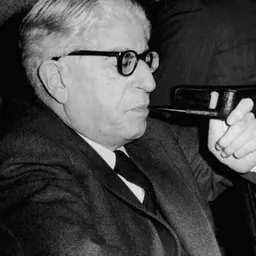



Related people
Same field, nearest in time

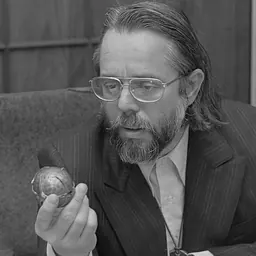



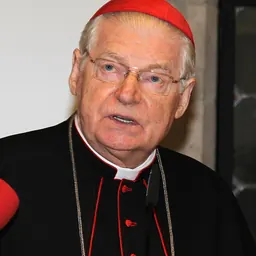
Contemporaries
People whose lives overlapped Jürgen Moltmann's


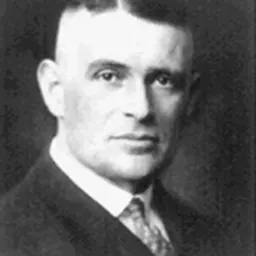
Frequently asked questions
Who was Jürgen Moltmann?
German Reformed theologian (1926–2024)
When was Jürgen Moltmann born?
Jürgen Moltmann was born on 8 April 1926 in Hamburg.
When did Jürgen Moltmann die?
Jürgen Moltmann died on 3 June 2024 in Tübingen.
What was Jürgen Moltmann's occupation?
Jürgen Moltmann was a theologian and university teacher.
What nationality was Jürgen Moltmann?
Jürgen Moltmann was German.
Sources & further reading
Cite this page
APA: Biography.guide. (2026). Jürgen Moltmann. https://biography.guide/jurgen-moltmann/
MLA: "Jürgen Moltmann." Biography.guide, https://biography.guide/jurgen-moltmann/.
Chicago: "Jürgen Moltmann." Biography.guide. https://biography.guide/jurgen-moltmann/.
Data last updated: 2026-09-25 · Spot an error? Report a correction.
Page generated 2026-09-27 05:11 UTC