
About Junnin
Lived 733 – 765 (aged 31–32). Junnin was a Japanese buddhist monk.
was the 47th emperor of Japan, according to the traditional order of succession. The seventh son of Prince Toneri and a grandson of Emperor Tenmu, his reign spanned the years 758 to 764.
Traditional narrative Before his ascension to the throne, his name (imina) was Ōi-no-ō. He was the seventh son of Prince Toneri, a son of Emperor Tenmu. And although his father died when he was three, he was not given any rank or office at the court. After the forced abdication he received the newer rank, thus addressed Ōi-shinnō. In the older Japanese documents, he is usually referred to as Haitai , the dethroned emperor. The posthumous name of Emperor Junnin was given by Emperor Meiji a thousand years later.
Ascension and reign In 757 the Empress Kōken, his third cousin appointed him to be her crown prince instead of Prince Funado, who had been appointed to this position in the will of the Emperor Shōmu. In the tenth year of Kōken-tennōs reign , on December 7, 758 (Tenpyō-shōhō 2, 1st day of the 8th month) , the empress abdicated and the succession (senso) passed to her adopted son. Shortly afterwards, Emperor Junnin is said to have ascended to the throne (sokui). In 760 (Tenpyō-hōji 4), additional coins were put into circulation—copper coins bearing the words Mannen Ten-hō, silver coins bearing the words Teihei Genhō, and gold coins bearing the words Kaiki Shōhō.
The years of Junnin's reign, 758–765, are more specifically encompassed within a single era name or nengō, Tenpyō-hōji. Junnin seemingly had very little power and was possibly a mere figurehead. In 764, six years after Empress Kōken had abdicated, the former empress reclaimed the throne during Fujiwara no Nakamaro's Rebellion, forcing Junnin to abdicate.
Death and mausoleum On November 10, 765 (Tenpyō-jingo 1, 23rd day of the 10th month), the former emperor died while in exile. The official cause of death was illness, but according to one theory, it was the assassination by the order of Empress Shōtoku. The site of Junnin's actual grave is unknown,
Though Junnin had, technically, been emperor, he was not featured on the official List of Japanese Emperors until the late nineteenth century. In 1870, Emperor Meiji conferred the posthumous name and title by which Emperor Junnin is now known. His place in the traditional order of succession was confirmed at the same time as announcements about Emperor Kōbun and Emperor Chūkyō were made public.
Kugyō is a collective term for the few most powerful men attached to the court of the Emperor of Japan in pre-Meiji eras. In general, this elite group included only three or four men at a time, and they were hereditary courtiers whose experience and background would have brought them to the pinnacle of their careers. During Junnin's reign, the ranks of this group of Daijō-kan included: Taishi (Daijō-daijin): Fujiwara Oshikatsu, also known as Emi no Oshikatsu (formerly Fujiwara no Nakamaro) .
Don’t just read it —
keep it.
Full-length biographies made to live with: read them, listen on the way to work, watch them tonight.
- E-book
- Audio
- Video
Instant download · yours to keep · every purchase keeps this site free
Important facts
Family & relationships
People in Junnin's life
Named in this biography and alive at the same time
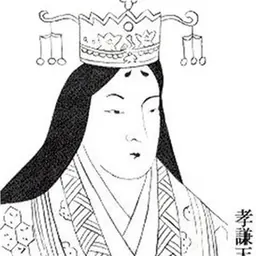
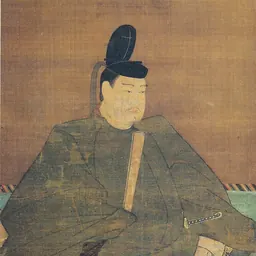
Related people
Same field, nearest in time


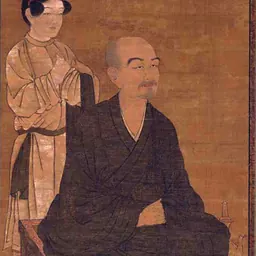
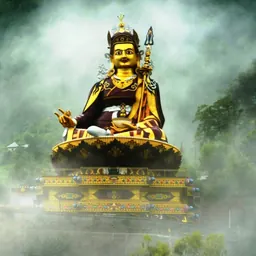

Contemporaries
People whose lives overlapped Junnin's




Frequently asked questions
Who was Junnin?
Emperor of Japan
When was Junnin born?
Junnin was born in 733.
When did Junnin die?
Junnin died on 10 November 765 in Awaji Province.
What was Junnin's occupation?
Junnin was a buddhist monk.
What nationality was Junnin?
Junnin was Japanese.
Sources & further reading
Cite this page
APA: Biography.guide. (2026). Junnin. https://biography.guide/junnin/
MLA: "Junnin." Biography.guide, https://biography.guide/junnin/.
Chicago: "Junnin." Biography.guide. https://biography.guide/junnin/.
Data last updated: 2026-09-20 · Spot an error? Report a correction.
Page generated 2026-09-27 05:24 UTC