
Julius Jordan
German art historian, archaeologist and architectural historian
About Julius Jordan
Lived 1877 – 1945 (aged 67). Julius Jordan was a German art historian, archaeologist, architectural historian, university teacher and building researcher.
Julius Johann Heinrich Jordan (27 October 1877 – 7 February 1945) was a German archaeologist active in Mesopotamia before and after the First World War.
In the 1930s he was the Director of the Baghdad Antiquities Museum.
Early life Born in Cassel in 1877, Jordan was educated at the Wilhelm-Gymnasium there, then in the spring of 1896 was admitted to the structural engineering department of the TU Dresden to study architecture. In Dresden he became a member of a group known as the Erato singers. His most important teacher was Cornelius Gurlitt, and Jordan also found a life-changing friendship with an older student, Walter Andrae. After graduating from this course around 1902, Jordan worked as a government construction manager in Chemnitz.
Career In 1904, with the help of Andrae, Jordan joined the German excavations at Assur, working there for eight years, and he also became a pupil of Robert Koldewey (1855–1925), who was working on the Hanging Gardens of Babylon. In 1910 Jordan received a doctorate, supervised by Cornelius Gurlitt in Dresden, with a dissertation entitled "Construction Elements of Assyrian Monumental Buildings" (Konstruktionselemente assyrischer Monumentalbauten).
Between 14 November 1912 and 12 May 1913, a German Oriental Society team led by Jordan, assisted by Conrad Preusser, began the first systematic excavations at Uruk. In that first season, he focused work on the two main temple complexes, known as the Eanna and the Rêś.
During the First World War, Jordan worked in an architectural office in Munich. He could not return to his archaeological interests in Mesopotamia, now Mandatory Iraq under British control, until 1926. From 1928 to 1931 he excavated again at Uruk, then from 1931 to 1939 worked for the museum service of the newly independent Kingdom of Iraq as director of the Baghdad Antiquities Museum. During the Second World War he was a consultant at the German Archaeological Institute and a visiting professor of architectural history at Technische Universität Berlin.
He was buried in the Stahnsdorf South-Western Cemetery.
Selected publications Julius Jordan, Uruk-Warka (51. Wissenschaftliche Veröffentlichung der Deutschen Orient-Gesellschaft, 1928) Julius Jordan, "Vorläufiger Bericht über die von der Notgemeinschaft der Deutschen Wissenschaft in Uruk-Warka unternommenen Ausgrabungen" in Abhandlungen der Preußischen Akademie der Wissenschaften, 1929, 1930, and 1931 Julius Jordan, Die Ausgrabungen der Notgemeinschaft der Deutschen Wissenschaft in Uruk-Warka 1930/1931 (1933) Julius Jordan, A Guide through the Ruins of Babylon and Borsippa (Baghdad, 1937) Julius Jordan, Der nahe Osten (Stuttgart, 1942) Julius Jordan, Leistungen und Aufgaben der deutschen Ausgrabungen im Vorderen Orient (Leipzig: Harrassowitz, 1944)
Don’t just read it —
keep it.
Full-length biographies made to live with: read them, listen on the way to work, watch them tonight.
- E-book
- Audio
- Video
Instant download · yours to keep · every purchase keeps this site free
Important facts
People in Julius Jordan's life
Named in this biography and alive at the same time

Related people
Same field, nearest in time

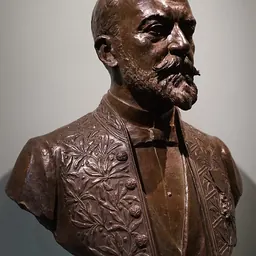

Contemporaries
People whose lives overlapped Julius Jordan's


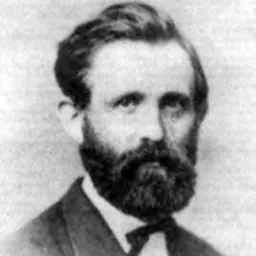

Frequently asked questions
Who was Julius Jordan?
German art historian, archaeologist and architectural historian (1877-1945)
When was Julius Jordan born?
Julius Jordan was born on 27 October 1877 in Kassel.
When did Julius Jordan die?
Julius Jordan died on 2 February 1945 in Berlin.
What was Julius Jordan's occupation?
Julius Jordan was an art historian, archaeologist, architectural historian, university teacher and building researcher.
What nationality was Julius Jordan?
Julius Jordan was German.
Sources & further reading
Cite this page
APA: Biography.guide. (2026). Julius Jordan. https://biography.guide/julius-jordan/
MLA: "Julius Jordan." Biography.guide, https://biography.guide/julius-jordan/.
Chicago: "Julius Jordan." Biography.guide. https://biography.guide/julius-jordan/.
Data last updated: 2026-09-20 · Spot an error? Report a correction.
Page generated 2026-09-27 04:58 UTC