
About Julius Drewe
Lived 1856 – 1931 (aged 75). Julius Drewe was a British entrepreneur and art collector, known for Home and Colonial Stores.
Arms of Drewe of Castle Drogo: Ermine, a lion passant per pale gules and or in chief three ears of wheat stalked and bladed of the last. This is a differenced version of the arms of Drewe of The Grange, Broadhembury (Ermine, a lion passant gules), from which family Julius Drewe claimed descent Julius Charles Drewe (or Julius Drew; 4 April 1856 – 20 November 1931) was an English businessman, retailer and entrepreneur who founded Home and Colonial Stores, and who ordered the building of Castle Drogo in Devon.
Origins Julius Charles Drew (he changed the spelling to Drewe in 1913) was born at the vicarage in Pulloxhill near Ampthill in Bedfordshire, the son of Rev. George Smith Drew (1819–1880), Rector of Avington, Winchester, by his wife Mary Peek, the eldest child of William Peek of Loddiswell, Devon and first cousin of Sir Henry William Peek, 1st Baronet (1825–1898) of Rousdon, Devon. In 1883 he moved to London to expand his enterprises. The business developed rapidly under the name of Home and Colonial Stores. After only six years, in 1889, he and his partner, John Musker, were able to retire from active participation in the firm as extremely rich men. Drew was only thirty-two years old. In 1919 they sold their shares in the business for £3.5 million, then a huge sum (estimated at £193 million today).
In 1898 he bought Wadhurst Park in East Sussex. Furthermore, the genealogist also produced an "authenticated descent" was lord of the manor of Teignton, later Drew's Teignton. However, by 1242 the manor of Teignton had passed from the Dru/Drogo family and was held by the Daubernon (or Dabernon) family. The manufactured pedigree suggested furthermore that Julius was also descended from the royal House of York through Edmund of Langley, 1st Duke of York's marriage to Isabella of Castile, Duchess of York. Having been told all this, in 1901 he bought the estate of Broadhembury House in the parish of Broadhembury and installed in it his elder brother William Drewe (d.1938), a wealthy barrister of the Inner Temple, who died there on 25 March 1938.
Castle Drogo
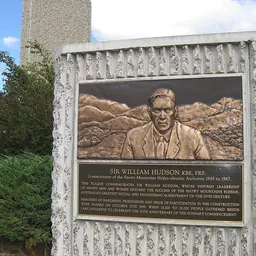
Julius's first cousin was Richard Peek, the rector of Drewsteignton (named after Drogo de Teigne, alleged forefather of the Drewes). Julius stayed on several occasions with his cousin and it must have been here that he conceived the idea of building a castle on the home ground of his ancestor. He found an ideal site, and in 1910 he bought about south and west of the village; by the time of his death he had bought up an estate of 1,500 acres. He then went to Edwin Lutyens, a prominent architect of the time, and asked him to build his castle. According to his son Basil, he did so on the advice of William Hudson, proprietor of Country Life, who was both a patron and a champion of Lutyens. Drewe was now 54 years old, but he still had time, energy and money to create his new family seat. On 4 April 1911, Drewe's 55th birthday, the first foundation stone was laid.
The castle took many years to complete, with the First World War and the economic downturn causing many delays. Castle Drogo was finally completed in 1930, a year before Julius died. Castle Drogo was the last castle to be built in England, and probably the last private house in the country to be built entirely of granite. It is now a Grade I listed building.
Marriage and progeny On 26 September 1890 Julius married Frances Richardson (d.1954), younger daughter of Thomas Richardson of Buxton, Derbyshire, Cedric Drewe (1896–1971), MP, 3rd and youngest son, of Broadhembury House, He inherited the Broadhembury properties after Julius's death. Mary Drewe Frances Drewe.
Death and succession Julius Drewe died on 10 November 1931 and was buried at Drewsteignton. His widow Frances and his eldest surviving son Basil Drewe continued to live in the castle. Frances Drewe died in 1954 and Basil was then joined at Drogo by his son Anthony Drewe and his wife. In 1974, Anthony Drewe and his son, Dr Christopher Drewe, gave Castle Drogo, of the surrounding estate, Whiddon Farm, several cottages in Drewsteignton and a financial dowry to the National Trust. It was the first property built in the 20th-century acquired by the charity.
Don’t just read it —
keep it.
Full-length biographies made to live with: read them, listen on the way to work, watch them tonight.
- E-book
- Audio
- Video
Instant download · yours to keep · every purchase keeps this site free
Important facts
Family & relationships
People in Julius Drewe's life
Named in this biography and alive at the same time



Related people
Same field, nearest in time



Contemporaries
People whose lives overlapped Julius Drewe's





Frequently asked questions
Who was Julius Drewe?
British businessman (1856-1931)
When was Julius Drewe born?
Julius Drewe was born on 4 April 1856 in Pulloxhill.
When did Julius Drewe die?
Julius Drewe died on 26 September 1931 in Drewsteignton.
What was Julius Drewe's occupation?
Julius Drewe was an entrepreneur and art collector.
What was Julius Drewe known for?
Julius Drewe was known for Home and Colonial Stores.
What nationality was Julius Drewe?
Julius Drewe was British.
Sources & further reading
Cite this page
APA: Biography.guide. (2026). Julius Drewe. https://biography.guide/julius-drewe/
MLA: "Julius Drewe." Biography.guide, https://biography.guide/julius-drewe/.
Chicago: "Julius Drewe." Biography.guide. https://biography.guide/julius-drewe/.
Data last updated: 2026-09-22 · Spot an error? Report a correction.
Page generated 2026-09-27 05:25 UTC