
Julien Offray de La Mettrie
French physician and philosopher
About Julien Offray de La Mettrie
Lived 1709 – 1751 (aged 41). Julien Offray de La Mettrie was a French philosopher, physician, non-fiction writer and writer.
Julien Offray de La Mettrie (; 23 November 1709 – 11 November 1751) was a French physician and philosopher, and one of the earliest of the French materialists of the Enlightenment. He is best known for his 1747 work L'homme machine (Man a Machine).
La Mettrie is most remembered for taking the position that humans are complex animals and no more have souls than other animals do. He considered that the mind is part of the body and that life should be lived so as to produce pleasure (hedonism). His views were so controversial that he had to flee France and settle in Berlin.
Early life La Mettrie was born at Saint-Malo in the Province of Brittany on November 23, 1709, and was the son of a prosperous textile merchant. His initial schooling took place in the colleges of Coutances and Caen. After attending the Collège du Plessis in Paris, he seemed to have acquired a vocational interest in becoming a clergyman, but after studying theology in the Jansenist schools for some years, his interests turned away from the Church. In 1725, La Mettrie entered the College d'Harcourt to study philosophy and natural science, probably graduating around 1728. At this time, D'Harcourt was pioneering the teaching of Cartesianism in France. In 1734, he went on to study under Hermann Boerhaave, a renowned physician who, similarly, had originally intended on becoming a clergyman. It was under Boerhaave that La Mettrie was influenced to try to bring changes to medical education in France.
Medical career After his studies at D'Harcourt, La Mettrie decided to take up the profession of medicine. A friend of the La Mettrie family, François-Joseph Hunauld, who was about to take the chair of anatomy at the Jardin du Roi, seems to have influenced him in this decision. For five years, La Mettrie studied at faculty of medicine in Paris, and enjoyed the mentorship of Hunauld. There he developed his doctrines still more boldly and completely in L'Homme machine, a hastily written treatise based upon consistently materialistic and quasi-atheistic principles.
Pierre Louis Maupertuis, also a native of Saint-Malo, helped La Mettrie find refuge in Prussia.
The ethical implications of these principles would later be worked out in his Discours sur le bonheur; La Mettrie considered it his magnum opus. Here he developed his theory of remorse, i.e. his view about the inauspicious effects of the feelings of guilt acquired at early age during the process of enculturation. This was the idea which brought him the enmity of virtually all thinkers of the French Enlightenment, and a damnatio memoriae which was lifted only a century later by Friedrich Albert Lange in his Geschichte des Materialismus.
Philosophy Julien de La Mettrie is considered one of the most influential determinists of the eighteenth century. He believed that mental processes were caused by the body. He expressed these thoughts in his most important work Man a Machine. There he also expressed his belief that humans worked like a machine. This theory can be considered to build off the work of Descartes and his approach to the human body working as a machine. La Mettrie believed that man, body and mind, worked like a machine. Although he helped further Descartes' view of mechanization in explaining human bodily behavior, he argued against Descartes' dualistic view on the mind. His opinions were so strong that he stated that Descartes was actually a materialist in regards to the mind.
The philosopher David Skrbina considers La Mettrie an adherent of "vitalistic materialism":
Man and the animal Prior to Man a Machine he published The Natural History of the Soul in 1745. He argued that humans were just complex animals. He later built on that idea: he claimed that humans and animals were composed of organized matter. He believed that humans and animals were only different in regards to the complexity that matter was organized. He compared the differences between man and animal to those of high quality pendulum clocks and watches stating: "[Man] is to the ape, and to the most intelligent animals, as the planetary pendulum of Huygens is to a watch of Julien Le Roy". While he did recognize that only humans spoke a language, he thought that animals were capable of learning a language. He used apes as an example, stating that if they were trained they would be "perfect [men]".
Some of the evidence La Mettrie presented was disregarded due to the nature of it. He argued that events such as a beheaded chicken running around, or a recently removed heart of an animal still working, proved the connection between the brain and the body. While theories did build off La Mettrie's, his works were not necessarily scientific. Rather, his writings were controversial and defiant.
Human nature He further expressed his radical beliefs by asserting himself as a determinist, dismissing the use of judges. In a letter to his sister, Frederick described him as a good devil and medic but a very bad author. He was survived by his wife and a 5-year-old daughter.
La Mettrie's collected Œuvres philosophiques appeared after his death in several editions, published in London, Berlin and Amsterdam.
Works Selected works Histoire Naturelle de l'Âme. 1745 (anon.) École de la Volupté. 1746, 1747 (anon.) Politique du Médecin de Machiavel. 1746 (anon.) L'Homme Machine. 1748 (anon.) L'Homme Plante. 1748 (anon.) Ouvrage de Pénélope ou Machiavel en Médecine. 1748 (pseudonym: Aletheius Demetrius) Discours sur le bonheur ou Anti-Sénèque [Traité de la vie heureuse, par Sénèque, avec un Discours du traducteur sur le même sujet]. 1748 (anon.) L'Homme plus que Machine. 1748 (anon.) Système d'Épicure. 1750 (anon.) L'Art de Jouir. 1751 (anon.)
Collected works Œuvres philosophiques, 2 vols., Paris: Fayard 1984, 1987 ; [vol. 3] Ouvrage de Pénélope ou Machiavel en Médecine, Paris: Fayard 2002 Œuvres philosophiques, 1 vol., Paris: Coda 2004
Critical editions of his major works Aram Vartanian (ed.): La Mettrie's L'homme machine. A Study in the Origins of an Idea, (Princeton: Princeton University Press, 1960) John F. Falvey (ed.): La Mettrie. Discours sur le bonheur in Studies on Voltaire and the Eighteenth Century, vol. cxxxiv (Banbury, Oxfordshire: The Voltaire Foundation, 1975) Ann Thomson (ed.): La Mettrie's Discours préliminaire. in Materialism and Society in the Mid-Eighteenth Century (Genève: Librairie Droz, 1981) Théo Verbeek (Ed.): Le Traité de l'Ame de La Mettrie, 2 vols. (Utrecht: OMI-Grafisch Bedrijf, 1988)
Don’t just read it —
keep it.
Full-length biographies made to live with: read them, listen on the way to work, watch them tonight.
- E-book
- Audio
- Video
Instant download · yours to keep · every purchase keeps this site free
Important facts
People in Julien Offray de La Mettrie's life
Named in this biography and alive at the same time

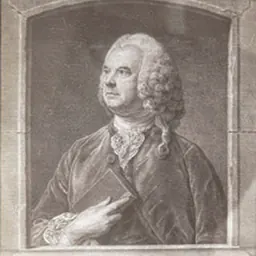
Related people
Same field, nearest in time




Contemporaries
People whose lives overlapped Julien Offray de La Mettrie's

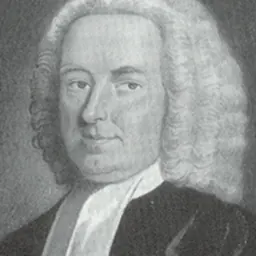



Frequently asked questions
Who was Julien Offray de La Mettrie?
French physician and philosopher (1709–1751)
When was Julien Offray de La Mettrie born?
Julien Offray de La Mettrie was born on 12 December 1709 in Saint-Malo.
When did Julien Offray de La Mettrie die?
Julien Offray de La Mettrie died on 11 November 1751 in Potsdam.
What was Julien Offray de La Mettrie's occupation?
Julien Offray de La Mettrie was a philosopher, physician, non-fiction writer and writer.
What nationality was Julien Offray de La Mettrie?
Julien Offray de La Mettrie was French.
Sources & further reading
· Wikipedia: Julien Offray de La Mettrie
· DBpedia: Julien Offray de La Mettrie
Cite this page
APA: Biography.guide. (2026). Julien Offray de La Mettrie. https://biography.guide/julien-offray-de-la-mettrie/
MLA: "Julien Offray de La Mettrie." Biography.guide, https://biography.guide/julien-offray-de-la-mettrie/.
Chicago: "Julien Offray de La Mettrie." Biography.guide. https://biography.guide/julien-offray-de-la-mettrie/.
Data last updated: 2026-09-24 · Spot an error? Report a correction.
Page generated 2026-09-27 05:05 UTC