
About Julián Besteiro
Lived 1870 – 1940 (aged 70). Julián Besteiro was a Spanish philosopher, trade unionist, politician, secondary school teacher and professor.
Julián Besteiro Fernández (, 21 September 1870 – 27 September 1940) was a Spanish socialist politician, elected to the and in 1931 as Speaker of the Constituent Cortes of the Spanish Republic. He also was elected several times to the town council of Madrid. During the same period, he was a university professor of philosophy and logic, and dean of the department at the Complutense University of Madrid. As the leader of the moderate wing of the Spanish Socialist Workers' Party (PSOE), he unsuccessfully tried to reach an agreement with the nationalist faction during the last year of the Civil War. After the defeat, he was imprisoned and died in jail.
Early life
Born in Madrid, he was educated in the Institución Libre de Enseñanza, and studied in the Faculty of Philosophy and Letters at the Complutense University of Madrid, as well as at the University of Paris in 1896, the Ludwig-Maximilians-Universität München, the Friedrich Wilhelm University of Berlin, and Leipzig University from 1909 to 1910. In 1908, he joined the Partido Radical (Radical Party) established by Alejandro Lerroux.
A member of the Republican Union, he was elected municipal councillor of Toledo on 8 November 1903.
He became a member of the Agrupación Socialista Madrileña (the socialist circle in Madrid) in 1912. That year he was offered the Chair of Fundamental Logic in the Faculty of Philosophy and Letters at the Complutense University of Madrid. Soon after, Besteiro became a member of Unión General de Trabajadores (UGT) trade union, and of the Spanish Socialist Workers' Party (PSOE). In 1913 he married Dolores Cebrián, a professor of physics and natural science at the teachers' training college in Toledo.
In 1917, after the general strike, Besteiro was among many members of the strike committee tried in Madrid; he was convicted and sentenced to life imprisonment. Following his release under the amnesty campaign, he was elected as a member of the town council of Madrid. Bestiero had also opposed the participation of UGT in the 15 December 1930 general strike. At a joint meeting of the PSOE and UGT in February 1931, Besteiro resigned as President of both the party and the union. (Note: Paul Preston writes that Besteiro resigned as president of the union in 1934. )
In 1931, he was elected a councillor of the Madrid town council.
Second Spanish Republic and the Civil War
Still serving in the after the establishment of the Second Spanish Republic in 1931, Besteiro was elected Speaker of the Constituent Cortes, empowered to draft a new constitution. The Cabinet offered him first the job of state delegate to CAMPSA, the state petrol monopoly, and then the post of Ambassador to France, both of which he rejected. During his period as President of the Cortes, he seemed to become more conservative in his political views. In January 1934, he resigned as President of the UGT.
Opposing the radicalization of the Socialist movement, In February 1936, Besteiro won the highest number of votes of any candidate in Madrid in the Popular Front elections.
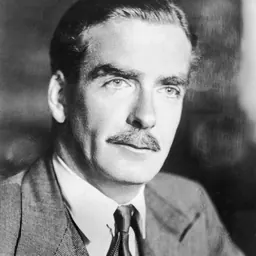
Throughout this period, Besteiro had continued to work at the Complutense University of Madrid as a Dean of the Faculty of Philosophy and Letters, as well as to carry out his duties as a parliamentary deputy and councillor of the town council in Madrid. After the Spanish Civil War broke out in 1936, and against the urgings of friends, he refused to leave Madrid and seek exile. Besteiro believed it was to be a peace mission. There he met with Sir Anthony Eden to seek British aid in ending the war, which had attracted German and Russian support of the opposing sides, but no significant results followed. After the failure of his mission in London, Besteiro returned to work on the town council of Madrid but withdrew from other official public life. He stopped attending the Agrupación Socialista Madrileña and the parliamentary group meetings.
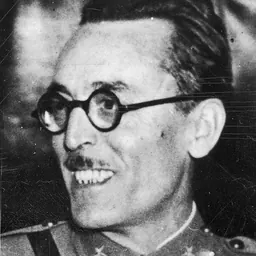
With the news of the fall of Barcelona on 26 January 1939 and Azaña's resignation as President of the Republic, Besteiro decided to work to achieve peace and stop the resistance. He contacted Colonel Segismundo Casado. On 5 March Besteiro announced the creation of the National Defence Council (Consejo Nacional de Defensa). The uprising against the government of Juan Negrín and its Communist Party of Spain allies succeeded, at the cost of nearly 2,000 lives.
Death After the fall of Madrid to the Nationalists on 28 March 1939, Besteiro was arrested by Francoist forces. On 8 July he faced a court martial and was sentenced to thirty years. He was imprisoned first in the Trappist monastery in Dueñas, Palencia, until the end of August 1939. He was transferred to the prison of Carmona, Andalusia. He died in prison the following year.
Besteiro was buried in the Cementerio Civil of Madrid.
Don’t just read it —
keep it.
Full-length biographies made to live with: read them, listen on the way to work, watch them tonight.
- E-book
- Audio
- Video
Instant download · yours to keep · every purchase keeps this site free
Important facts
People in Julián Besteiro's life
Named in this biography and alive at the same time

Related people
Same field, nearest in time



Contemporaries
People whose lives overlapped Julián Besteiro's



Frequently asked questions
Who was Julián Besteiro?
Spanish academic and politician (1870–1940)
When was Julián Besteiro born?
Julián Besteiro was born on 21 September 1870 in Madrid, costanilla de Santiago.
When did Julián Besteiro die?
Julián Besteiro died on 27 September 1940 in Carmona.
What was Julián Besteiro's occupation?
Julián Besteiro was a philosopher, trade unionist, politician, secondary school teacher and professor.
What nationality was Julián Besteiro?
Julián Besteiro was Spanish.
Sources & further reading
Cite this page
APA: Biography.guide. (2026). Julián Besteiro. https://biography.guide/julian-besteiro/
MLA: "Julián Besteiro." Biography.guide, https://biography.guide/julian-besteiro/.
Chicago: "Julián Besteiro." Biography.guide. https://biography.guide/julian-besteiro/.
Data last updated: 2026-09-20 · Spot an error? Report a correction.
Page generated 2026-09-27 05:32 UTC