
About Julia Grant
Lived 1826 – 1902 (aged 76). Julia Grant was an American politician.
Julia Boggs Grant (née Dent; January 26, 1826 – December 14, 1902) was the First lady of the United States and wife of President Ulysses S. Grant.
As first lady, she became the first woman in the position to write a memoir. Her memoirs, The Personal Memoirs of Julia Dent Grant, were posthumously published in 1975.
Early life and education Julia Boggs Dent was born on January 26, 1826, at White Haven plantation west of St. Louis, Missouri. Her parents were Frederick Dent (1787–1873), a planter and merchant, and Ellen Wrenshall Dent.
She grew up on her family's plantation, White Haven, where her father, Frederick Dent, provided a financially comfortable household. Dent's upbringing shielded her from hardship, she later recalled that life at White Haven, including family's enslaved laborers, were similar to her own. Grant was described as shy, sheltered, and largely removed from political life or the world beyond her family’s social circle. Descriptions portray her with limited exposure to household management or public life.
Grant, a distant maternal relative to Confederate general James Longstreet, was the fifth of eight children.
Around 1831–1836, Julia attended the Gravois School, a co-educational one-room schoolhouse in St. Louis.
Grant was self-conscious about her eye condition. As her public role increased, she wanted to correct her eye with surgery, but physicians considered her too old to perform the operation. According to accounts, she found comfort from her husband who told her that he admires her eyes as they were.
Because her strabismus was never corrected, Grant almost always posed in profile for portraits.
Engagement and marriage to Grant While a student at West Point, New York, Fred Dent wrote to his sister Julia about how impressed he was with a fellow student, Ulysses S. Grant: "I want you to know him, he is pure gold."
Following their marriage, Grant adjusted to life as a military wife, often managing household responsibilities on her own while her husband was away on duty. Having grown up with slaves, she struggled with running a home. When the American Civil War broke out, her father remained a Democrat and supporter of the Confederacy, while Grant supported the Union, aligning herself to her husband's allegiance. At one point, during a stay with a Tennessee family, Grant was accused of Confederate sympathies because of her background and her home state of Missouri. She reportedly replied, “I am the most loyal of the loyal."
Throughout the war, she frequently visited Ulysses at his military camps, providing companionship and emotional support. She would travel regularly from camps, White Haven, and homes of relatives, leading to historians to remark that her "home" was wherever her husband was. Soldiers came to know her presence at camp, at times crediting for her attentiveness to her husband's well-being and often cared for him during periods of illness, including his recurring headaches. She served as mediator for Ulysses and the soldiers. Grant visited military hospitals while Ulysses was away from camp and would pass along messages and requests from the wounded soldiers to her husband.
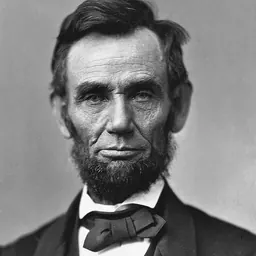
President Abraham Lincoln invited the Grants to events. First Lady Mary Todd Lincoln extended a request to Grant for a public greeting together. Grant declined the request, reportedly due to her shyness. The refusal reportedly created tension between the two and future interactions were described as strained, with Mary showed hostility toward Grant.
She expressed strong personal belief in premonitions and often stated that she believed her husband was destined for greatness. Her premonitions became real as Ulysses S. Grant rose to the rank of General of the Army, led the Union to victory, and was later elected President of the United States.
Following the war's conclusion, Grant stated that she missed the energy and sense of purpose she experienced during the conflict. Her experience as a military wife contributed to her managing the family's finances after the war. She conducted her own research in order to purchase a home, which she refused to sell when Ulysses insisted. She cited legal protections for married women that property could not be sold without her consent.
The Grants were invited to attend Ford's Theatre but chose instead to travel to their new home. In her memoirs, Julia Grant wrote that she found the man who delivered the invitation as untrustworthy and tension between Mary Todd Lincoln and herself may have influenced her decision. Some historians have speculated these factors contributed to the couple's absence on the night of President Abraham Lincoln's assassination.
Family and children
The Grants had three sons and a daughter: Frederick Dent Grant (1850–1912)soldier, public official Ulysses Simpson Grant Jr. known as "Buck" (1852–1929)lawyer Ellen Wrenshall Grant known as "Nellie" (1855–1922)homemaker Jesse Root Grant (1858–1934)engineer
First Lady of the United States (1869–1877)
Grant often referred to her time in the White House as the "happiest period" of her life. Initially, Grant insisted on the family continuing to reside in their own Washington home before eventually relenting to adhere to tradition.
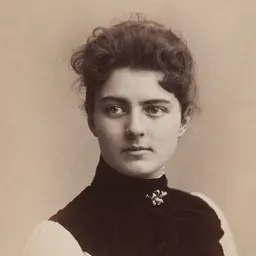
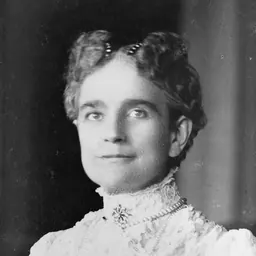
She implemented changes to staff expectations, including dress codes and rules that did not allow eating or smoking while on duty. Her approach would be noted as influential on the management on government society and contributed for American domesticity. Grant is noted as the first presidential wife to receive national attention, resulting in her children becoming press favorites. After leaving the White House, she also became the first president's wife to write an autobiography for publication. To prepare for First Daughter Nellie Grant's wedding, the Grants focused their refurbishing on the East Room, including the installation of gas globe chandeliers, which became renowned during the American Gilded Age among the elite. She was close friends with Julia Fish, wife of secretary of state Hamilton Fish. She did not publicly support women's suffrage, but refused to sign an anti-suffrage petition. She became friends with First Ladies Frances Cleveland, Caroline Harrison, Ida Saxton McKinley and Edith Roosevelt. In 1897, she attended the dedication of Grant's monumental tomb overlooking the Hudson River in New York City.
Death
Julia Grant died from a heart and kidney disease on December 14, 1902, in Washington D.C. She was buried in a sarcophagus beside her husband. She had ended her own chronicle of their years together with a firm declaration: "the light of his glorious fame still reaches out to me, falls upon me, and warms me."
Don’t just read it —
keep it.
Full-length biographies made to live with: read them, listen on the way to work, watch them tonight.
- E-book
- Audio
- Video
Instant download · yours to keep · every purchase keeps this site free
Important facts
Family & relationships
People in Julia Grant's life
Named in this biography and alive at the same time



Related people
Same field, nearest in time



Contemporaries
People whose lives overlapped Julia Grant's





Frequently asked questions
Who was Julia Grant?
First Lady of the United States from 1869 to 1877
When was Julia Grant born?
Julia Grant was born on 26 January 1826 in St. Louis.
When did Julia Grant die?
Julia Grant died on 14 December 1902 in Washington, D.C..
What was Julia Grant's occupation?
Julia Grant was a politician.
What nationality was Julia Grant?
Julia Grant was American.
Sources & further reading
Cite this page
APA: Biography.guide. (2026). Julia Grant. https://biography.guide/julia-grant/
MLA: "Julia Grant." Biography.guide, https://biography.guide/julia-grant/.
Chicago: "Julia Grant." Biography.guide. https://biography.guide/julia-grant/.
Data last updated: 2026-09-20 · Spot an error? Report a correction.
Page generated 2026-09-27 05:17 UTC