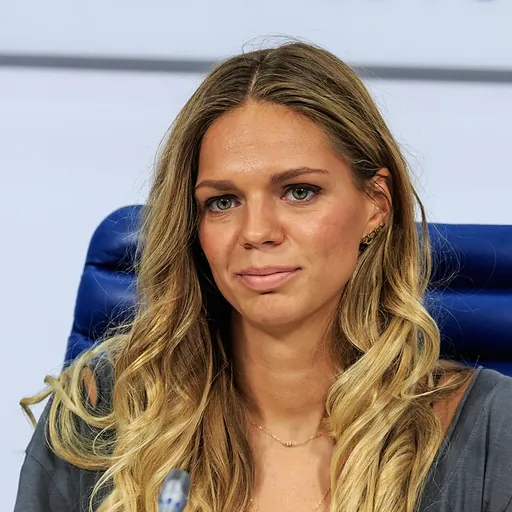
About Julia Efimova
Born 1992. Julia Efimova is a Russian swimmer.
Career 2007–2009: World record at 17 years of age Yefimova's first notable achievement was winning the 50 metre, 100 metre, and 200 metre breaststroke titles at the 2007 European Short Course Swimming Championships. At 15 years of age, she set her first European record and Russian national record in the short course 200 metre breaststroke with her time of 2:19.08 in the final that won her the gold medal in the event. At the 2008 European Aquatics Championships she was the gold medalist in the 200 metre breaststroke and the silver medalist in the 50 metre breaststroke. Yefimova competed at the 2008 Summer Olympics in Beijing when she was 16, placing fourth in the 100 metre breaststroke and fifth in the 200 metre breaststroke. At the 2009 World Aquatics Championships in Rome, Italy, Yefimova won the gold medal in the 50 metre breaststroke in a world record time of 30.09 seconds at 17 years of age.
2010–2013 Yefimova won gold medals at the 2010 European Aquatics Championships in the 50 metre and 100 metre breaststroke events. The following year, at the 2011 World Aquatics Championships, she won the silver medal in the 200 metre breaststroke with a Russian record time of 2:22.22, finishing less than one second behind the gold medalist in the event Rebecca Soni of the United States. In 2012, she earned the bronze medal in the 200 metre breaststroke at the 2012 Summer Olympics with a new European record time of 2:20.92. A year later, at the 2013 World Aquatics Championships in Barcelona, Yefimova triumphed in the 200 metre breaststroke with a time of 2:19.41. In the 50 metre breaststroke prelims heats, she achieved a new world record of 29.78 seconds. She won the finals, finishing first in 29.52 seconds.
Suspension, disqualifications In January 2014, it was announced that Yefimova had failed an out of competition drug test in October 2013. Her positive test was for DHEA, an endogenous steroid hormone banned in professional sports. On 13 May 2014, she was disqualified by FINA for 16 months, from 31 October 2013 to 28 February 2015. She was stripped of her results and medals at the 2013 European Short Course Championships. Her four world short-course records (two relays and the 50 metre and 200 metre breaststroke set in November/December 2013) were also invalidated.
2015 World Aquatics Championships
In August 2015, after 16 months of disqualification due to the positive drug test, Yefimova competed at the World Aquatics Championships in Kazan. She won a gold medal in the 100 metre breaststroke with a time of 1:05.66 that was seven tenths of a second faster than the next fastest swimmer, Rūta Meilutytė of Lithuania. In the 50 metre breaststroke Yefimova won the bronze medal at 30.13 seconds. In the 200 metre breaststroke she placed 17th in the prelims heats with a time of 2:26.11 and did not advance to the semifinals. She also placed fifth in the 4 × 100 metre mixed medley relay, splitting a 1:05.46 for the breaststroke leg of the relay.
2016 Between 15 February and 30 March 2016, Yefimova tested positive for meldonium six times in total. She was provisionally suspended from international competition by the International Swimming Federation (FINA) on 14 March. With no research on how long the drug stayed in a person's system, she was not banned or given a suspension. In June 2016, Yefimova returned to competition at the Los Angeles Invitational, winning the 200 metre breaststroke with a time of 2:22.77.
2016 Summer Olympics
Yefimova was the silver medalist at the 2016 Summer Olympics in the 100 metre breaststroke and 200 metre breaststroke. She also helped set a new Russian national record as part of the 4 × 100 metre medley relay that placed sixth with a time of 3:55.66 in the finals, splitting the fastest breaststroke leg of all finals relays with a time of 1:04.98.
Yefimova's participation in the 2016 Summer Olympics was controversial due to doping within the Russian Olympic team. She was initially banned from participation due to her previous doping suspension, but this ban was overturned by the Court of Arbitration for Sport, allowing her to compete. During the Games, she was booed by spectators during each of her races. Yefimova was also criticized for taking performance-enhancing drugs by other swimmers, including Lilly King, who won the gold medal in the 100 metre breaststroke. Yefimova won the silver, and during the news conference afterwards, she was "on the verge of tears from the opening question about the boos directed at her." After Yefimova won silver in the 100 metre breaststroke, ESPN pushed back directly against her presence at the 2016 Olympic Games, stating "Yulia Efimova shouldn't have been in Rio at all". The treatment of Yefimova was also covered by The Washington Post, which pointed out the asymmetry in how people responded to Yefimova competing at the 2016 Summer Olympics compared to the response when Jessica Hardy of the United States competed at the 2012 Summer Olympics.
2017 At the 2017 New South Wales State Open Championships in March in Sydney, Australia, Yefimova won the 200 metre breaststroke event with a time of 2:28.80. She also won the 100 metre breaststroke with a time of 1:06.55. A month later, she won the 50 metre breaststroke at the 2017 Russian Championships with a time of 29.88 seconds.
2017 World Aquatics Championships
In July, at the 2017 World Aquatics Championships in Budapest, Hungary, Yefimova won the bronze medal in the 100 metre breaststroke in 1:05.05, finishing 0.92 seconds after the gold medalist, Lilly King, and 0.02 seconds after the silver medalist, Katie Meili. Her time of 1:04.36 in the semifinals set a new Russian record in the event. Three days later, she won the 200 metre breaststroke in 2:19.64, which was over two seconds faster than the next fastest swimmer and silver medalist in the event, Bethany Galat, and gave her the fifth World Championships title of her career. In the 4 × 100 metre medley relay, Yefimova won a silver medal and set a new European record and a new national record with her relay teammates in a time of 3:53.58; she split the fastest breaststroke leg out of all finals relays by over four tenths of a second with a time of 1:04.03. In the 200 metre individual medley, Yefimova placed 14th in the semifinals with a time of 2:12.88 and did not qualify for the final.
2018 European Aquatics Championships In August 2018, at the 2018 European Aquatics Championships, held at Tollcross International Swimming Centre in Glasgow, Scotland, Yefimova won the gold medal in the 100 metre breaststroke with a championships record time of 1:05.53 in the final, breaking her own championships record she set in the semifinals at 1:05.87. In the 4 × 100 metre mixed medley relay, Yefimova split a 1:05.07 for the breaststroke leg of the relay, helping achieve a time of 3:42.71 with Kliment Kolesnikov, Svetlana Chimrova, and Vladimir Morozov to win the silver medal and set a new Russian record. Yefimova ranked fourteenth in the prelims heats of the 200 metre individual medley, qualified for the semifinals, and withdrew from competition, forgoing competing in the semifinals. In the 50 metre breaststroke, Yefimova won the gold medal after setting a championships record of 29.66 seconds in the semifinals. Yefimova was one of three swimmers to win four gold medals at the 2018 European Aquatics Championships along with Adam Peaty of Great Britain and Sarah Sjöström of Sweden.
2019 World Aquatics Championships
At the 2019 World Aquatics Championships in Gwangju, South Korea in July, Yefimova won the silver medal in the 100 metre breaststroke, finishing less than six-tenths of a second behind Lilly King of the United States with a time of 1:05.49. In the 200 metre breaststroke, Yefimova won the gold medal and became the first woman to win the 200 metre breaststroke world title at a World Aquatics Championships three times, finishing over two seconds ahead of Tatjana Schoenmaker of South Africa with a time of 2:20.17. Yefimova won the bronze medal in the 50 metre breaststroke, finishing third behind gold medalist Lilly King and silver medalist Benedetta Pilato of Italy in 30.15 seconds.
2020 European Aquatics Championships On 19 May 2021, Yefimova placed fourth in the 100 metre breaststroke at the 2020 European Aquatics Championships held at Danube Arena in Budapest, Hungary. The next day, Yefimova placed fourth as part of the 4 × 100 metre mixed medley relay, swimming the breaststroke leg of the relay and helping to finish in a time of 3:43.60. In the 200 metre breaststroke final on 21 May 2021, Yefimova won the bronze medal with a time of 2:22.16. She won a bronze medal in the 50 metre breaststroke as well, finishing with a 30.22 after gold medalist Benedetta Pilato and silver medalist Ida Hulkko of Finland. In the 4 × 100 metre medley relay, Yefimova won a silver medal, splitting a 1:05.77 for the breaststroke leg of the relay.
2020 Summer Olympics
With her, and all other Russians's, outfit, national song, and cohort name selected by the International Olympic Committee, Yefimova competed in the 2020 Summer Olympic Games for the Russian Olympic Committee.
At the 2020 Summer Olympics in Tokyo, Japan, held in the summer of 2021 due to the COVID-19 pandemic, Yefimova competed in two events. For the preliminary heats of the 100 metre breaststroke, she ranked eighth with a time of 1:06.21 and advanced to the semifinals, where she qualified for the final with a time of 1:06.47 and overall fifth-rank. Her team was seventh in the prelims heats of the 4 × 100 metre medley relay and then placed seventh in the finals relay, as well.
2021 Swimming World Cup Stop 3: Doha
Yefimova competed in the third stop of the short course 2021 FINA Swimming World Cup in Doha, Qatar. She joined the competition at the Doha stop, the third of four stops in the year's World Cup circuit, after deciding not to compete at the first two stops. Yefimova entered to compete in all breaststroke events available to female swimmers at the Doha stop, which were the 50 metre breaststroke, 100 metre breaststroke, and 200 metre breaststroke races.
On the first day of competition, Yefomiva won the gold medal in the final of the 200 metre breaststroke, finishing over one second ahead of the next fastest swimmer with her time of 2:22.19. The next day she backed up her gold medal performance with another, this time winning the gold medal in the 100 metre breaststroke in a time of 1:06.08. In her final race of the Doha World Cup stop on day three, Yefimova won her third gold medal, swimming a time of 30.11 seconds in the final of the 50 metre breaststroke to win the event.
Stop 4: Kazan
In the morning of day one of competition, Yefimova ranked third across all prelims heats in the 200 metre breaststroke with her time of 2:25.54 and qualified for the final in the evening. She finished second in the final with a time of 2:20.49, winning the silver medal in the event. The following morning, on 29 October, Yefimova advanced to the final ranked second for the 100 metre breaststroke from the prelims heats where she swam a 1:06.24. She dropped almost two seconds off her time from the prelims heats to win the gold medal in the final of the 100 metre breaststroke with a time of 1:04.56 that was one-hundredth of a second faster than the second-place finisher. On the last day of World Cup competition, Yefimova ranked first in the prelims heats of the 50 metre breaststroke with a time of 30.21, two-hundredths of a second ahead of the next-fastest competitor. In the final of the 50 metre breaststroke, she won the silver medal with a time of 29.65 seconds, one-hundredth of a second behind the gold medal winner in the event, Nika Godun. When points were summed across all four World Cup stops, Yefimova ranked tenth in terms of overall score for female competitors, second for female competitors from a country that hosted at least one World Cup stop, and first for female Russian competitors. Her total of six medals, four gold medals and two silver medals, ranked her eighth in total medals won by a female competitor.
2022–2023 Yefimova was impacted by a nationality ban enacted by LEN and implemented on 3 March 2022, which permanently banned all Russians and Belarusians from their competitions, including the 2022 European Aquatics Championships, with no date of re-entry communicated at the time the ban took effect. The second ban for her nationality came from FINA, which barred all Russians and Belarusians from their competitions effective 21 April 2022 and lasting at least through 31 December 2022. For non-FINA events from which she and other Russians were not banned, their times did not count towards world rankings nor world records. In April 2023, World Aquatics (formerly FINA) provided clarity that it had extended its 2022 ban in a back-acting manner, and the sanctions were indefinitely still in effect.
Olympic Games and world championships results
Career best times Long course metres (50 m pool) Event Time Meet Location Date
Don’t just read it —
keep it.
Full-length biographies made to live with: read them, listen on the way to work, watch them tonight.
- E-book
- Audio
- Video
Instant download · yours to keep · every purchase keeps this site free
Important facts
People in Julia Efimova's life
Named in this biography and alive at the same time

Related people
Same field, nearest in time
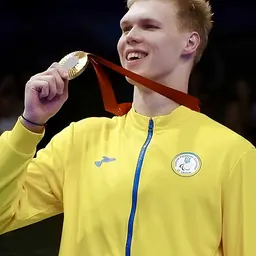
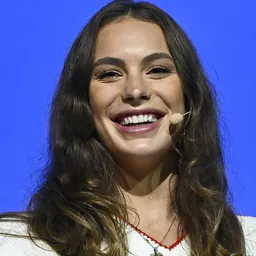


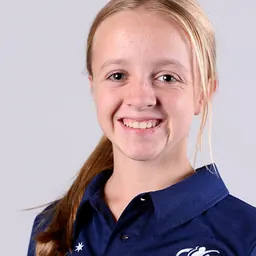
Contemporaries
People whose lives overlapped Julia Efimova's
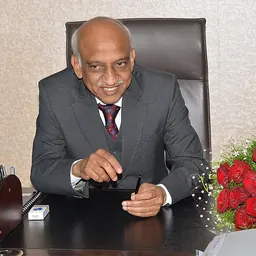




Frequently asked questions
Who is Julia Efimova?
Russian swimmer
When was Julia Efimova born?
Julia Efimova was born on 3 April 1992 in Grozny.
What is Julia Efimova's occupation?
Julia Efimova is a swimmer.
What nationality is Julia Efimova?
Julia Efimova is Russian.
Sources & further reading
Cite this page
APA: Biography.guide. (2026). Julia Efimova. https://biography.guide/julia-efimova/
MLA: "Julia Efimova." Biography.guide, https://biography.guide/julia-efimova/.
Chicago: "Julia Efimova." Biography.guide. https://biography.guide/julia-efimova/.
Data last updated: 2026-09-20 · Spot an error? Report a correction.
Portrait: Wikimedia Commons · author & licence
Page generated 2026-09-27 04:57 UTC