
About Jules Eichorn
Lived 1912 – 2000 (aged 88). Jules Eichorn was an American mountaineer.
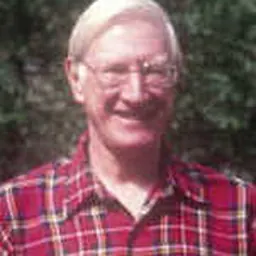
Jules Marquard Eichorn (February 7, 1912 – February 15, 2000) was an American mountaineer, environmentalist, and music teacher.
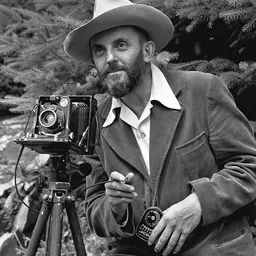
Early years Jules Marquard Eichorn was born in San Francisco on February 7, 1912, to Hilmar and Frieda Eichorn, who were immigrants from Germany. As a youngster, he often hiked on the slopes of Mount Tamalpais in Marin County, California with his parents and siblings. He showed musical talent and began studying violin at a young age. In 1927, he began piano lessons, and his first instructor was Ansel Adams. Eichorn was also Adams's first piano student. That summer, Eichorn joined Adams on the Sierra Club annual High Trip, which included a climb of Alta Peak in Sequoia National Park. That climb sparked the 15-year-old Eichorn's love of mountaineering.
Eichorn worked for Ansel Adams washing photographic prints and hauling photographic equipment in exchange for piano lessons, and their friendship lasted until Adams's death in 1984. After graduating from Lick-Wilmerding High School in San Francisco in 1929, Eichorn traveled to the Teton Range of Wyoming in 1930 for a summer climbing trip.
Mountaineering achievements
On July 6, 1930, during the Sierra Club's annual High Trip, he first teamed up with Glen Dawson to make the third ascent of Red and White Mountain in the Sierra. They continued at a fast pace to climb Mount Abbot, Bear Creek Spire, Mount Dade, Turret Peak, Mount Darwin, The Hermit, Mount McGee, a first ascent of the (later named) Mount Mendel, Mount Goddard, Devils Crags, Mount Woodworth, Middle Palisade, Mount Sill, North Palisade, Polemonium Peak, Mount Winchell and Mount Agassiz. All of these climbs were completed in 24 days. Sierra Club Secretary Will Colby wrote, "Some youthful enthusiasts, including Glen Dawson, Jules Eichorn and John Olmstead, swarmed over everything that looked formidable in the way of a mountain peak."
In 1931, Sierra Club leader Francis P. Farquhar invited Harvard philosophy professor and Appalachian Mountain Club member Robert L. M. Underhill to come to the Sierra Nevada to teach the latest techniques of roped climbing. Underhill had learned these techniques in the Alps, and had used them earlier that summer in the Tetons and the Canadian Rockies. Jules Eichorn was among the first group of Californians who practiced these techniques on Mount Ritter and Banner Peak in the Ritter Range. After the basic course was completed, the more advanced students, including Eichorn, his climbing partner Glen Dawson, Norman Clyde, Lewis Clark, and Bestor Robinson traveled south to the Palisades, the most rugged and alpine part of the Sierra Nevada. There, on August 13, 1931, the party completed the first ascent of the last unclimbed 14,000+ foot peak in California, which remained unnamed due to its remote location above the Palisade Glaciers. After a challenging ascent to the summit, the climbers were caught in an intense lightning storm, and Eichorn barely escaped electrocution when "a thunderbolt whizzed right by my ear". The mountain was named Thunderbolt Peak to commemorate that close call. Underhill called Dawson and Eichorn "young natural-born rock climbers of the first water."
Photo of Jules Eichorn, Norman Clyde, Robert L. M. Underhill and Glen Dawson taken the day after the first ascent of the East Face of Mount Whitney.
Three days later on August 16, Eichorn, Clyde, Underhill and Dawson completed the first ascent of the East Face of Mount Whitney, the highest peak in the contiguous United States. The route was extremely exposed, especially the famous Fresh Air Traverse. Eichorn was just 19 years old. Steve Roper called this route "one of the classic routes of the Sierra, partly because of its spectacular location and partly because it was the first really big wall to be climbed in the range." Porcella & Burns wrote that "the climb heralded a new standard of technical competence in Californian rock climbing . . ." Eichorn's 1931 experiences led to a lifelong friendship with Norman Clyde, who was, by most accounts, California's greatest mountaineer of the first half of the 20th century.
These two classic climbs were among at least 26 first ascents that Eichorn completed in the High Sierra between 1930 and 1952. His other first ascents included the Dragtooth, Finger Peaks, Matthes crest, Eichorn Minaret, Waller Minaret, Clyde Spires, Mt. McGee, Frustration Turret, Pyramidal Pinnacle, and Red Spur. His first ascents of new routes on previously climbed peaks include Matterhorn Peak, Mount Hoffmann, Cathedral Peak, Banner Peak, Michael Minaret, Mount Winchell, Temple Crag, Middle Palisade, the ridge traverse from North Palisade to Starlight Peak, Deerhorn Mountain, Mt. Ericsson, Mount Russell and three routes on the Devil's Crags.
In 1934, Eichorn, Robinson and Dick Leonard of the Cragmont Climbing Club assembled the most advanced set of climbing gear then in use in North America, much of which they had obtained from Germany, and successfully climbed Higher Cathedral Spire in Yosemite Valley. This was the first major technical ascent in the valley that later became a mecca of rock climbing.
Eichorn died in his sleep at his home in Redwood City, California on February 15, 2000, eight days after his 88th birthday.
Legacy
Two Sierra Nevada peaks are named after Jules Eichorn. Eichorn Pinnacle (~10,940 feet) is the spectacular west summit of Cathedral Peak near Tuolumne Meadows in Yosemite National Park. Jules Eichorn climbed this pinnacle in 1931.
Eichorn Minaret (12,255 feet) is one of the Minarets in the Ritter Range, located in the Ansel Adams Wilderness.
The Jules Eichorn Memorial Grove is located in Big Basin Redwoods State Park in Santa Cruz County, California.
Eichorn was the winner of the Sierra Club's Francis P. Farquhar Mountaineering Award for 1972.
His personal slogan was "Music and the mountains; they're the greatest."
Don’t just read it —
keep it.
Full-length biographies made to live with: read them, listen on the way to work, watch them tonight.
- E-book
- Audio
- Video
Instant download · yours to keep · every purchase keeps this site free
Important facts
People in Jules Eichorn's life
Named in this biography and alive at the same time






Related people
Same field, nearest in time


Contemporaries
People whose lives overlapped Jules Eichorn's






Frequently asked questions
Who was Jules Eichorn?
American mountain climber
When was Jules Eichorn born?
Jules Eichorn was born on 7 February 1912.
When did Jules Eichorn die?
Jules Eichorn died on 15 February 2000.
What was Jules Eichorn's occupation?
Jules Eichorn was a mountaineer.
What nationality was Jules Eichorn?
Jules Eichorn was American.
Sources & further reading
Cite this page
APA: Biography.guide. (2026). Jules Eichorn. https://biography.guide/jules-eichorn/
MLA: "Jules Eichorn." Biography.guide, https://biography.guide/jules-eichorn/.
Chicago: "Jules Eichorn." Biography.guide. https://biography.guide/jules-eichorn/.
Data last updated: 2026-09-20 · Spot an error? Report a correction.
Page generated 2026-09-27 05:17 UTC