
About Jules Brunet
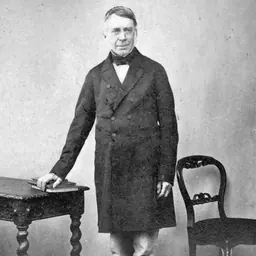
Lived 1838 – 1911 (aged 73). Jules Brunet was a French military officer and military personnel.
Jules Brunet (2 January 1838 – 12 August 1911) was a French military officer who served the Tokugawa shogunate during the Boshin War in Japan. Originally sent to Japan as a horse artillery instructor with the French military mission of 1867, he refused to leave the country after the shōgun was defeated, and played a leading role in the separatist Republic of Ezo and its fight against forces of the Meiji Restoration. After the rebellion's defeat, he returned to France, fought in the Franco-Prussian War (1870-1871), later reached the rank of general of division, and worked for the Ministry of War.
Jules Brunet was an inspiration for the character played by Tom Cruise in the 2003 film The Last Samurai.
Early life and career Brunet was born on 2 January 1838 in Belfort, in the region of Bourgogne-Franche-Comté, in eastern France. He was the son of Jean-Michel Brunet, a veterinary doctor in the army, and his wife Louise-Adine Rocher. In 1855, he began his military education after being admitted to Saint-Cyr, which he left two years later to enter the École Polytechnique. Graduating 68th of 120 in his class, Brunet joined the horse artillery, and finished his education at the school of artillery of Metz, where he excelled in his studies and graduated in fourth place in his course, in 1861.
Shortly after graduating, Brunet was sent to serve in the French invasion of Mexico. in the horse artillery regiment of the Imperial Guard, he served with distinction throughout the war, particularly during the Siege of Puebla in 1863, for which he was awarded by Emperor Napoleon III with the Cross of the Légion d'honneur.
"A revolution is forcing the Military Mission to return to France. Alone I stay, alone I wish to continue, under new conditions: the results obtained by the Mission, together with the Party of the North, which is the party favorable to France in Japan. Soon a reaction will take place, and the Daimyos of the North have offered me to be its soul. I have accepted, because with the help of one thousand Japanese officers and non-commissioned officers, our students, I can direct the 50,000 men of the Confederation [...]".
On 4 October, the day of his resignation, Brunet left the French headquarters in Yokohama under the pretext of going to visit the Franco-Japanese arsenal in Yokosuka. Instead, he went to the Shogunate's fleet anchored off Shinagawa, in Tokyo Bay, where he joined André Cazeneuve, a fellow countryman who remained loyal to the Shogun. There they quickly captured the port city of Hakodate, on 26 October 1868, and by the end of the year Enomoto and his allies had proclaimed the independent Republic of Ezo. Brunet became the de facto Minister of Foreign Affairs of the Ezo government. He invited foreign diplomats and handled opening negotiations with foreign powers, as the Ezo state sought international recognition, and was responsible for drafting French-language announcements to his fellow officers fighting in the rebellion. Brunet then returned to France. The new Japanese government requested that Brunet be punished for his activities in the Boshin War, but his actions had won popular support in France and the request was denied.
On his return to Japan, he was presented with three Japanese swords by Yoshinobu Tokugawa.
After receiving a light sentence in his country He was taken prisoner at the Siege of Metz. and later that year was made an officer of the Légion d'honneur and assigned as aide de camp to the Minister of War, Ernest Courtot de Cissey.
In 1879, Brunet received the promotion to chef d'escadron and was appointed military attaché to Rome.
In January 1903, Brunet retired into the army reserve. After a long period of illness he died in Fontenay-sous-Bois, on 13 August 1911.
Rehabilitation in Japan Brunet's former ally, Admiral Enomoto, joined the Imperial government and became Minister of the Imperial Japanese Navy. Through Enomoto's influence, the Imperial government not only forgave Brunet's actions but awarded him medals in May 1881 and again in March 1885, among those the Order of the Rising Sun. The medals were presented at the Japanese Embassy in Paris. In 1895 Brunet was made a Grand Officer of the Order of the Sacred Treasure.
Brunet also appears as a character in the 2024 video game Rise of the Ronin, where he is portrayed as a military advisor to Katsu Kaishu and can fight alongside the player in the Battle of Toba-Fushimi if the player chooses to side with the Shogunate's forces during the conflict.
Drawing and paintings by Brunet Brunet was a talented painter and sketch artist who left numerous depictions of his travels in Mexico and Japan.
Don’t just read it —
keep it.
Full-length biographies made to live with: read them, listen on the way to work, watch them tonight.
- E-book
- Audio
- Video
Instant download · yours to keep · every purchase keeps this site free
Important facts
People in Jules Brunet's life
Named in this biography and alive at the same time


Related people
Same field, nearest in time



Contemporaries
People whose lives overlapped Jules Brunet's

Frequently asked questions
Who was Jules Brunet?
French advisor to Japan (1838–1911)
When was Jules Brunet born?
Jules Brunet was born on 2 January 1838 in Belfort.
When did Jules Brunet die?
Jules Brunet died on 12 August 1911 in Fontenay-sous-Bois.
What was Jules Brunet's occupation?
Jules Brunet was a military officer and military personnel.
What nationality was Jules Brunet?
Jules Brunet was French.
Sources & further reading
Cite this page
APA: Biography.guide. (2026). Jules Brunet. https://biography.guide/jules-brunet/
MLA: "Jules Brunet." Biography.guide, https://biography.guide/jules-brunet/.
Chicago: "Jules Brunet." Biography.guide. https://biography.guide/jules-brunet/.
Data last updated: 2026-09-25 · Spot an error? Report a correction.
Page generated 2026-09-27 05:12 UTC