
Judith C. Waller
American broadcasting pioneer
About Judith C. Waller
Lived 1889 – 1973 (aged 83–84). Judith C. Waller was a pioneer.
Judith Cary Waller (February 19, 1889 – October 28, 1973) was an American broadcasting pioneer. Despite the fact that she knew nothing about radio at the time, she became the first station manager of Chicago radio station WMAQ when it went on the air in 1922. She was one of the first female radio station managers in the United States, along with Eleanor Poehler of WLAG/WCCO in Minneapolis, and Bertha Brainard of WJZ and Vaughn De Leath of WDT in New York City. During her tenure as station manager, Waller was responsible for obtaining broadcast rights for Chicago Cubs home games for WMAQ and for hiring Freeman Gosden and Charles Correll as Amos 'n' Andy after they left WGN radio over syndication rights. Waller tried to interest the CBS radio network in the program with no success. NBC brought the program to its Blue Network three years before its purchase of WMAQ in 1931.
Waller was also responsible for the long-running discussion program University of Chicago Round Table on radio. The program began at WMAQ; it was then heard on the NBC Radio Network for over twenty years. She was also active in various educational programs, having started a children's radio club centered around the educational programs broadcast by WMAQ; there were more than 275,000 children enrolled in the club with more than 100 area schools participating in the program. Waller also began a program at Northwestern University to provide professional training to college students interested in broadcasting as a profession.
She also entered into television work. Waller promoted the idea of a nursery school program for television; it began on WMAQ-TV as Ding Dong School in 1952. Within months, it was picked up by NBC's television network. Waller remained station manager until WMAQ was purchased by the National Broadcasting Company in 1931. She was then appointed director of education and public affairs for NBC's Midwest operations. In 1955, Waller was named as the public affairs representative for the NBC network, a post she held until her retirement from NBC in 1957. While Waller was no longer working at NBC, she did not stop her activities involving media and education. After leaving NBC, she was active in the Midwest Program on Airborne Television Instruction and other projects. Waller died in Evanston, Illinois, on October 28, 1973; she was known to many as "The First Lady of Radio."
Early years and family Judith Cary Waller was born on February 19, 1889, in Oak Park, Illinois. She was the eldest daughter of Doctor John Duke Waller and Katherine Short Waller. Following her 1908 graduation from Oak Park High School, a wealthy aunt gave her the gift of a year in Europe. Though she was expected to make a social debut after her return, Waller enrolled in business college. She was hired for secretarial work after completing her training. Waller settled into work at J. Walter Thompson in Chicago in a new division of the company called the "women's department", eventually spending two years in their New York offices. After her mother's health made her return to Chicago in 1920, Waller found employment at the local offices of the American Red Cross.
While on her trip through Europe, Waller met Walter A. Strong, who was the business manager of the Chicago Daily News. Hoping to work in journalism, she asked Strong for a job. Strong phoned her one evening saying that the Daily News had just bought a radio station; he offered Waller the job of managing it. When she admitted to Strong that she didn't know what a radio station was, his cheerful reply was, "Neither do I. But come on down and we'll find out." Waller was hired in February 1922. She is thought to be the first woman in the United States who was employed in this type of position.
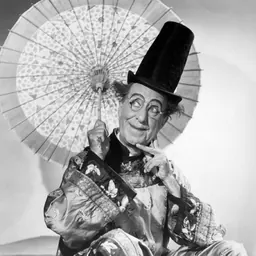
Station management The radio station was WGU and it was jointly owned by the Daily News and a Chicago department store, The Fair. It was assigned a frequency of 833 kilocycles with a transmitter power of about 100 watts. The WGU studios were at The Fair store and the station's transmitter was atop the department store. Waller showed an aptitude for radio programming when she planned the station's inaugural broadcast. Since the other Chicago radio station, KYW, was known for playing jazz, she realized she needed to do something different at WGU to attract an audience. Ed Wynn at WMAQ, October 2, 1922. He spoke the first words heard on the station. Waller asked opera star Sophie Braslau if she would sing for the station's first broadcast. Braslau performed on WGU on April 13, 1922, but it is not known if anyone heard the broadcast. WGU shut down for technical problems the next day; it remained off the air until a new transmitter was obtained. It was back on the air on October 2, 1922, with a 500–watt transmitter and was now operating on 750 kilocycles. New call letters were also applied for and the station was now known as WMAQ.
Waller quickly learned if something needed to be done, it was her job to do it. Looking back on her entry into radio, she remarked with humor, "It was a one-man station and that one man was me." Waller was the one who created rules and policy, who found people to appear on the air, and did the necessary announcing. Because early radio stations had very small budgets and no commercials to create revenue, having guests or performers meant asking them to work without pay.
Even though the station was on the air only one or two hours a day at the time, it was sometimes a challenge to find enough material to fill them. Waller was fortunate enough to get Ed Wynn along with many musicians and vocalists to appear on the station's first broadcast as WMAQ, but there were times when she played the station's drums or the song bells to fill the time. A look at the station's broadcast schedule for October 23, 1923, shows that WMAQ's on-air time had more than doubled; British statesman David Lloyd George was visiting Chicago and the station intended to air two speeches of his that evening. WMAQ also began airing University of Chicago football games from Stagg Field.
Continued growth
WMAQ continued to grow. After moving to the 670 kilocycles frequency, the station shared it with station WQJ until 1927 when the Daily News was able to lease the other station. (The station was jointly owned by the Rainbo Gardens ballroom and the Calumet Baking Powder Company, Gosden and Correll did not renew their contract with WGN because the station was unwilling to grant them syndication rights for their program.)
The asking price for Gosden and Correll and their announcer, Bill Hay, was $25,000 per year, along with their right to syndicate their radio show. Since this was more than WMAQ's annual operating budget, Waller had to consult with Walter Strong at the Daily News. Gosden and Correll performed their act in episode form, similar to a serial film; the exception was that the episodes were heard daily instead of weekly. She felt that the expense for their services was justified and would mean profits for WMAQ in the long run when the program was syndicated. Strong was in agreement; the contracts were signed and Gosden and Correll re-worked some of their act. Since WGN owned the title Sam 'n' Henry, the new radio program was called Amos 'n' Andy and it aired on WMAQ for the first time in March 1928.
The program was a great success both locally and in markets where it was syndicated. Still, Waller felt it should be aired nationally on a network. Since WMAQ was a Columbia Broadcasting System affiliate at the time, she traveled to New York to try to interest the network in broadcasting the show. Years later, Waller recalled that she was told the network already had the Two Black Crows. When she tried to explain that Amos 'n' Andy was not musical but a story told in segments, she was asked if she thought such an act could be heard on the network every weekday. After Waller answered "yes", she was then told to go back to Chicago because she knew nothing about radio. After it had been put into syndication, NBC began monitoring developments regarding the program. The program was signed and made its debut on the Blue Network on August 19, 1929; NBC paid a record $100,000 for the first year of broadcast rights.
Waller also aired the radio anthology Destination Freedom, with scripts written by Richard Durham . That series ran from 1948 to 1950 and was dedicated to retelling the lives of Negros in the United States and Western Hemisphere. From 1950 to 1951 the series was relaunched as an anthology with a Paul Revere narrator using historical events to discuss general concepts of law and democracy. The newspaper began construction of a building which would house the newspaper offices and printing plant as well as the WMAQ studios and offices. When it was completed in 1929; WMAQ shifted its transmitter to a site west of Chicago's Loop in Elmhurst, Illinois, and moved to the Daily News Building.
Later years In 1955, Waller was appointed public affairs representative for the NBC network. The position meant traveling throughout the U.S. and serving as a link between national organizations, and the NBC network. She announced her retirement from NBC in 1957. While she was no longer working for NBC, she remained active in projects relating to educational broadcasting. Waller remained active in the Northwestern University Summer Institute she had helped to start in 1942 and assisted in expanding the program to other colleges. She also became involved in the Purdue University program, Midwest Program on Airborne Television Instruction. Waller, who had received many honors and honorary college degrees for her work in the field of communications, was known as "The First Lady of Radio" by many. She died in Evanston, Illinois, on October 28, 1973.
Books by Judith Waller
Don’t just read it —
keep it.
Full-length biographies made to live with: read them, listen on the way to work, watch them tonight.
- E-book
- Audio
- Video
Instant download · yours to keep · every purchase keeps this site free
Important facts
People in Judith C. Waller's life
Named in this biography and alive at the same time





Related people
Same field, nearest in time

Contemporaries
People whose lives overlapped Judith C. Waller's




Frequently asked questions
Who was Judith C. Waller?
American broadcasting pioneer
When was Judith C. Waller born?
Judith C. Waller was born in 1889.
When did Judith C. Waller die?
Judith C. Waller died on 28 October 1973.
What was Judith C. Waller's occupation?
Judith C. Waller was a pioneer.
Sources & further reading
Cite this page
APA: Biography.guide. (2026). Judith C. Waller. https://biography.guide/judith-c-waller/
MLA: "Judith C. Waller." Biography.guide, https://biography.guide/judith-c-waller/.
Chicago: "Judith C. Waller." Biography.guide. https://biography.guide/judith-c-waller/.
Data last updated: 2026-09-20 · Spot an error? Report a correction.
Page generated 2026-09-27 05:33 UTC