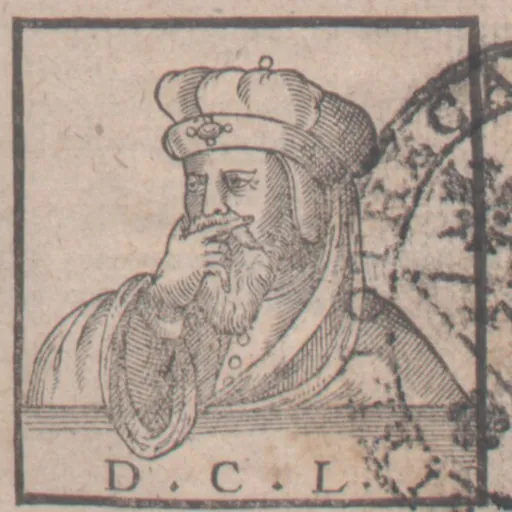
Judah Leon Abravanel
Portuguese Jewish philosopher, physician and poet
About Judah Leon Abravanel
Lived 1460 – 1530 (aged 69–70). Judah Leon Abravanel was a philosopher, poet, physician, writer, rabbi and humanist.
Judah Leon Abravanel or Abrabanel (c. 1460 Lisbon – c. 1530? Naples?), otherwise known by the pen name of Leo the Hebrew This translation was likely produced in order reclaim Abravanel's Jewish identity and to encourage Spanish-speaking diaspora communities and as an appeal to the Spanish king to remember and reconsider the situation of the Sephardic exiles.
In his Dialoghi d'amore, Judah (Leon) Abravanel seeks to define love in philosophical terms. He structures his three dialogues as a conversation between two abstract and mostly undeveloped “characters”: Philo, representing love or appetite, and Sophia, representing science or wisdom, in other words, Philo+Sophia (philosophy).
The first dialogue, titled, “Philo and Sophia on Love and Desire” is a contemplation on the distinctions between love and desire, or the types of love and the true nature of love. In Sophia's opinion, love and desire are exclusive; however, Philo argues that love and desire mix in things we find pleasurable, and that desire assumes knowledge of its object and, thus, its existence. Philo defines desire as that which seeks to become united with its object and love as that which, in union with its object, is enjoyed. When love and desire intersect, there are three different qualities of objects: useful, pleasant and good. Useful objects are not loved and desired together. Useful objects are those that are possessed. Meanwhile, love and desire of pleasant objects grows and perishes at the same time; pleasant objects exist because of privation. Good objects, on the other hand, exist when love and desire have no limit.
Sophia then asks Philo to distinguish love of God from love of friends. He posits that God is the fountainhead, reason and end of good in the world. However, as humans, we lack the knowledge to love God completely.
Happiness is the next topic of discussion, and the two determine that it exists not by gaining or enjoying a possession but rather in wisdom, when virtue is assumed. Wisdom is not omniscience, however, which is noted to be almost unreachable and can be found only in knowing God or communing with the Active Intellect.
From there, Sophia asks Philo to clarify knowledge and love of God. Wisdom is born out of the love of God, he explains, and is the source of human happiness. Sophia then asks Philo to give a definition of the love that he feels for her, according to their discussion. He attempts to win her affection by stating that union increases love because of the physical aspect of human love, while injury does not. He adds that love is born of Reason (though it is not subject to it directly, or at least not to its “ordinary” form; rather, “heroic Reason” motivates it to seek the beloved as its object). At this point, Philo tells her that the hour is drawing late and she must rest while “my mind keeps it usual anguished watch.” However, she is not satisfied to end the discussion yet.
The second dialogue, titled, “Philo and Sophia on the Universality of Love” postulates that love is the dominant principle of all life and describes how love operates in human beings’ lives.
Sophia asks Philo to expound on his ideas of love's origin and universality. As the translation by F. Friedeberg-Seeley and Jean H. Barnes in The Philosophy of Love reads,
The third and most lengthy dialogue, “Philo and Sophia on the Origin of Love” is a discussion about God's love and how it encompasses all of existence, from the lowest creatures to the heavens and is the “cohesion of the universe.” A discussion of beauty and the soul follows, with an analysis of Plato's ideas. The third dialogue is considered the most important at the aesthetic level.
In this dialogue, Philo and Sophia meet unexpectedly. After Philo apologizes for not recognizing Sophia because he was struck by her beauteous image, he begins to discuss a comparison between the soul and intellect. As the translation by F. Friedeberg-Seeley and Jean H. Barnes in The Philosophy of Love reads, "The intellect is purely spiritual, whereas the soul is partly spiritual and partly corporeal, and is ever-moving to and fro between body and mind." Philo [later] defines the essence of love:
Philo then turns to Sophia's first question, and shows her that love must have been created and is subject to birth, because it presupposes both lover and beloved, from whom it takes its origin.
The answer to the second question—when was love first born?—must depend on yet another—when was the world first created? The first love and procreative cause of the universe is that of God for Himself as eternal lover and beloved, and whenever the universe was first created, then love was first born.
As to the birthplace of love, this must have been the angelic world, which is the most perfect of all created being and has, therefore, the most perfect knowledge of the divine beauty it lacks.
In answer to the fourth question—who were the parents of love?—Philo tells Sophia of the allegorical meaning of the birth of Cupid, and that of the ancient and mythological figure, Androgynous, and of the creation of Adam and Eve and the fall of man. The universal father of all love is the beautiful, and the universal mother a knowledge of the beautiful together with privation. Beauty is the necessity a prior condition of all love, because it is upon the world. The supremely beautiful is God, the highest beauty is His intellect or wisdom, in the image of which the whole derives from the form that actuates their matter, and therefore all the forms or Ideas pre-exist in the eternal splendor. The end of all love is pleasure, and this is the same as the desire of the lover for union with the beloved, because pleasure consists in union with the pleasurable. The end of love of the universe is union with divine beauty, the final beatitude and highest perfection of all creation.
Philo, however is careful to point out that his love has no end but torment and grief, because Sophia is unwilling to grant him his desire and makes no return of his love. She persists in her refusal to recognize any save the love of the intellect, and finding that argument cannot avail her against the subtleties of Philo's reasoning, reminds him of his promise to tell of the effects of love, for she would know further of the dangers into which he would lead her. And so the lovers part, and the tale of their promised meeting is as yet untold.
Dialoghi d'amore was an important work in Spanish culture as it brought Renaissance ideals to Spain. Otis Green argues in his España y la tradición occidental that in Abravanel's work human love is spiritualized, placing it in connection with divine love, by posing the necessity of going beyond physical union to merge minds and souls.
Miguel de Cervantes refers to the Dialoghi d'amore in the Prologue to his Don Quixote.
Don’t just read it —
keep it.
Full-length biographies made to live with: read them, listen on the way to work, watch them tonight.
- E-book
- Audio
- Video
Instant download · yours to keep · every purchase keeps this site free
Important facts
Related people
Same field, nearest in time




Contemporaries
People whose lives overlapped Judah Leon Abravanel's


Frequently asked questions
Who was Judah Leon Abravanel?
Portuguese Jewish philosopher, physician and poet
When was Judah Leon Abravanel born?
Judah Leon Abravanel was born in 1460 in Lisbon.
When did Judah Leon Abravanel die?
Judah Leon Abravanel died in 1530 in Naples.
What was Judah Leon Abravanel's occupation?
Judah Leon Abravanel was a philosopher, poet, physician, writer, rabbi and humanist.
What nationality was Judah Leon Abravanel?
Judah Leon Abravanel's recorded nationality: Kingdom of Portugal.
Sources & further reading
· Wikipedia: Judah Leon Abravanel
· DBpedia: Judah Leon Abravanel
Cite this page
APA: Biography.guide. (2026). Judah Leon Abravanel. https://biography.guide/judah-leon-abravanel/
MLA: "Judah Leon Abravanel." Biography.guide, https://biography.guide/judah-leon-abravanel/.
Chicago: "Judah Leon Abravanel." Biography.guide. https://biography.guide/judah-leon-abravanel/.
Data last updated: 2026-09-20 · Spot an error? Report a correction.
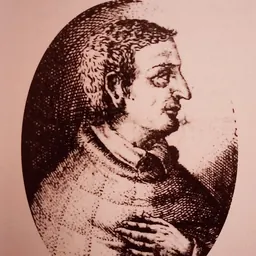
Portrait: Wikimedia Commons · author & licence
Page generated 2026-09-27 04:58 UTC