
About Judah ben Samuel of Regensburg
Lived 1150 – 1217 (aged 66–67). Judah ben Samuel of Regensburg was a philosopher, rabbi and writer.
Judah ben Samuel of Regensburg (1150 – 22 February 1217 or Judah the Pious in Hebrew, was a leader of the Ashkenazi Hasidim a movement of Jewish mysticism in Germany (not to be confused with the 18th-century Hasidic Judaism founded by the Baal Shem Tov).
Judah was born in 1150 in the small town of Speyer, now in the Rhineland-Palatinate, Germany, but later settled in Regensburg, now in Bavaria, in 1195. He wrote much of Sefer Hasidim ("Book of the Pious"), as well as a work about Gematria and Sefer Hakavod (Book of Glory); the latter has been lost and is only known by quotations that other authors have made from it. His most prominent students were Elazar Rokeach, Isaac ben Moses of Vienna author of Or Zarua and perhaps also Moses ben Jacob of Coucy according to Chaim Yosef David Azulai.
Biography Judah was descended from an old family of kabbalists from Northern Italy that had settled in Germany. His grandfather Kalonymus ben Isaac the Elder was a scholar and parnas in Speyer (died 1126). His father Samuel, also called HeHasid "the Pious", HaKadosh "the Holy", and HaNabi "the Prophet", was president of a bet midrash in Speyer, and from him Judah, together with his brother Abraham, received his early instruction. Samuel died while Judah was still young. About 1195 he left Speyer and settled in Regensburg (Ratisbon), on account of an "accident" – most probably a ritual murder accusation Feb. 13 1195 (see e.g. Israel Yuval: Two Nations in Your Womb (2006) p. 171) and the following persecution experienced by the Jews of Speyer. author of a commentary on several parts of the Bible. Some scholars think that this Moses Zaltman, Zlatman or Blatman was in reality Rabbi Moses ben Yoel of Regensburg. It has been erroneously supposed that Judah had two other sons, Aaron and David. who is also called HeḤasid, which is nothing but an honorable title usual in his age. The fact that French words are to be found in the Book of the Pious and that it reflects French conditions caused Grätz also to attribute its authorship to Judah Sir Leon HeḤasid. But the reasons given by Grätz are not tenable. a decision of his is found in Samson ben Zadok's Sefer Tašbaṣ § 219, in Isaac ben Moses of Vienna's Or Zarua, and in Meïr Rothenburg's collection of responsa; and he is found in correspondence with celebrated halakhists of his age. Eran Viezel has argued that these claims were made by R. Moshe Zaltman, the son of R. Judah he-Hasid, rather than Judah himself. there is very great divergence of opinion, and the question of its authorship is still undecided. According to Zunz, it seems to be genuine, as do also his prayer Yechabeh Dim`ati and his selicha Gadol Yichudcha Elohim Beyisrael. More probably, according to the sources, his father, or a certain Samuel Ḥazzan, who died as a martyr at Erfurt in 1121, composed the Shir ha-Yiḥud, and Judah himself wrote a commentary on it. Several prayers are erroneously attributed to Judah; e.g., Zunz wrongly ascribes to him the alphabetical teḥinnah Ezkera Yom Moti. He wrote also commentaries on several parts of the daily prayers and on the Maḥzor. His chief literary work was an ethical and mystical one. Undoubtedly genuine is his Sefer HaKavod, which is mentioned by his pupils. Although there is some doubt, it is generally accepted that the person who wrote ethical will Tzava'at Rabbi Yehudah Hechasid, printed in 1583 and translated into Judæo-German, Prague, seventeenth to eighteenth century was Harav Yehuda HeChasid Shapiro. This testament contained regulations regarding the dead (§§ 1-15), the building of houses (§§ 16-21), matrimony (§§ 22-32), prohibited marriages between stepbrothers and stepsisters and between cousins, and various customs and superstitious prescriptions (§§ 33-end). He also taught Isaac ben Moses of Vienna (author of the Or Zarua) and Moses ben Jacob of Coucy (author of the Semag). Some commentaries go so far as to say that none of the Biblical prophets came to his level. Some say one who is not careful with the items in the tzavaah will have to give a din and heshbon (account). The reason why the will is generally not brought in the Shulchan Aruch is because the dangers mentioned in it and the Gemara are real dangers, while the items in the will are not real dangers, but things which one must distance himself from.
There are also ascribed to Judah an astrological work, Gemaṭriot, handed down by his pupils and seen by Chaim Azulai, and Sefer ha-Ḥokhmah, on prayers and customs and the writing of scrolls of the Law. Zunz says of him: "To vindicate whatever is noble in human endeavors, and the highest aspirations of the Israelite, and to discover the inmost truths alluded to in the Sacred Books, seemed to be the ultimate purpose of a mind in which poetic, moral, and divine qualities were fused."
Don’t just read it —
keep it.
Full-length biographies made to live with: read them, listen on the way to work, watch them tonight.
- E-book
- Audio
- Video
Instant download · yours to keep · every purchase keeps this site free
Important facts
People in Judah ben Samuel of Regensburg's life
Named in this biography and alive at the same time

Related people
Same field, nearest in time

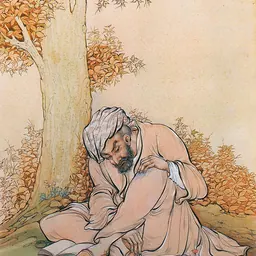
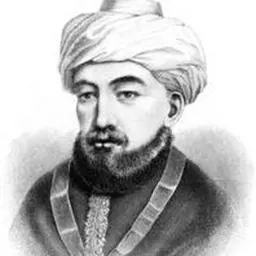


Contemporaries
People whose lives overlapped Judah ben Samuel of Regensburg's
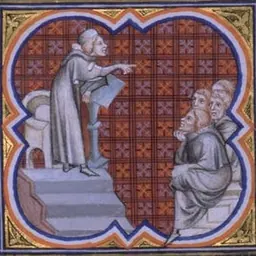





Frequently asked questions
Who was Judah ben Samuel of Regensburg?
German Jewish mystic (1150–1217)
When was Judah ben Samuel of Regensburg born?
Judah ben Samuel of Regensburg was born in 1150 in Speyer.
When did Judah ben Samuel of Regensburg die?
Judah ben Samuel of Regensburg died on 22 February 1217 in Regensburg.
What was Judah ben Samuel of Regensburg's occupation?
Judah ben Samuel of Regensburg was a philosopher, rabbi and writer.
Sources & further reading
· Wikipedia: Judah ben Samuel of Regensburg
· DBpedia: Judah ben Samuel of Regensburg
Cite this page
APA: Biography.guide. (2026). Judah ben Samuel of Regensburg. https://biography.guide/judah-ben-samuel-of-regensburg/
MLA: "Judah ben Samuel of Regensburg." Biography.guide, https://biography.guide/judah-ben-samuel-of-regensburg/.
Chicago: "Judah ben Samuel of Regensburg." Biography.guide. https://biography.guide/judah-ben-samuel-of-regensburg/.
Data last updated: 2026-09-20 · Spot an error? Report a correction.
Page generated 2026-09-27 05:16 UTC