
About Juan Vásquez
Lived 1500 – 1560. Juan Vásquez was a composer, singer and catholic priest.
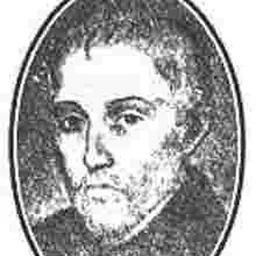
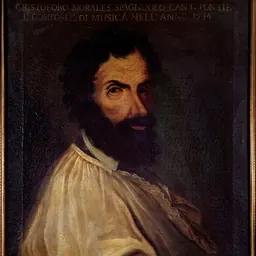
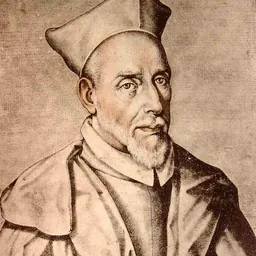
Juan Vásquez (or Vázquez, c. 1500 in Badajoz – c. 1560 in Seville) was a Spanish priest and composer of the Renaissance. He can be considered part of the School of Andalusia group of composers along with Francisco Guerrero, Cristóbal de Morales, Juan Navarro Hispalensis and others.
Biography Even relative to the standards of early music composers, the life of Juan Vásquez is largely unknown, despite the best efforts of leading musicologists. As a result, all mentions of his age are educated guesses by professionals rather than hard facts. A chapel singer from boyhood, his engagement in 1511 as a "contralto" at the cathedral of Plasencia, Cáceres indicates that he was still a boy at that time. He does not appear in any other records for nearly 20 years. In late 1530 he turns up at Badajoz Cathedral, teaching plainchant to the choirboys. The year 1539 finds him singing in Palencia Cathedral, where he became known as a composer. The music employs both plainchant and polyphony, with his best and most extensive use of polyphony to be found in the Missa pro defunctis from that collection. The Office of the Dead is very highly regarded for its contemplative qualities, standing well alongside Vásquez's elegantly simple songs which have more reputation today. secular villancicos (approximately 90 in total),
Agenda defunctorum Vásquez's setting (published in 1556) is remarkable for being part of a complete Agenda defunctorum that included Matins and Lauds in addition to the more usual Vespers and Mass. In the first publication, the original Sevillan chants appear alongside their polyphonic elaborations. It was in Spain and Portugal that the tradition of stile antico requiem settings had the greatest longevity, its ramifications extending well into the next century (as with Tomás Luis de Victoria's setting), and, through the colonial possessions of both countries, into new continents as well.
Discography
Dedicated discs Agenda Defunctorum: Capilla Peñaflorida, Josep Cabré. Isabel Álvarez (soprano), Karmele Iriarte (soprano), M. Jesús Ugalde (soprano), David Azurza (alto), Mirari Pérez (alto), David Sagastume (alto), Jon Bagüés (tenor), Josep Benet (tenor), Peio Ormazábal (tenor), Nicolás Basarrate (bass), Aitor Sáiz de Cortázar (bass), Gonzalo Ubani (bass), Fernando Sánchez (dulcian), Loreto Fernández Imaz (organ). CD, 73:22, Almaviva 0122, ASIN: B000025Q3B, UPC: 8427287101220, recorded June 1996 (Seville). Ex Agenda Defunctorum Officium: Coro de Cámara de la Universidad de Salamanca, Bernardo García-Bernalt. Gloria Ramos Sánez de Tejada, Amparo Cerdá Miralles, Araceli Rodríguez Flores, Paz Carrasco García, Paz Vara Castro, Miriam Gutíerrez Martínez, Inmaculada Vara Castro, Raquel Nieto Arroyo, Mercedes Pinto Oviedo, Bernardo García-Bernalt Alonso (director), etc. CD, 49:50, Radio Nacional de España 640036, recorded January 1991. Villancicos - Quink Vocal Ensemble 2013 Si no os hubiera mirado: Los Afectos Diversos , Nacho Rodríguez. Selection from his "Recopilación de sonetos y villancicos a quatro y a cinco", Sevilla, 1560. Cristina Teijeiro (soprano), Flavio Ferri-Benedetti, Gabriel Díaz (altus), Diego Blázquez, Fran Braojos, Nacho Rodríguez (tenors), Manuel Jiménez (baritone), Bart Vandewege (bass), Laura Puerto (organ and harp), Manuel Minguillón (vihuela), Thor Jorgen (gamba). CD, 53:42, iTinerant Early IE003, UPC: 7502258853726, recorded January 2016 (Segovia)
Various artists Canciones y Ensaladas - Chansons et pièces instrumentales du Siècle d'Or: Ensemble Clément Janequin, Dominique Visse. Visse (countertenor), Bruno Boterf (tenor), Vincent Bouchot (baritone), François Fauché (bass), Renaud Delaigue (bass), Éric Bellocq (lute, guitar), Massimo Moscardo (lute), Matthieu Lusson (viol), Jean-Marc Aymes (positive organ). CD, 58:00, Harmonia Mundi HMC 90 1627, recorded January 1997. The Victory of Santiago - Voices of Renaissance Spain: The Concord Ensemble. Paul Flight (countertenor), Pablo Corá (tenor), N. Lincoln Hanks (tenor), Daniel Carberg (tenor), Sumner Thompson (baritone), Daniel Cole (bass), Bruce Remaker (countertenor). CD, 63:00, Dorian 90274, recorded February 1999 (Troy, NY).
Don’t just read it —
keep it.
Full-length biographies made to live with: read them, listen on the way to work, watch them tonight.
- E-book
- Audio
- Video
Instant download · yours to keep · every purchase keeps this site free
Important facts
People in Juan Vásquez's life
Named in this biography and alive at the same time


Related people
Same field, nearest in time


Contemporaries
People whose lives overlapped Juan Vásquez's



Frequently asked questions
Who was Juan Vásquez?
Spanish priest and composer
When was Juan Vásquez born?
Juan Vásquez was born in 1500 in Badajoz.
When did Juan Vásquez die?
Juan Vásquez died in 1560 in Seville.
What was Juan Vásquez's occupation?
Juan Vásquez was a composer, singer and catholic priest.
What nationality was Juan Vásquez?
Juan Vásquez's recorded nationality: Crown of Castile.
Sources & further reading
· DBpedia: Juan Vásquez (composer)
Cite this page
APA: Biography.guide. (2026). Juan Vásquez. https://biography.guide/juan-vasquez/
MLA: "Juan Vásquez." Biography.guide, https://biography.guide/juan-vasquez/.
Chicago: "Juan Vásquez." Biography.guide. https://biography.guide/juan-vasquez/.
Data last updated: 2026-09-20 · Spot an error? Report a correction.
Page generated 2026-09-27 05:00 UTC