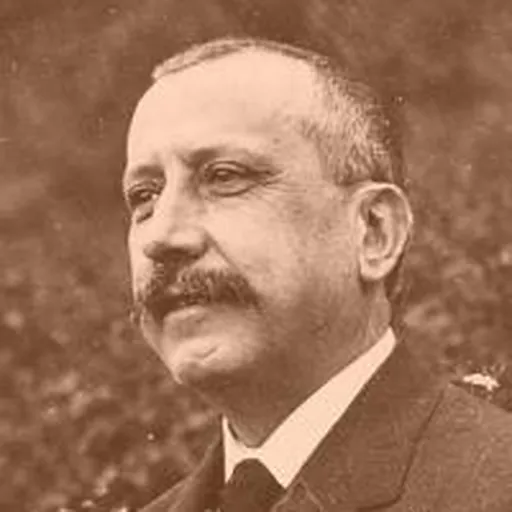
About Juan Rubió
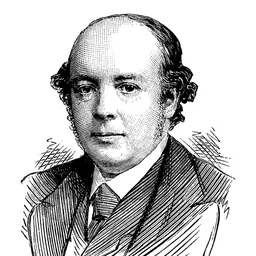
Lived 1871 – 1952 (aged 80). Juan Rubió was a Spanish architect.
Joan Rubió y Bellver (; 24 April 1870 – 30 November 1952) was a Spanish architect famous for his contributions to the Catalan Modernista movement.
Biography
Early life, family Rubió was born in Reus, Province of Tarragona. He was also the brother of the military engineer Marià Rubió i Bellver and uncle of the architect Nicolau Maria Rubió i Tudurí and the engineer Santiago Rubió i Tudurí.
Design career A keen disciple of Antoni Gaudí, he collaborated with him until 1905, on such works as La Sagrada Família, the Casa Batlló, the Casa Calvet, the Torre Bellesguard and Parc Güell in Barcelona, the restoration of La Seu (the cathedral of Palma de Mallorca), and the Colònia Güell (factory town) in Santa Coloma de Cervelló, where Rubió built the agricultural cooperativa building with Francesc Berenguer in 1900, along with two private homes: Ca l'Ordal (1894) and Ca l'Espinal (1900). When designing houses the architect had a prevalence for bow window on the corners of his designs.
Rubió was also a regidor (councillor) on the Barcelona City Council (Ajuntament de Barcelona, 1905) and was appointed an architect for the Province of Barcelona (1906-1943) by the Barcelona Provincial Council (Diputació de Barcelona). His architecture is also prevalent on the Balearic Islands, for example in the northern town of Sóller, on Mallorca, where he designed the façade of the Church of Sant Bartomeu (1904) as well as the Banco de Sóller (1912), remarkable for its intricate ironwork (wrought iron).
Notable works and collaborations
Many of the following works are collaborations with Antoni Gaudí. La Sagrada Familia the Casa Batlló the Casa Calvet the Torre Bellesguard Parc Güell in Barcelona the restoration of La Seu (the cathedral of Palma de Mallorca) 1894: Ca l'Ordal - - in Colònia Güell (factory town) in Santa Coloma de Cervelló 1900: agricultural cooperativa building with Francesc Berenguer - in Colònia Güell 1900: Ca l'Espinal - private home in Colònia Güell 1901: Casa Golferichs in Barcelona. 1904: façade of the church of Sant Bartomeu - Sóller, on Mallorca 1903-1909: Anti-tuberculosis sanatorium (Barcelona, Can Rectoret neighborhood) 1912: façade of Banco de Sóller with intricate ironwork (wrought iron) - Sóller 1928: neo-gothic bridge over Carrer del Bisbe, in Barcelona.
Gallery
Don’t just read it —
keep it.
Full-length biographies made to live with: read them, listen on the way to work, watch them tonight.
- E-book
- Audio
- Video
Instant download · yours to keep · every purchase keeps this site free
Important facts
People in Juan Rubió's life
Named in this biography and alive at the same time

Related people
Same field, nearest in time


Contemporaries
People whose lives overlapped Juan Rubió's
Frequently asked questions
Who was Juan Rubió?
Spanish architect (1870-1952)
When was Juan Rubió born?
Juan Rubió was born on 24 April 1871 in Reus.
When did Juan Rubió die?
Juan Rubió died on 31 January 1952 in Barcelona.
What was Juan Rubió's occupation?
Juan Rubió was an architect.
What nationality was Juan Rubió?
Juan Rubió was Spanish.
Sources & further reading
Cite this page
APA: Biography.guide. (2026). Juan Rubió. https://biography.guide/juan-rubio-architect/
MLA: "Juan Rubió." Biography.guide, https://biography.guide/juan-rubio-architect/.
Chicago: "Juan Rubió." Biography.guide. https://biography.guide/juan-rubio-architect/.
Data last updated: 2026-09-21 · Spot an error? Report a correction.
Portrait: Wikimedia Commons · author & licence
Page generated 2026-09-27 04:59 UTC