
About Juan O'Gormann
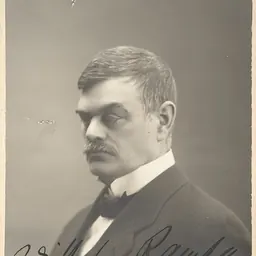
Lived 1905 – 1982 (aged 76). Juan O'Gormann was a Mexican painter and architect.
Juan O'Gorman (6 July 1905 – 18 January 1982) was a Mexican painter and architect.
Early life and family Juan O'Gorman was born on 6 July 1905 in Coyoacán, then a village to the south of Mexico City and now a borough of the city, to an Irish immigrant father, Cecil Crawford O'Gorman and Encarnación O'Gorman Moreno. His parents were distant cousins. He had three younger siblings, Edmundo, Margarita and Tomás. Despite his father's influence, O'Gorman chose to focus on architecture early in his career. In 1927, he graduated from Academy of San Carlos, the Art and Architecture school at the National Autonomous University of Mexico. O'Gorman dubbed the house the first functionalist structure in Latin America. The house was built in a similar functionalist style from 1931 to 1932. Both houses were purchased to be restored and opened to the public with the Rivera-Kahlo house operating as a museum.
Schools In 1932, Narciso Bassols, then Secretary of Education, appointed O'Gorman to the position of Head of Architectural Office of the Ministry of Public Education, where he went on to design and build 26 elementary schools in Mexico City.
After 6 years of functionalist projects, O'Gorman turned away from strict functionalism later in life to focus on painting and murals, including works at the Mexico City airport in 1937 and "Credit Transforms Mexico" for the International Bank on Reforma Avenue, now moved to HSBC.
After being asked by Edgar Kaufmann Sr. to submit a proposal for murals for the Pittsburgh Young Men's & Women's Hebrew Association, O'Gorman spent a weekend at Fallingwater, which inspired him to return to architecture, this time a more organic architecture, combining the influence of Frank Lloyd Wright with traditional Mexican constructions.
Central Library at Ciudad Universitaria (UNAM)
Juan O'Gorman's most celebrated work due to its creativity, construction technique, and dimensions, are the four thousand square meters murals covering the four faces of the building of the Central Library at at UNAM. These murals are mosaics made from millions of colored stones that he gathered all around Mexico in order to be able to obtain the different colors he needed.
From the beginning, I had the idea of making mosaics of colored stones in the walls of the collections, with a technique in which I was already well experienced. With these mosaics the library would be different from the other buildings of , and it would be given a particular Mexican character.
Later work O'Gorman built and designed his own house in the suburb of Pedregal, which was part built structure part natural cave, which is known as "The Cave House" from 1953 to 1956. It was decorated with mosaics throughout. Due to financial reasons O'Gorman sold the house to the Mexican sculptor Helen Escobedo in 1969, with the promise that the house would be preserved in its original state. However the house was partially demolished and modified, later transformed into a music school without a clear preservation plan for O'Gorman's architectural legacy.
His paintings often treated Mexican history, landscape, and legends. A mural commission in Pátzcuaro, Michoacan resulted in the huge "La historia de Michoacán" in the Biblioteca Pública Gertrudis Bocanegra in a former church. He painted the murals in the Independence Room in Mexico City's Chapultepec Castle, and the huge murals of his own 1952 Central Library of the National Autonomous University of Mexico, designed with Gustavo Saavedra and Juan Martínez de Velasco.
In 1959, together with fellow artists, Raúl Anguiano, Jesús Guerrero Galván, and Carlos Orozco Romero, O'Gorman founded the militant Unión de Pintores y Grabadores de México (Mexican Painters and Engravers Union).
Death O'Gorman was found dead at his home of suicide at age 76, on 18 January 1982. Authorities believe the artist grew despondent after being diagnosed with a heart ailment which curtailed his work.
Awards National Prize for Arts and Sciences of "fine arts", 1972.
Don’t just read it —
keep it.
Full-length biographies made to live with: read them, listen on the way to work, watch them tonight.
- E-book
- Audio
- Video
Instant download · yours to keep · every purchase keeps this site free
Important facts
People in Juan O'Gormann's life
Named in this biography and alive at the same time





Related people
Same field, nearest in time



Contemporaries
People whose lives overlapped Juan O'Gormann's





Frequently asked questions
Who was Juan O'Gormann?
Mexican artist and architect (1905-1982)
When was Juan O'Gormann born?
Juan O'Gormann was born on 6 July 1905 in Coyoacán.
When did Juan O'Gormann die?
Juan O'Gormann died on 18 January 1982 in Mexico City.
What was Juan O'Gormann's occupation?
Juan O'Gormann was a painter and architect.
What nationality was Juan O'Gormann?
Juan O'Gormann was Mexican.
Sources & further reading
Cite this page
APA: Biography.guide. (2026). Juan O'Gormann. https://biography.guide/juan-o-gormann/
MLA: "Juan O'Gormann." Biography.guide, https://biography.guide/juan-o-gormann/.
Chicago: "Juan O'Gormann." Biography.guide. https://biography.guide/juan-o-gormann/.
Data last updated: 2026-09-20 · Spot an error? Report a correction.
Page generated 2026-09-27 05:24 UTC