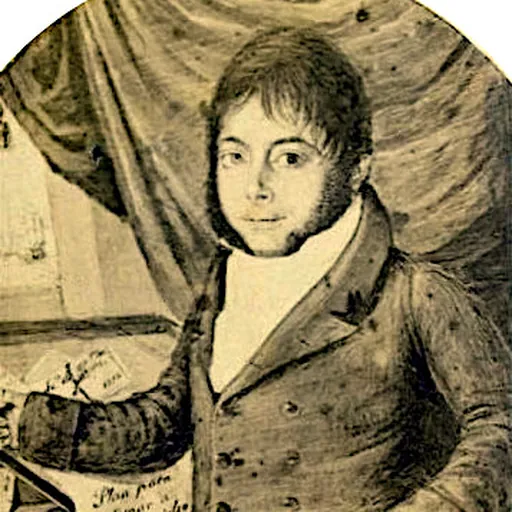
About Juan Larrea
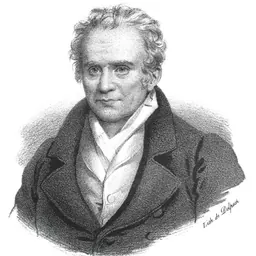
Lived 1782 – 1847 (aged 64). Juan Larrea was an Argentine, Spanish and Argentinian economist, diplomat, politician, ship-owner and merchant.
Juan Larrea (24 June 1782 – 20 June 1847) was a Spanish businessman and politician in Buenos Aires during the early nineteenth century. He headed a military unit during the second British invasion of the River Plate, and worked at the Buenos Aires Cabildo. He took part in the ill-fated Mutiny of Álzaga. Larrea and Domingo Matheu were the only two Spanish-born members of the Primera Junta, the first national government of Argentina.
He supported the secretary Mariano Moreno within the Junta, and was moved to the distant city of San Juan when the Morenists were removed from government. He returned as a deputy for Córdoba in the Assembly of Year XIII constituent assembly, promoting many resolutions. Together with Carlos María de Alvear, he organized the strategy for the downfall of the royalist stronghold in Montevideo, a threat to Buenos Aires during the Argentine War of Independence. Despite the victory, he faced political conflicts with admiral William Brown and an economic crisis, and was exiled from the country.
He moved to Bordeaux, France, but returned to Buenos Aires when his exile was lifted by the Oblivion law. He served as consul for a time, but his business declined and he committed suicide on 20 June 1847. He was the last surviving member of the Primera Junta.
Biography
Early life and Viceroyalty Juan Larrea was born on 24 June 1782, in the city of Mataró, Catalonia. His father was Martín Ramón de Larrea, who was in charge of customs operations in Mataró, and his mother was Tomasa Espeso. He studied mathematics and navigation, and focused his education towards a career in commerce. His father died in 1793, so Larrea became the patriarch of the family. They moved to Buenos Aires, where he established a warehouse for wines, leather, and sugar. He traded with Peru, Upper Peru, Paraguay, Chile and colonial Brazil. By 1806 he was a well-respected businessman, and a syndic of the Royal Consulate. He promoted the role of deputies from Buenos Aires at the Madrid court, to better the representation of the Brazilian viceroyalty and reduce the privileges of peninsular merchants.
Buenos Aires and other nearby cities were involved in the British invasions of the River Plate in 1806 and 1807. In the absence of reinforcements from Spain, viceroy Santiago de Liniers arranged that everyone in Buenos Aires capable of bearing arms should join the resistance against the second invasion. Larrea established the Legion of Catalan Volunteers with Jaime Nadal y Guarda, Jaime Lavallol and José Olaguer Reynals. Larrea was appointed captain of this military unit. The defense was successful, and the British were eventually forced to surrender and evacuate the viceroyalty.
Like many other nineteenth century Argentines prominent in public life, he was a freemason.
Primera Junta alt=Allegoric images of the 7 members of the Primera Junta, arranged in a scheme freely similar to the Argentine coat of Arms. An icon of the president of the Junta is in a big oval in the middle, with a sun over it. A crown of laurel surrounds it, with attached smaller ovals with the icons of the other members of the Junta. Larrea's prestige as an influential businessman promoted his appointment as member of the Primera Junta. However, as with the other members, the precise reasons for his inclusion are unclear. The Junta's membership has been considered a balance between Carlotists and Alzaguists. Larrea resigned his wages from his position as Junta member, and organized the resources for the upcoming war of independence. Together with Manuel de Sarratea he drafted a new code regulating business in Argentina, and he also secured the exile of former viceroy Baltasar Hidalgo de Cisneros by bribing the captain of the ship carrying him, the Dart, to avoid any landfall until reaching the Canary Islands on the far side of the Atlantic. He supported the execution of Liniers after the defeat of his counter-revolution, and supported the secretary Mariano Moreno against the president Cornelio Saavedra. Larrea voted for the incorporation of deputies from other cities into the Junta, although he had previously indicated his opposition to the proposal. It was intended by Saavedra that this change would reduce Moreno's influence within the Junta.
The proposal prevailed, and the Primera Junta became the Junta Grande by incorporating the new deputies. The resignation and death of Mariano Moreno did not reduce the conflicts between Morenists and Saavedrists. A rebellion on behalf of Saavedrism ensued, on 5 and 6 April 1811, aiming at the resignation of all remaining Morenists, including Larrea. Larrea was accused of joining factions and risking public security, and was deposed. Taken prisoner, he was moved to the nearby city of Luján, and then to the distant San Juan.
Return to politics Meeting of the Assembly of Year XIII. Lithograph of the time. Larrea resumed business activities in San Juan, avoiding politics until 1812. The Revolution of 8 October 1812 returned the Morenists to power, and so Larrea could return to Buenos Aires. He returned as a deputy for Córdoba to the Assembly of Year XIII constituent assembly.
Larrea served briefly in the Second Triumvirate, replacing José Julián Pérez as finance minister, until the Assembly replaced the Triumvirate with the Supreme Director, an office placing the powers of head of state in the hands of one person. Gervasio Antonio de Posadas was chosen as the first Supreme Director. Posadas was concerned about Montevideo, a nearby city which had been under royalist control since the beginning of the war, and a constant threat to Buenos Aires. Carlos María de Alvear complemented the existing siege of Montevideo with a naval blockade, in which Larrea's expertise was instrumental. Alvear developed the military strategy, and Larrea took care of the financial aspects. Larrea drafted a report of the nature, costs and strength of the proposed navy, and the captains and sailors that were required, and planned to negotiate with the American William White. Larrea also appointed the Irish admiral William Brown to lead the attack. The royalist forces in Montevideo were finally defeated in June 1814.
Larrea did not get on well with Brown, who blamed him for disagreements and supply shortages, and even for discontent among the sailors. Buenos Aires did not have a naval tradition, and therefore most of the people involved in the naval campaign were foreigners. As a result, their commitment to the war was often limited. After the capture of Montevideo, Larrea instructed Brown to report directly to the minister of war, and not correspond with himself. Nevertheless, the disagreements continued. Due to the economic crisis caused by the war, Larrea sold the captured ships, decommissioned the navy and sold off the government's own ships, but the sailors complained that they had not received their wages, their reward for the military victory nor their percentage of the sale of the captured ships. Larrea and White were blamed for this. Larrea resigned by the end of the year, after signing an order for the creation of an infantry and a cavalry regiment for the Army of the Andes. Larrea blamed White for the unresolved dispute over the sailors' wages, declaring that he had arranged that White would organize the payment of the wages. Alvear resigned in 1815 after the mutiny of Álvarez Thomas, and all the members of his administration were put on trial. Larrea was accused of abuse of power, administrative fraud and stealing from the national treasury. All his properties were confiscated, and he was exiled.
Exile and return After his exile, Larrea moved to Bordeaux in France, and did business with some of his old associates. He continued correspondence with Bernardino Rivadavia, and in 1818 he moved to Montevideo, under Brazilian control at that time, and strengthened his contacts in Buenos Aires from there. He was finally able to return to Buenos Aires in 1822 due to the oblivion law.
Once he returned to Buenos Aires, Larrea avoided political activities and concentrated on business activities. He established a mailing service between Buenos Aires and Le Havre (France), but the venture failed. He then worked in animal husbandry, both in Buenos Aires and in Montevideo. He was appointed consul of the United Provinces by governor Manuel Dorrego, and moved back to Bordeaux to strengthen commerce with France.
Don’t just read it —
keep it.
Full-length biographies made to live with: read them, listen on the way to work, watch them tonight.
- E-book
- Audio
- Video
Instant download · yours to keep · every purchase keeps this site free
Important facts
People in Juan Larrea's life
Named in this biography and alive at the same time




Related people
Same field, nearest in time

Contemporaries
People whose lives overlapped Juan Larrea's




Frequently asked questions
Who was Juan Larrea?
Argentine politician
When was Juan Larrea born?
Juan Larrea was born on 24 June 1782 in Balaguer, Mataró.
When did Juan Larrea die?
Juan Larrea died on 20 June 1847 in Buenos Aires.
What was Juan Larrea's occupation?
Juan Larrea was an economist, diplomat, politician, ship-owner and merchant.
What nationality was Juan Larrea?
Juan Larrea was Argentine, Spanish and Argentinian.
Sources & further reading
· DBpedia: Juan Larrea (politician)
Cite this page
APA: Biography.guide. (2026). Juan Larrea. https://biography.guide/juan-larrea-economist/
MLA: "Juan Larrea." Biography.guide, https://biography.guide/juan-larrea-economist/.
Chicago: "Juan Larrea." Biography.guide. https://biography.guide/juan-larrea-economist/.
Data last updated: 2026-09-21 · Spot an error? Report a correction.
Portrait: Wikimedia Commons · author & licence
Page generated 2026-09-27 04:59 UTC