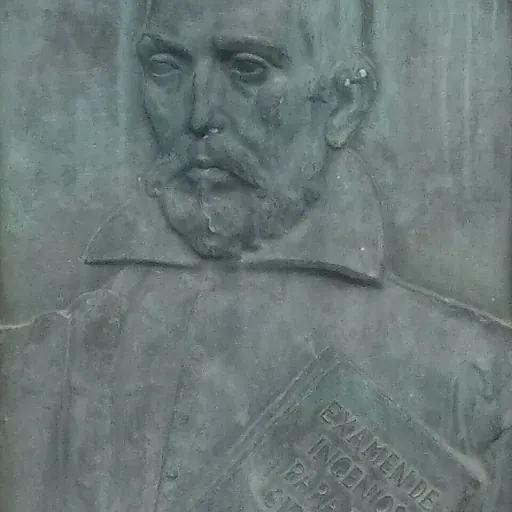
About Juan Huarte de San Juan
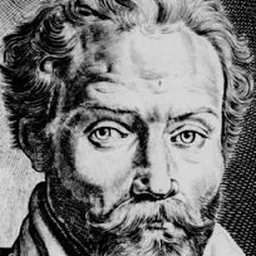
Lived 1529 – 1588 (aged 58–59). Juan Huarte de San Juan was a Spanish physician, philosopher, writer and psychologist.
Juan Huarte de San Juan or Juan Huarte y Navarro (1529 – 1588) was a Spanish physician.
Life He was born at Saint-Jean-Pied-de-Port (Lower Navarre) toward the end of 1529 or beginning of 1530, and was educated, first, at the university of Huesca. He then went on to the University of Alcalá, where he received his doctorate in medicine in 1560.
Though it appears doubtful whether he practiced as a physician at Huesca, Huarte distinguished himself by his professional skill and heroic zeal during the plague which devastated Baeza in 1566. Though now superseded, Huarte's treatise is historically interesting as the first attempt to show the connection between psychology and physiology, and its acute ingenuity is as remarkable as the boldness of its views. Between 1575 and 1800, sixty different editions of Examen were published. During the 16th, 17th and 18th century, the Examen was translated into six European languages: French, Italian, English, Latin, German and Dutch. Richard Carew was the translator of Examen de Ingenios into English, basing his translation on Camilli's Italian version. (This book is the first systematic attempt to relate physiology with psychology, though based on the medicine of Galen. Four editions of this translation were published: in 1594, 1596, 1604 and 1616.)
Theories
Talent
He set forth the following theories in his Examen de ingenios para las ciencias:
First, it is only possible for someone to have a lone talent, rather than multiple talents. Huarte considered this single talent to be differentiated in a high degree, with differentiation between individuals and nations.
Second, it is critical to fulfill a profession that is in agreement with the talent a person possesses.
Third, if the individual is "lacking genius," he or she struggles in a futile way with science.
Finally, each talent is marked by a temperament which is corresponding to the physique of a person. This concept relates to his theory on humoral temperaments.
Children
In Examen, Huarte discusses the treatment of children as it relates to their abilities. In line with his theory regarding single talents, Huarte believed some children are proficient in one particular area while others are not. Because they have these differences, children should be studied while they are young to ascertain their abilities so they can learn efficiently in the area they excel in. While Huarte wanted children to begin acquiring knowledge related to their talents at a young age, he was aware that the tasks would have to be developmentally appropriate. Applying this, children would learn language earlier and logic when they are older.
Humoral Temperaments
As mentioned above, Huarte believed that humoral temperaments had an effect on individual differences. He believed that levels of heat, cold, moistness, and dryness would result in these differences. During this time, humoral temperaments were used to explain differences in age, ethnicity, and intellect. However, Huarte applied the idea of humoral temperaments in a different way. He suggested that humoral temperaments had an effect on differences in memory and understanding. In his theory, memory was dependent on moistness while understanding was dependent on dryness. Following his theory, he believed older people had brains that were dry (understanding), but that means the person has a poor memory as well. Children, on the other hand, were believed to have the opposite problem: they had moist brains useful for memory tasks, but were low in understanding because they were lacking dryness. Huarte also stated that for everyone, memory is better in the morning and worsens throughout the day because brains accumulate moisture while sleeping and dry out over the waking hours.
Gender
In keeping with tradition during the time, Huarte did not have positive views toward women. He aided in perpetuating the views related to gender differences by using his theory regarding humoral temperaments. According to Huarte, women could not be blamed for being dull, because they were both cold and dry (a humoral temperamental characterization of their gender). In conjunction with this, Huarte taught that intelligence is stored in the testicles, thus justifying his theory that women are, by nature more stupid than men. Historians can interpret these paternalistic biases coinciding with his desire to understand individual differences as insight into how psychologists shaped and supported social norms during and after their time, and use this knowledge to question other gender-differentiated results. Additionally, Huarte's position on women provides support for the suggestion that the Renaissance was a time for men to make intellectual strides, and that women did not have this chance.
Don’t just read it —
keep it.
Full-length biographies made to live with: read them, listen on the way to work, watch them tonight.
- E-book
- Audio
- Video
Instant download · yours to keep · every purchase keeps this site free
Important facts
People in Juan Huarte de San Juan's life
Named in this biography and alive at the same time

Related people
Same field, nearest in time


Contemporaries
People whose lives overlapped Juan Huarte de San Juan's






Frequently asked questions
Who was Juan Huarte de San Juan?
Spanish physician and psychologist
When was Juan Huarte de San Juan born?
Juan Huarte de San Juan was born in 1529 in Saint-Jean-Pied-de-Port.
When did Juan Huarte de San Juan die?
Juan Huarte de San Juan died in 1588 in Baeza.
What was Juan Huarte de San Juan's occupation?
Juan Huarte de San Juan was a physician, philosopher, writer and psychologist.
What nationality was Juan Huarte de San Juan?
Juan Huarte de San Juan was Spanish.
Sources & further reading
· Wikipedia: Juan Huarte de San Juan
· DBpedia: Juan Huarte de San Juan
Cite this page
APA: Biography.guide. (2026). Juan Huarte de San Juan. https://biography.guide/juan-huarte-de-san-juan/
MLA: "Juan Huarte de San Juan." Biography.guide, https://biography.guide/juan-huarte-de-san-juan/.
Chicago: "Juan Huarte de San Juan." Biography.guide. https://biography.guide/juan-huarte-de-san-juan/.
Data last updated: 2026-09-21 · Spot an error? Report a correction.
Portrait: Wikimedia Commons · author & licence
Page generated 2026-09-27 05:00 UTC