
About Juan Cobo
Lived 1546 – 1592 (aged 45–46). Juan Cobo was a Spanish diplomat, writer and catholic priest.
Juan Cobo OP (Hokkien ) (ca. 1546–1592) was a Spanish Dominican missionary, diplomat, astronomer and sinologist.
Cobo was born in Alcázar de San Juan, known as "Alcázar de Consuegra" in the past. After becoming a priest of the Dominican order, he traveled to Mexico in 1586 and later to Manila in 1588. He was assigned by King Philip II to bring Christianity to China along with Miguel de Benavides. He translated into Chinese several works by Seneca and the Catechism. Circa 1590, he also translated from Chinese into Spanish the work Mingxin baojian (明心寶鑑) compiled by Fan Liben 范立本 in 1393 under the title Espejo rico del claro corázón o Beng Sim Po Cam, which was never published. Fidel Villarroel said that “El Padre Cobo fue el primer europeo que consiguió traducir un libro chino, el Beng Sim Po Cam” (“Father Cobo was the first European who managed to translate a Chinese book, the Beng Sim Po Cam”). Yet, there is debate about which one was the first translation into a European language.
In addition to this translation of Rich Mirror of the Good Heart (1590), Cobo's other contributions to Sino-Spanish production in the Philippines are the catechism Doctrina Christiana en letra y lengua china (Christian Doctrine) (1592–93), co-authored with Miguel de Benavides y Añoza; and the scientific theological text Bian zhengjiao zhenchuan shilu 辯正教真傳實錄 (Testimony of the True Religion), published in 1593, in Parian, the Chinese ghetto of Manila, under Cobo's name in Hokkien Chinese, 嗃呣𠿢 . This apology of Christianity is commonly known as Shilu and written in classical Chinese. Critics agree that Cobo could not have produced the Shilu without much help from educated Chinese. Who was the readership of the book is not clear. It has been said that perhaps the Shillu was not directed at the Chinese population of the Philippines who spoke another variety of Chinese (that which is Hokkien), but rather was a propaganda tool of the Dominican Order in the Spanish court and among educated Chinese. The book contains an entire section on European geographical knowledge. That is why Cobo also "has the distinction of being the first to introduce European philosophy and science to China, at least in print."
He was sent to Japan by the governor of Manila and received by Toyotomi Hideyoshi. He died in Taiwan when his boat sank during his return from Japan.
Don’t just read it —
keep it.
Full-length biographies made to live with: read them, listen on the way to work, watch them tonight.
- E-book
- Audio
- Video
Instant download · yours to keep · every purchase keeps this site free
Important facts
People in Juan Cobo's life
Named in this biography and alive at the same time
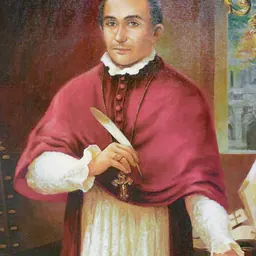

Related people
Same field, nearest in time
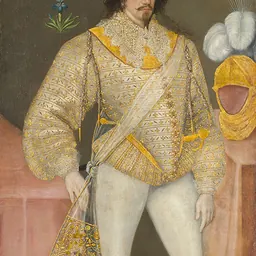
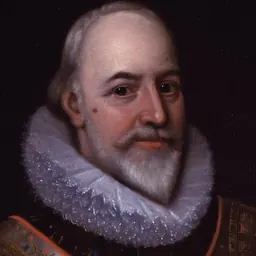

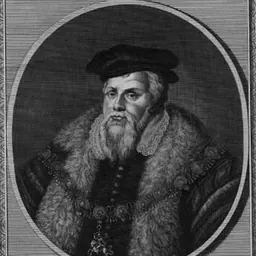

Contemporaries
People whose lives overlapped Juan Cobo's




Frequently asked questions
Who was Juan Cobo?
Spanish diplomat and academic
When was Juan Cobo born?
Juan Cobo was born in 1546 in Consuegra.
When did Juan Cobo die?
Juan Cobo died in 1592 in Taiwan Strait.
What was Juan Cobo's occupation?
Juan Cobo was a diplomat, writer and catholic priest.
What nationality was Juan Cobo?
Juan Cobo was Spanish.
Sources & further reading
Cite this page
APA: Biography.guide. (2026). Juan Cobo. https://biography.guide/juan-cobo/
MLA: "Juan Cobo." Biography.guide, https://biography.guide/juan-cobo/.
Chicago: "Juan Cobo." Biography.guide. https://biography.guide/juan-cobo/.
Data last updated: 2026-09-20 · Spot an error? Report a correction.
Page generated 2026-09-27 05:06 UTC