
About Juan Carlos Goyeneche
Lived 1913 – 1982 (aged 69). Juan Carlos Goyeneche was an Argentine journalist.
Juan Carlos Goyeneche (6 January 1913 – 16 October 1982) was an Argentine Catholic nationalist politician. Also highly sympathetic to Nazism, during the Second World War Goyeneche travelled to Nazi Germany where he met a number of leading figures. He was the son of Mayor of Buenos Aires Arturo Goyeneche and the grandson of a President of Uruguay.
Right-wing activity During his time as a colonel in the Argentine Army Juan Peron had Goyeneche as his confidential agent. He was a close collaborator of the Ausland-Sicherheitsdienst, the overseas intelligence service of Nazi Germany. He was a prominent far right journalist, serving as the editor of the Sol y Luna journal as well as a writer for the Cabildo magazine. He was notorious for the anti-Semitism in his writing.
European trip In April 1942 Goyeneche travelled to Europe as a diplomat, ostensibly to attend a function of the "Hispanic Council", supposedly a cultural group established by Francisco Franco but in fact a front group set up by Enrique Ruiz Guiñazú and Mario Amadeo to send men into Axis territory. In Paris Goyeneche made contact with Schutzstaffel officer Herbert Knochen who agreed to arrange for Goyeneche to make a trip to Berlin. The plan was not taken seriously anywhere, and met particular derision in Brazil where the press mocked both Argentina's delusions of grandeur and the pro-Nazi agenda of their diplomats.
In Nazi Germany Goyeneche finally made it to Berlin in October 1942 where he was placed at the Hotel Adlon at the expense of the Nazi state. Despite this Goyeneche found Ribbentrop a wholly dislikable individual, dismissing him as "pedantic and close-minded".
Goyeneche's next meeting was with Walter Schellenberg, the head of the Ausland-Sicherheitsdienst, a group with which Goyeneche was already familiar. Under instructions from Ribbentrop, who hoped that Argentina might be enticed into the war, details of the meetings were allowed to be wired by telegram back to Guiñazú and Amadeo by Goyeneche. The heavily coded messages were nonetheless intercepted and translated by the US War Department.
Whether or not Goyeneche met Hitler during his time in Germany is a matter of some debate. The United States diplomat W. Wendell Blancke claimed that, while in service to General Dwight Eisenhower at the end of the war in Germany, he saw captured Nazi documents that described a meeting between the two taking place on 7 December 1942 at which Hitler reiterated Ribbentrop's pro-Argentina stance. A secret meeting in the Black Forest was also said to have taken place in 1944 amongst Goyeneche's friends. Goyeneche himself claimed that Ribbentrop had given him a letter written by Hitler but that no meeting had ever taken place. Reinebeck meanwhile, under interrogation, denied that there had been any contact between Goyeneche and Hitler whatsoever.
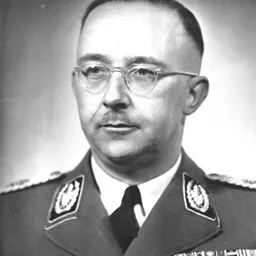
In January 1943 however Goyeneche did meet Heinrich Himmler after Schellenberg took him the eastern headquarters of the Reichsführer-SS. The discussion was largely limited to general ideas, although Himmler expressed similar supportive ideas as Ribbentrop and Goyeneche found him to be much more pleasing company than he had the Foreign Minister.
Italy and Spain Soon after the Himmler meeting Goyeneche left Germany and briefly returned to Spain to have lunch with Ramón Serrano Súñer. He informed the Spanish Foreign Minister that he intended to return to Rome to host a conference at which Catholic delegates from across Europe would meet to discuss how they could "integrate the Christian order in the New Order".
Returning to Rome he held a series of meetings with Monsignor Giovanni Montini as well as two more with Pius XII before eventually meeting Benito Mussolini. Goyeneche obtained a number of concessions from the Italian dictator, including a pledge to support Argentina's claim to the Falklands and a guarantee that he would obtain the same unequivocal support from Germany and Japan. Mussolini also publicly supported a plan to overthrow President Ramón Castillo and the 1943 Argentine coup d'état followed quickly after this pronouncement. Goyeneche also sought and received a guarantee from Mussolini that the Axis powers had no desire to end Argentine independence or that of any Latin American state, a common claim of Allied propaganda in the region. Mussolini also intimated that whatever shape South America would take after an Axis victory he envisaged Argentina as being the leading power.
Goyeneche spent the final months of the war in Spain and from his base in Cádiz he was in contact with Himmler until near the end. Indeed, it has been claimed that Goyeneche facilitated communication between Himmler and Peron at this stage.
In Argentina When Peron was overthrown in 1955 Goyeneche initially found himself remaining in favour as his close friend Pierre Daye had him appointed culture and press secretary at the Casa Rosada. Goyeneche and Daye however were soon persona non grata as the new government under Pedro Eugenio Aramburu decided to purge the Nazi sympathisers from public life. Nonetheless he was a strong ideological influence on the activities of the violent Tacuara Nationalist Movement that emerged in the 1960s.
He died in Buenos Aires on 16 October 1982.
Don’t just read it —
keep it.
Full-length biographies made to live with: read them, listen on the way to work, watch them tonight.
- E-book
- Audio
- Video
Instant download · yours to keep · every purchase keeps this site free
Important facts
People in Juan Carlos Goyeneche's life
Named in this biography and alive at the same time





Related people
Same field, nearest in time

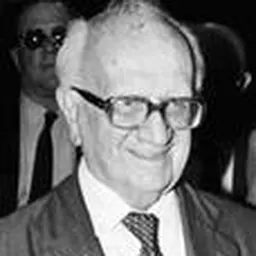
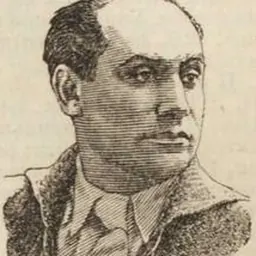

Contemporaries
People whose lives overlapped Juan Carlos Goyeneche's

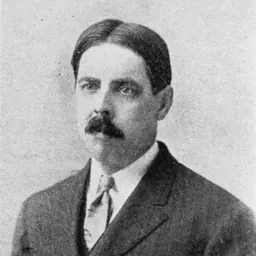

Frequently asked questions
Who was Juan Carlos Goyeneche?
Argentine politician
When was Juan Carlos Goyeneche born?
Juan Carlos Goyeneche was born on 6 January 1913 in Buenos Aires.
When did Juan Carlos Goyeneche die?
Juan Carlos Goyeneche died on 16 October 1982 in Buenos Aires.
What was Juan Carlos Goyeneche's occupation?
Juan Carlos Goyeneche was a journalist.
What nationality was Juan Carlos Goyeneche?
Juan Carlos Goyeneche was Argentine.
Sources & further reading
· Wikipedia: Juan Carlos Goyeneche
· DBpedia: Juan Carlos Goyeneche
Cite this page
APA: Biography.guide. (2026). Juan Carlos Goyeneche. https://biography.guide/juan-carlos-goyeneche/
MLA: "Juan Carlos Goyeneche." Biography.guide, https://biography.guide/juan-carlos-goyeneche/.
Chicago: "Juan Carlos Goyeneche." Biography.guide. https://biography.guide/juan-carlos-goyeneche/.
Data last updated: 2026-09-20 · Spot an error? Report a correction.
Page generated 2026-09-27 05:16 UTC