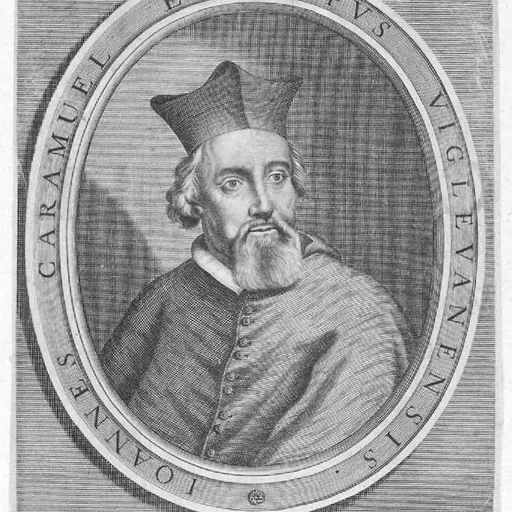
Juan Caramuel y Lobkowitz
Spanish mathematician and theologian
About Juan Caramuel y Lobkowitz
Lived 1606 – 1682 (aged 76). Juan Caramuel y Lobkowitz was a Spanish mathematician, philosopher, theologian, musicologist, linguist and architect.
Juan Caramuel y Lobkowitz (Juan Caramuel de Lobkowitz, 23 May 1606 in Madrid — 7 or 8 September 1682 in Vigevano) was a Spanish Catholic scholastic philosopher, ecclesiastic, mathematician, polyglot, and writer. He is believed to be a great-grandson of Jan Popel y Lobkowicz.
Life
Early life and education Juan Caramuel was born in Madrid on 23 May 1606. His father, Lorenzo Caramuel de Lobkowitz, was descended from a noble Czech / Bohemian family; his mother, Catarina Frisse, was related to the Danish royal family. He was instructed in oriental languages by Archbishop Juan de Esron (Ezron). By the age of 17, he was studying at the University of Alcalá de Henares, where he took his degree in the humanities and philosophy. His theological teachers at the University of Alcalá included the Dominicans John of St. Thomas (João Poinsot, 1589–1644) and Francisco de Araujo (1580–1664) as well as the Cistercian Pedro de Lorca (1521–1621).
He was a precocious child, early delving into serious problems in mathematics and even publishing astronomical tables at the age of ten, Caramuelis primus calamus (Madrid 1617). He studied Chinese. He was received into the Cistercian Order at the monastery of La Espina, in the diocese of Palencia in 1625, and after ordination entered upon a varied and brilliant career. He served in the monastery of Montederramo (diocese of Orense), then Santa María del Destierro (Salamanca), where he completed his studies. He probably attended the last classes of Agustín Antolínez (1554–1626), in that time the major theologian of the Augustinian Order in Salamanca. He then taught in houses in Alcalá, Palazuelos, and Salamanca. He then travelled to Portugal for the sake of studying oriental languages, and from there he moved to the Low Countries (the Spanish Netherlands), where he resided from 1635 to 1644.
In the Netherlands Caramuel's sermons attracted the favorable attention of the Infante Ferdinand, Governor of the Low Countries, while he was attached to the monastery of Dunes in Flanders. He assisted Don Ferdinand in the defense of the city of Louvain from the attacks of the French and the Dutch, as engineer and chief of works, for which Don Ferdinand appointed him court preacher. Through Don Ferdinand, Caramuel became friends with Marie de' Medici, the exiled former queen-mother of France (1630–1642), who lived in Bruxelles, though she visited her daughter, the queen of England, for a period of three years. Through Marie's influence, Caramuel was appointed Vicar General of the Carthusians in England, Ireland, and Scotland; and named Abbot of Melrose.
In 1638 he defended his academic theses with great success, and was granted the degree of Doctor of Theology by the University of Leuven on 2 September 1638. Having learned more of the doctrines of Cornelius Jansen, who had died earlier in that year, Caramuel embarked on a preaching crusade through Belgium and Germany, especially Mainz. An inscription in the cathedral of Vigevano claims he brought some 30,000 persons back to practicing Roman Catholicism.
The Thirty Years' War Caramuel's patron, the Cardinal Infante Ferdinand, died on 9 November 1641. When he was obliged to leave the Electorate of the Palatinate, Philip IV of Spain made him his envoy to the court of Emperor Ferdinand III whose court was residing in Prague at the time. He was in turn Abbot of Melrose (Scotland), Abbot-Superior of the Benedictines of Vienna, Abbot of the Benedictine Emmaus Monastery in Prague (1647), and Grand-Vicar to the Archbishop of Prague, Ernst Augustus z Harrach (1623–1667).
In 1648, when the Swedes attacked Prague, Caramuel armed and led a military division of ecclesiastics who helped defend the city. His bravery on this occasion merited for him a collar of gold from the emperor. "Being active in the political struggles of his time and carrying out the project of re-Catholicisation perhaps too vigorously," according to Petr Dvořák, "he made himself many enemies even within the Catholic camp." He soon left Central Europe for Italy.
Bishop Caramuel In 1656 Caramuel visited Rome for the first time, where Pope Alexander VII named him Consultor of the Holy Office (Inquisition) and Consultor of the Sacred Congregation of Rites. Pope Alexander knew Caramuel well, since he had been papal legate in Cologne from 1639 to 1651. Soon after, on 9 July 1657, he was named Bishop of Campagna e Satrianum (1657–1673), a small and poor diocese in the Kingdom of Naples.
On 25 July 1673, Caramuel was appointed to the diocese of Vigevano near Milan (1673–1682), which he held until his death on 8 September 1682.
Caramuel was in active correspondence with famous scholars: the philosophers René Descartes and Pierre Gassendi; the Jesuit polymath Athanasius Kircher; the Czech Capuchin friar and astronomer Anton Maria Schyrleus of Rheita, the Bohemian doctor Jan Marek Marci, Pope Alexander VII (Fabio Chigi), who was a great admirer of his work; the Belgian astronomer Godefroy Wendelin, the theologians Franciscus Bonae Spei and Antonino Diana, Giovanni Battista Hodierna, Johannes Hevelius, Valerianus Magnus, Juan Eusebio Nieremberg, and many others.
He knew 24 languages. and reminds that Augustine did not wish to be followed blindly. Augustine gave himself the example of a continuous change and progress of opinion in his numerous Retractationes (cf. Aug.'s reconsideration in persev. 21.55).
Caramuel loved to defend novel theories, and in Theologia moralis ad prima atque clarissima principia reducta (Leuven, 1643) tried to solve theological problems by mathematical rules. He was a leading exponent of probabilism and his permissive moral opinions were criticized in Pascal's Provincial Letters and gained for him from Alphonsus Liguori the title of "Prince of the Laxists". Contemporary theologian Julia A. Fleming argues with this assessment.
His mathematical work centred on combinatorics and he was one of the early writers on probability, republishing Huygens's work on dice with helpful explanations. Caramuel's Mathesis biceps presents some original contributions to the field of mathematics: he proposed a new method of approximation for trisecting an angle and proposed a form of logarithm that prefigure cologarithms, although he was not understood by his contemporaries. Caramuel was also the first mathematician who made a reasoned study on non-decimal counts, thus making a significant contribution to the development of the binary numeral system. Rationalis et realis philosophia, Leuven, 1642.
Theologia moralis fundamentalis, praeterintentionalis, decalogica, sacramentalis, canonica, regularis, civilis, militaris, Frankfurt, 1652–1653. Theologia rationalis, Frankfurt, 1654–1655. Theologia moralis fundamentalis, editio secunda, Rome, 1656.
Arquitectura civil recta y oblicua..., Vigevano, C. Corrado, 1678[-1679]. Leptotatos, latine subtilissimus, Vigevano 1681 (in Latin). (Spanish translation: Leptotatos [Neuva lengua sutilisima] Metalogica, Pamplona: Eunsa, 2008
Don’t just read it —
keep it.
Full-length biographies made to live with: read them, listen on the way to work, watch them tonight.
- E-book
- Audio
- Video
Instant download · yours to keep · every purchase keeps this site free
Important facts
People in Juan Caramuel y Lobkowitz's life
Named in this biography and alive at the same time


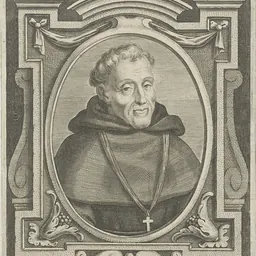
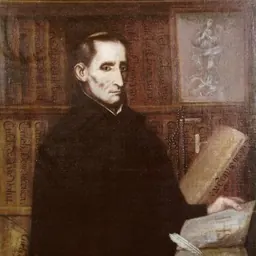

Related people
Same field, nearest in time
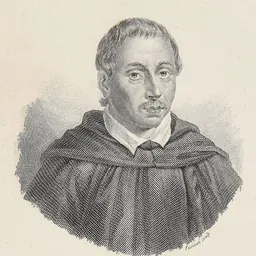
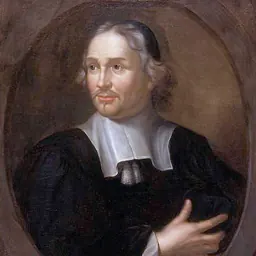

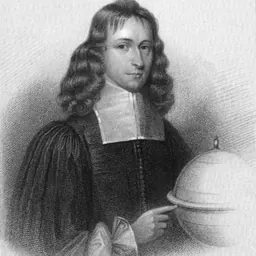

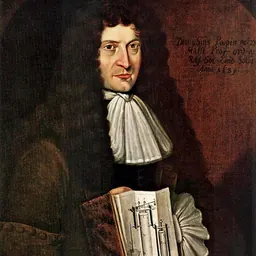
Contemporaries
People whose lives overlapped Juan Caramuel y Lobkowitz's





Frequently asked questions
Who was Juan Caramuel y Lobkowitz?
Spanish mathematician and theologian
When was Juan Caramuel y Lobkowitz born?
Juan Caramuel y Lobkowitz was born on 23 May 1606 in Madrid.
When did Juan Caramuel y Lobkowitz die?
Juan Caramuel y Lobkowitz died on 7 September 1682 in Milan, Vigevano.
What was Juan Caramuel y Lobkowitz's occupation?
Juan Caramuel y Lobkowitz was a mathematician, philosopher, theologian, musicologist, linguist and architect.
What nationality was Juan Caramuel y Lobkowitz?
Juan Caramuel y Lobkowitz was Spanish.
Sources & further reading
· Wikipedia: Juan Caramuel y Lobkowitz
· DBpedia: Juan Caramuel y Lobkowitz
Cite this page
APA: Biography.guide. (2026). Juan Caramuel y Lobkowitz. https://biography.guide/juan-caramuel-y-lobkowitz/
MLA: "Juan Caramuel y Lobkowitz." Biography.guide, https://biography.guide/juan-caramuel-y-lobkowitz/.
Chicago: "Juan Caramuel y Lobkowitz." Biography.guide. https://biography.guide/juan-caramuel-y-lobkowitz/.
Data last updated: 2026-09-20 · Spot an error? Report a correction.
Portrait: Wikimedia Commons · author & licence
Page generated 2026-09-27 04:58 UTC