
About Józef Walaszczyk
Lived 1919 – 2022 (aged 102). Józef Walaszczyk was a Polish entrepreneur and artisan.
Józef Władysław Walaszczyk (13 November 1919 – 20 June 2022) was a Polish leatherworker and businessman who was declared Righteous Among the Nations in 2002 for sheltering Jews during the Holocaust. He has been described as a "second Schindler" or "Polish Schindler".
Early life Walaszczyk was born in Częstochowa into an affluent intelligentsia family. His mother was a feldsher and his father a journalist. In 1927, after his father died during a visit to the United States, the family's financial situation worsened. His mother decided to move from Warsaw to Rylsk where their cousin, Ludwik Okęcki, owned an estate and a potato flour factory. Walaszczyk continued his education in Częstochowa, Aleksandrów Kujawski, Łowicz, and Piotrków Trybunalski. Before outbreak of the war, he had passed the junior high school graduation examination and was studying at the senior high school of commerce in Warsaw. He lived in a studio apartment at 34 Krucza Street and worked in trade, achieving enough success to lead a comfortable lifestyle. At that time, he had some Jewish acquaintances. He spent his holidays in Rylsk, where Okęcki taught him to run the estate. In 1938, he joined the National Party but quickly left due to its antisemitism.
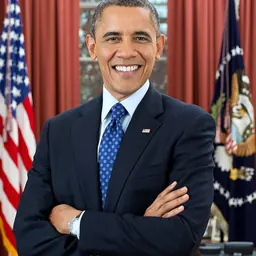
Second World War Rylsk In June 1939, Walaszczyk participated in a military preparatory course near Lidzbark Warmiński. After Germans invaded Poland on 1 September 1939, he was mobilised and sent to Brześć, Eastern Poland. Following the Soviet Union attacked Poland on 17 September 1939, Walaszczyk and his cousin, who was also sent there, decided to return to Rylsk instead of going to the Romanian Bridgehead, their initial plan. Despite difficulties (Józef was arrested for a couple of days by Germans), they reached Rylsk at the end of September. In December 1939, thanks to his knowledge of German, Walaszczyk was appointed manager of the factory and administrator of the entire estate in Rylsk. He employed around 200 workers, including his family, friends, and others from the community (including Jews), providing them with food and accommodation. Probably in 1941, one of his friends from before 1939, Wengrow, asked him to employ forty Jews from the ghetto in Rawa Mazowiecka. Walaszczyk agreed as he owed him a favour. He obtained permission from Miller, head of the local Arbeitsamt (labour office), convincing him with a large bribe to take 30 Jews. Walaszczyk needed to provide another installment of the bribe every two weeks. The hired Jews had a sufficiently good situation to care for themselves, so Walaszczyk did not need to feed them. However, after about a year, Miller withdrew his permission. Walaszczyk advised his workers to hide if Germans appeared. When he was on his way to the Arbeitsamt, German officers arrived at the estate with trucks. A few Jews who had not hidden were arrested and transported to the ghetto in Łódź. The rest hid and survived. so she could attempt to be put on the non-Jewish Volksliste. At the end of October 1941, Front was detained with a group of 20 Jewish acquaintances. Walaszczyk, informed about the situation, came to Warsaw. At the police station, where the Home Army had an agent, he was informed that all 21 Jews would be released if he brought the Germans a kilogram of gold (2.2 lb) within 5 hours. He frequently bribed a tram driver to slow down when passing the ghetto so he could jump off safely. During one of his visits in 1943, he contracted typhus and spent a couple of weeks recovering at the flat on Emilii Plater Street. In January 1945, he and Front returned to Warsaw where they stayed until the end of the war. In the meantime, he obtained permission to work as a master leatherworker, which allowed him to open his own workshop at 18 Jana III Sobieskiego Street in Warsaw. He continued to run it until he was very old. In 2009, he was among the representatives of Polish Righteous during a visit to the United States, which included meeting with President Barack Obama. In the same year, KARTA Center published his memoirPrzywracanie pamięci (Restoring Memory). In 2019, his 100th birthday was commemorated by President of Poland Andrzej Duda. Walaszczyk died on 20 June 2022 in Warsaw.
Honours
Righteous Among the Nations (2002) Commander of the Order of Polonia Restituta (2008) Bronze Cross of Merit Pro Patria Medal (2017) Pro Bono Poloniae Medal (2019)
Don’t just read it —
keep it.
Full-length biographies made to live with: read them, listen on the way to work, watch them tonight.
- E-book
- Audio
- Video
Instant download · yours to keep · every purchase keeps this site free
Important facts
People in Józef Walaszczyk's life
Named in this biography and alive at the same time



Related people
Same field, nearest in time




Contemporaries
People whose lives overlapped Józef Walaszczyk's



Frequently asked questions
Who was Józef Walaszczyk?
Polish Righteous Among the Nations
When was Józef Walaszczyk born?
Józef Walaszczyk was born on 13 November 1919 in Częstochowa.
When did Józef Walaszczyk die?
Józef Walaszczyk died on 20 June 2022 in Warsaw.
What was Józef Walaszczyk's occupation?
Józef Walaszczyk was an entrepreneur and artisan.
What nationality was Józef Walaszczyk?
Józef Walaszczyk was Polish.
Sources & further reading
Cite this page
APA: Biography.guide. (2026). Józef Walaszczyk. https://biography.guide/jozef-walaszczyk/
MLA: "Józef Walaszczyk." Biography.guide, https://biography.guide/jozef-walaszczyk/.
Chicago: "Józef Walaszczyk." Biography.guide. https://biography.guide/jozef-walaszczyk/.
Data last updated: 2026-09-22 · Spot an error? Report a correction.
Page generated 2026-09-27 05:33 UTC