
About Jovan Rašković
Lived 1929 – 1992 (aged 63). Jovan Rašković was a Serbian psychiatrist, university teacher, politician and writer.
Jovan Rašković (, ; 5 July 1929 – 28 July 1992) was a Croatian Serb politician. He was leader of the Serb Democratic Party.
Early life Rašković was born in Knin in 1929. During World War II in Yugoslavia, after a pogrom by the Ustaše which resulted in the deaths of his relatives, he was exiled to Kistanje in Italian-occupied Dalmatia. Witnessing, in 1941, the psychological effect of genocide on a bereaved man from Kistanje who had lost his family left a strong impact on his worldview.
He passed his secondary school exams in Šibenik, and graduated in Zagreb. He studied medicine at the University of Zagreb, receiving his diploma in 1956 and a degree in psychiatry in 1962.
Career Before the wars In the 1960s, he served as director of Šibenik city hospital and later director of the medical center. He was one of the founders of the Medical Research Institute of Neurophysiology in Ljubljana. Rašković was a member of the Serbian Academy of Sciences and Arts, the Academy of Medical Sciences of Croatia and a number of psychiatry associations in the United States, Czechoslovakia and Italy. He was a university professor in Zagreb and Ljubljana and a visiting professor at the Universities of Pavia, Rome, Houston and London. Rašković split his time between his house in Primošten and his apartment in Šibenik.
Although he was not a member of the Serbian Academy of Sciences and Arts at the time of its drafting, at least one source claimed that he was extensively consulted from his home in Croatia by Serbian nationalist intellectual Dobrica Ćosić when the controversial 1986 SANU Memorandum was being developed. Moreover, later in 1990, Rašković was formally inducted into the organisation. |source=
In this book, he also argued that the lack of collective guilt on the part of Croats for the genocides during World War II, which had left Serbs traumatised, had brought about "asymmetrical memories of recent history," which would bring conflict between the two ethnic groups. He noticed that there was no equivalent party in Bosnia and Herzegovina so he contacted Radovan Karadžić, a colleague, to suggest for him to establish one. The two, both psychiatrists by profession, gave lectures in Bosnia-Herzegovina from the period of 1990–1991, in which they tried to incite "hatred and militancy" among the local Serbs there, Tuđman's chief political advisor, Slaven Letica, had the words secretly taped and leaked the transcript to Croatian media to discredit Rašković among his people and then replace him with someone more acceptable to the Croatian government. That backfired, as, instead of rejecting Rašković, many Serbs lost any trust in Croatian government and embraced extremism and then armed conflict. For his part, Tuđman, an ardent Croatian nationalist, rejected Rašković's more moderate demands, thus legitimising the rise of more radical Serbian nationalist resistance forces. The most important of these demands was the continued recognition of Serbs as a constituent people of Croatia, which Tuđman's government rejected; in December 1990, a new Croatian constitution was passed which, although it granted cultural autonomy to Serbs, said that Croatia was legally the "national state of the Croats" only.
To make matters worse, Rašković was also receiving pressure from Belgrade, which political scientist Nina Caspersen argued was more instrumental in increasing tensions than Tuđman's hardline stances. Moreover, Rašković, an anti-communist nationalist, publicly opposed Serbian president Slobodan Milošević, whom he referred to as "a big Bolshevik, a communist, and a tyrant to the tips of his toes." He also tried competing electorally in Serbia against Milošević, whereas the more militant Milan Babić showed unreserved support for Milošević and, in turn, received support from him.
Rašković later expressed fear about the collective state of mind of Serbs, saying that "Serb myths have entered the Serb spirit, but with a dose of poison, spite, vengeance, [and] regression," which he believed needed to be "controlled in order to make less poisonous."
Death and legacy Rašković died in Belgrade from a heart attack on 28 July 1992 at the age of 63. Bosnian Serb leader Radovan Karadžić, who was a friend and colleague, considered Rašković to be "his main role model and inspiration."
He is interred in the Alley of Distinguished Citizens in the Belgrade New Cemetery. In addition, there are streets in Trebinje, Prijedor, Banja Luka and Novi Banovci named in his honor as well.
Don’t just read it —
keep it.
Full-length biographies made to live with: read them, listen on the way to work, watch them tonight.
- E-book
- Audio
- Video
Instant download · yours to keep · every purchase keeps this site free
Important facts
Family & relationships
People in Jovan Rašković's life
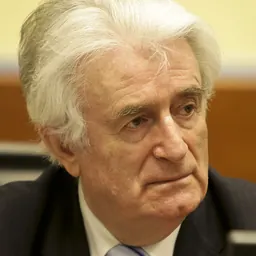
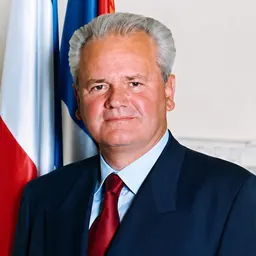
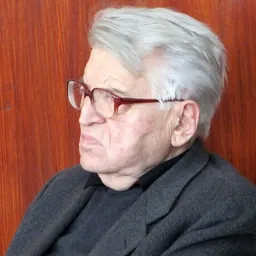
Named in this biography and alive at the same time


Related people
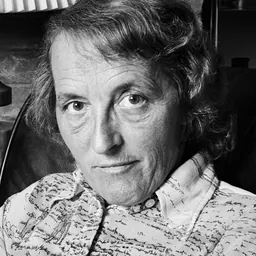
Same field, nearest in time

Contemporaries
People whose lives overlapped Jovan Rašković's



Frequently asked questions
Who was Jovan Rašković?
Croatian Serb politician (1929-1992)
When was Jovan Rašković born?
Jovan Rašković was born on 5 July 1929 in Knin.
When did Jovan Rašković die?
Jovan Rašković died on 28 July 1992 in Belgrade.
What was Jovan Rašković's occupation?
Jovan Rašković was a psychiatrist, university teacher, politician and writer.
What nationality was Jovan Rašković?
Jovan Rašković was Serbian.
Sources & further reading
Cite this page
APA: Biography.guide. (2026). Jovan Rašković. https://biography.guide/jovan-raskovic/
MLA: "Jovan Rašković." Biography.guide, https://biography.guide/jovan-raskovic/.
Chicago: "Jovan Rašković." Biography.guide. https://biography.guide/jovan-raskovic/.
Data last updated: 2026-09-20 · Spot an error? Report a correction.
Page generated 2026-09-27 05:19 UTC