
About Josiah White
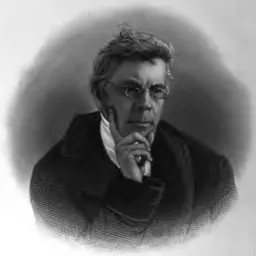
Lived 1781 – 1850 (aged 68–69). Josiah White was an American civil engineer and engineer.
Josiah White (1781–1850) was a Pennsylvania industrialist and key figure in the American Industrial Revolution.
Career Pennsylvania navigation development White began early factory-centered mill production in 1808 in water powered ironworks near Philadelphia, along with his partner, Erskine Hazard, when they quickly found their first mill at East Falls, Pennsylvania, to be much too small. They then built a more elaborate and larger mill nearby to refine pig iron and produce cast iron artifacts and roll wrought bar iron goods, including nails and wire. The pair were especially influential after 1814 in helping the American Industrial Revolution to accelerate its building momentum by agitating for infrastructure investment, sponsoring two key river navigations and the nation's first long railway, and then after initial success, increasingly supplying an expanding part of the country's overall energy needs including that of other industrialists at a time when there occurred the prolonged first energy crisis in the brief history of the country, where forests had grown remote from population centers through over logging, charcoal and imported coal were increasing in price rapidly, and fire wood was growing dearly expensive.
White was a mill owner, and early pioneer in the advancement of civil engineering, mining, iron production, water transport. and railroad development, boat and barge shipping & construction. An innovative open-minded pragmatist, most of all in response to the energy crises in the early 19th century, his focus from 1815 on was mostly about the mining, and delivery of anthracite coal to others for their manufacturing and domestic heating needs in everyday life. Having taken over an 1808 speculative charter to build locks and mill races along the Schuylkill River's falls, which today is the shoreline along the East Falls region of Philadelphia. Historian Charles V. Hagner wrote that, "Erskine Hazard was the partner of Josiah, White in the iron and wire business; in the, erection of the locks and mill-seats he had, another partner, Joseph Gillingham. They finished the locks and canal on the western side of, the river and two mills were built there — one a sawmill, the other for making white lead." These were in addition to the two main mills of White and Hazard, which were on the east or left bank.
During the War of 1812, he succeeded in the effort to find a way to ignite and burn anthracite coal.
Along with partner Erskine Hazard, White helped found numerous companies. Most were either mining operations or transportation enterprises to establish a better infrastructure for coal, people, and other industrial materials needs (ores, timber, and finished goods) in the Schuylkill Valley, the Lehigh Valley, the Delaware Valley, and Wyoming Valley regions. Having commissioned anthracite shipment by mule train from up the Schuylkill, in 1815 White and Hazard started the Lehigh Canal machinations as commissioners, but were not selected by investors to become the operations managers elected to work out ways and means.
The managers selected a slow plodding approach with which the partners quarreled, championing instead a means to deliver coal down river much more quickly using temporary dams and artificial freshets in order to produce revenue from one way traffic delivering coal. This method was rejected by the managers, resulting in the belated first deliveries of coal on the Schuylkill Canal only in 1823, while their method delivered record amount of 365 long-tons of anthracite coal down the Lehigh Canal to Philadelphia in December 1820, four years ahead of promises. Their Lehigh Coal and Navigation Companies are credited with being the earliest known example of vertical integration, the companies each sourcing at least part of the needs of the next domino in the chain.
White experimented with a succession of fireplace and furnace grates until he created artifacts allowing stone coal to replace expensive firewood for heating. In 1818 White's wire works built the first (temporary) wire suspension bridge over the Falls of the Schuylkill using trees and tall buildings near the river to string catenary cables from which a board walk was suspended attached by wires. In the 1820s White and Hazard experimented with blast furnace production of smelted pig iron using charges of anthracite in Mauch Chunk in present-day Jim Thorpe, Pennsylvania, and succeeded in part, perhaps as much as any in the United States, for their processes could not always reliably repeat, so were not commercially viable in the long run.
This primed them to import skills and necessary equipment when news of successful use of anthracite pig iron processes arrived from Wales in 1838; subsequently he invested heavily and had, as the operating manager, had the Lehigh Coal & Navigation Company invest in the Lehigh Crane Iron Company backing the importing of professional talent from Wales to establish the first sustainably-successful blast furnaces of the region in Catasauqua, and established the first wire rope factory in the United States in Mauch Chunk, which enabled Ashley Planes and up cable railway conversion and expansion of Mauch Chunk Switchback Railway.
Lehigh Coal Company and Lehigh Navigation Company In 1814, White and Hazard acquired the last two punts that the Lehigh Coal Mine Company (LCMC) managed to pole downriver to Philadelphia, after losing more boats than successfully reached the docks. The losses represented the disappointing outcome of more than a year of work by the party sent out the previous year to build boats and mine coal for shipment.They soon learned the LCMC was not intending to send out other expeditions, being of a mind they'd lost sufficient money, so White and Hazard felt the companies rights could be leased and set out to examine Lehigh's course, and tour the mine site along Pisgah Ridge to examine why both mining and delivery of coal was supposedly so difficult.
They concluded the surface outcrops at the mine located in what today is Summit Hill, Pennsylvania would be easy to mine with the proper digging tools capable of breaking the hard mineral. Examination of the mountainous terrain back towards the Lehigh, they conceived a wagon road which descended steadily to a point above the river, so loading of boats could be done by chute. Lastly, they concluded the necessary river depth could be achieved for a safe down descent by employing a quasi-lock gate that sprang to mind as he examined the situations. In the event, they returned home filled with enthusiasm convinced that good management could achieve a regular supply of coal to customers in Philadelphia. In short order they obtained an option on leasing the mining and other rights held by the despondent owners of the LCMC, and began activities promoting the venture.
Erskine Hazard-founding partners of the Lehigh Coal Company, the Lehigh Navigation Company, Ashley Planes, the Lehigh Canal, Lehigh and Susquehanna Railroad, Lehigh Coal & Navigation Company, Mauch Chunk Switchback Railway, and the Lehigh and Susquehanna Railroad.
White's Manual Labor Institute A boarding school was established by the Society of Friends in the state of Indiana through a bequest at White's death in 1850. It opened in 1861 as a mixed-race boarding school, intending to "take boys and girls without distinction of color" Among the graduates of this school was Zitkala-Ša in 1887.
Other companies White also was a founder of Beaver Meadow Railroad and Coal Company, which began producing coal in 1813. The company was the first to employ steam locomotives, which were used throughout the Lehigh Valley region of eastern Pennsylvania.
Don’t just read it —
keep it.
Full-length biographies made to live with: read them, listen on the way to work, watch them tonight.
- E-book
- Audio
- Video
Instant download · yours to keep · every purchase keeps this site free
Important facts
Related people
Same field, nearest in time

Contemporaries
People whose lives overlapped Josiah White's




Frequently asked questions
Who was Josiah White?
Coal technology pioneer
When was Josiah White born?
Josiah White was born in 1781 in Mount Holly.
When did Josiah White die?
Josiah White died in 1850 in Philadelphia.
What was Josiah White's occupation?
Josiah White was a civil engineer and engineer.
What nationality was Josiah White?
Josiah White was American.
Sources & further reading
Cite this page
APA: Biography.guide. (2026). Josiah White. https://biography.guide/josiah-white/
MLA: "Josiah White." Biography.guide, https://biography.guide/josiah-white/.
Chicago: "Josiah White." Biography.guide. https://biography.guide/josiah-white/.
Data last updated: 2026-09-20 · Spot an error? Report a correction.
Page generated 2026-09-27 05:24 UTC