
About Josiah Gregg
Lived 1806 – 1850 (aged 43). Josiah Gregg was an American explorer, lawyer, journalist, naturalist, botanical collector and scientific collector.
Josiah Gregg (19 July 1806 – 25 February 1850) was an American merchant, explorer, naturalist, and author of Commerce of the Prairies, about the American Southwest and parts of northern Mexico. He collected many previously undescribed plants on his merchant trips and during the Mexican–American War, for which he has often been credited in botanical nomenclature. After the war he went to California, where he reportedly died of a fall from his mount due to starvation near Clear Lake on 25 February 1850, following a cross-country expedition which fixed the location of Humboldt Bay.
Early years Josiah Gregg was born on July 19, 1806, in Overton County, Tennessee, the youngest son of seven children of Harmon and Susannah (Smelser) Gregg. Six years later his family moved to Howard County, Missouri.
By 1840, Gregg had learned Spanish, crossed the plains between Missouri and Santa Fe four times, traveled the Chihuahua Trail into Mexico, and become a successful businessman.
Only a few months later, he traveled through the Oklahoma Territory as far west as Cache Creek in the Comanche territory.
Commerce of the Prairies
Gregg's book Commerce of the Prairies, published in two volumes in 1844, is an account of his time spent as a trader on the Santa Fe Trail from 1831 to 1840 and includes commentary on the geography, botany, geology, and culture of New Mexico. Gregg wrote about local people and described Indian culture and artifacts. The book was an immediate success and established Gregg's literary reputation. It went through several editions, sold a large number in England, and was translated into French and German. As part of his equipment for his trip to Santa Fe with the Owens wagon train were special-sized plates for his sixth-plate camera, probably delivered to him by naturalist Friedrich Adolph Wislizenus. In this capacity, he traveled through Chihuahua. Gregg traveled to Washington, D.C., where he was unimpressed after meeting President James K. Polk, and took a series of steamships down the Mississippi River into the Gulf of Mexico, then up the Rio Grande and back to Saltillo at the end of 1847. Through the spring of 1848 he actively practiced medicine for the first time since earning his degree.
Gold Rush and Humboldt Bay In 1849, Gregg joined the California Gold Rush by sailing from Mazatlán to San Francisco, eating canned food for the first time and remarking in a letter that he liked it. He left field notes with his former partner Jesse Sutton and gave Sutton instructions what to do with them if he did not return from what might turn out to be his last trip. Shortly thereafter he visited placer mines on the Trinity River. The roster of the party was: Gregg; Thomas Seabring of Ottawa, Illinois; David A. Buck of New York; J. B. Truesdale of Oregon; Charles C. Southard of Boston; Isaac Wilson of Missouri; Lewis Keysor Wood of Kentucky; and James Van Duzen.
They had been told by Indians that the Pacific Ocean was an eight-day journey, so they provisioned for ten days' rations. The party instead followed the river until it became impassable, then went west. they emerged from the redwood forests and saw the ocean at the mouth of a watercourse which they called the Little River. and passed through present-day Eureka on 26 December.
Southard's story of burying Gregg after his death may not be the whole truth. Other reports say he died on February 25 near Clear Lake, California, of poor health and the hardships of his journey, while another casts doubt on the story that his companions buried him, instead suggesting he survived at least briefly at an Indian village.
About eighty plant names were originally assigned to honor Gregg; as of 2002, 47 Mexican and Southwestern plant species bear the specific patronym .
Publications Josiah Gregg, Commerce of the Prairies, ed. Max I. Moorhead, University of Oklahoma Press, Norman, Oklahoma, 1954. Josiah Gregg, Diary and Letters of Josiah Gregg, 2 volumes, University of Oklahoma Press, Norman, Oklahoma, 1941, 1944. Josiah Gregg, "Commerce of the Prairies, or, The Journal of a Santa Fé trader, during eight expeditions across the great western prairies, and a residence of nearly nine years in northern Mexico", 2 vols., Moore, Philadelphia, 1849. Available at https://archive.org/details/commerceofpra01greg
Don’t just read it —
keep it.
Full-length biographies made to live with: read them, listen on the way to work, watch them tonight.
- E-book
- Audio
- Video
Instant download · yours to keep · every purchase keeps this site free
Important facts
People in Josiah Gregg's life
Named in this biography and alive at the same time
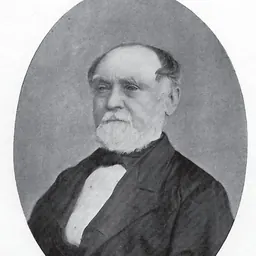

Related people
Same field, nearest in time


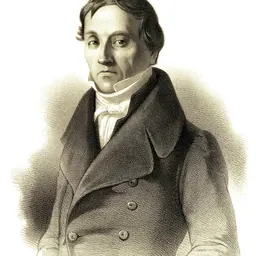
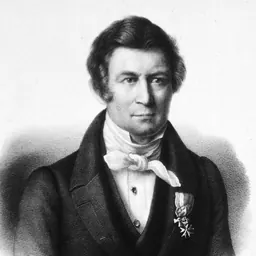
Contemporaries
People whose lives overlapped Josiah Gregg's





Frequently asked questions
Who was Josiah Gregg?
merchant, explorer, naturalist, and author (1806-1850)
When was Josiah Gregg born?
Josiah Gregg was born on 19 July 1806 in Overton County.
When did Josiah Gregg die?
Josiah Gregg died on 25 February 1850 in Clear Lake, California.
What was Josiah Gregg's occupation?
Josiah Gregg was an explorer, lawyer, journalist, naturalist, botanical collector and scientific collector.
What nationality was Josiah Gregg?
Josiah Gregg was American.
Sources & further reading
Cite this page
APA: Biography.guide. (2026). Josiah Gregg. https://biography.guide/josiah-gregg/
MLA: "Josiah Gregg." Biography.guide, https://biography.guide/josiah-gregg/.
Chicago: "Josiah Gregg." Biography.guide. https://biography.guide/josiah-gregg/.
Data last updated: 2026-09-20 · Spot an error? Report a correction.
Page generated 2026-09-27 05:19 UTC