
Joseph Wulf
German biographer and Holocaust survivor
About Joseph Wulf
Lived 1912 – 1974 (aged 61). Joseph Wulf was a German and Polish historian of Modern Age, historian, biographer and opinion journalist, known for Wannsee House.
Joseph Wulf (; 22 December 1912 – 10 October 1974) was a German-Polish Jewish historian. A survivor of the Auschwitz concentration camp, he was the author of several books about Nazi Germany and the Holocaust, including Das Dritte Reich und die Juden (with Léon Poliakov, 1955); Heinrich Himmler; and Martin Bormann: Hitlers Schatten (1962). The House of the Wannsee Conference museum in Berlin houses the Joseph Wulf Library in his honour.
Early life Born in Chemnitz, Germany, the child of a wealthy Jewish merchant, Wulf was raised from 1917 in Kraków, Poland, and educated there in Jewish studies and agriculture. His father had hoped he would become a rabbi, but he turned instead to writing.
Before the war, he married Jenta Falik-Dachner, with whom he had a son, David.
The Holocaust After Nazi Germany occupied Poland in 1939, sparking World War II, the Wulf family was deported to the Kraków Ghetto. He became close to famed poet/songwriter Mordechai Gebirtig and painter Abraham Neumann in the ghetto.
Wulf joined a group of Jewish resistance fighters, but he was captured and imprisoned in the Auschwitz concentration camp in 1943, slave labor subcamp Buna-Monowitz. While there, he made the decision to dedicate his life to exposing Nazi crimes. This commitment found fruition after the war, working for the Jewish Historical Commission in Krakow and co-founding of the Centre for the History of Polish Jews in Paris. There, he recorded a number of Yiddish songs to preserve the work of his ghetto friend Gebirtig and of Jakub Weingarten. He also preserved two songs he composed while in Auschwitz, including Sunbeams, which features prominently in the 2023 film The Zone of Interest.
Writing and research At the end of the war, Wulf remained in Poland, where from 1945 to 1947 he co-founded the Central Jewish Historical Commission, publishing documents about Nazi Germany. He moved to Stockholm and in the summer of 1947 to Paris, working for a newspaper and the Centre pour l'Histoire des Juifs Polonais, where he met Léon Poliakov, the French historian. In 1952 he and his wife moved to Berlin. Steven Lehrer writes that Wulf "cut an unmistakeable figure ... e dressed impeccably, carried a walking stick, and held a long cigarette holder clenched between his teeth at a jaunty angle."
Wulf and Poliakov co-wrote Das Dritte Reich und die Juden ("The Third Reich and the Jews"), 1955, published in Berlin by the Arani Verlag. It was followed by two more volumes, Das Dritte Reich und seine Diener ("The Third Reich and its Servants"), 1956, and Das Dritte Reich und seine Denker ("The Third Reich and its Thinkers"), 1959. Nicolas Berg writes that the work "marked the breaking of a West German taboo", placing the Holocaust at the centre of its study of Nazi Germany, unlike the approach of other German historians at the time, and using direct language. Violence and mass murder had been goals of the regime, they wrote, not a means to achieve some other goal. According to Berg, the books were generally regarded as important, but German historians looked down on them as unscholarly.
The first volume included a document signed by Otto Bräutigam, an adviser to Konrad Adenauer, West German Chancellor from 1949 to 1963. Bräutigam had worked for the Nazi's Reich Ministry for the Occupied Eastern Territories. The document signed by Bräutigam said: "Through word of mouth, clarity may well have meanwhile been reached in the Jewish Question," an apparent reference to the Final Solution to the Jewish Question. The publication of this document attracted national and international press coverage. The Federal Defence Ministry refused to include the first volume in its list of books recommended for the German army's libraries, because it contained documents signed by military leaders during the Third Reich who were still active in West Germany.
Wulf went on to publish several more works about Nazi Germany, among them biographies of Heinrich Himmler and Martin Bormann. In 1961 he won the Leo Baeck Prize and in 1964 the Carl von Ossietzky Medal. He was also awarded an honorary doctorate by the Free University of Berlin.
Wulf's most widely-distributed work is Sunbeams, a song he recorded as an afterthought while preserving the work of other composers. It is a highlight in the 2023 film The Zone of Interest.
Selected works with Léon Poliakov (1955). Das Dritte Reich und die Juden, Berlin: Arani-Verlag. A slightly adapted edition was published in Dutch as Het Derde Rijk en de Joden (1956), Amsterdam. with Léon Poliakov (1956). Das Dritte Reich und seine Diener, Berlin: Arani-Verlag. with Léon Poliakov (1959). Das Dritte Reich und seine Denker, Berlin: Arani-Verlag. (1960). Die Nürnberger Gesetze, Berlin. (1960). Heinrich Himmler, Berlin. (1961). Das Dritte Reich und seine Vollstrecker. Die Liquidation von 500.000 Juden im Ghetto Warschau, Berlin: Arani-Verlag. (1962). Martin Bormann: Hitlers Schatten, Gütersloh. (1963). Aus dem Lexikon der Mörder, Gütersloh. (1963). Musik im Dritten Reich, Gütersloh. (1963). Die bildenden Künste im Dritten Reich, Gütersloh. (1963). Literatur und Dichtung im Dritten Reich, Gütersloh. (1963). Theater und Film im Dritten Reich, Gütersloh. (1964). Presse und Funk im Dritten Reich, Gütersloh. (1968). Raoul Wallenberg: Il fut leur espérance, Paris (first published by Colloquium Verlag, Berlin, 1958).
Don’t just read it —
keep it.
Full-length biographies made to live with: read them, listen on the way to work, watch them tonight.
- E-book
- Audio
- Video
Instant download · yours to keep · every purchase keeps this site free
Important facts
People in Joseph Wulf's life
Named in this biography and alive at the same time

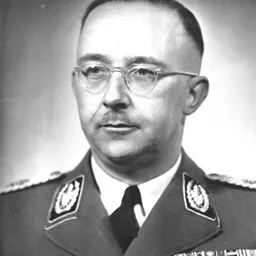

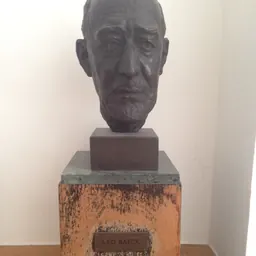
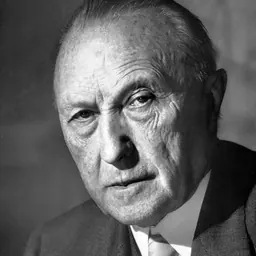

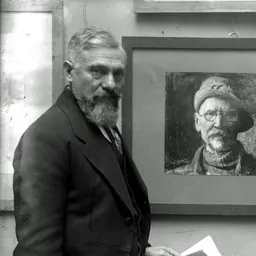
Related people
Same field, nearest in time

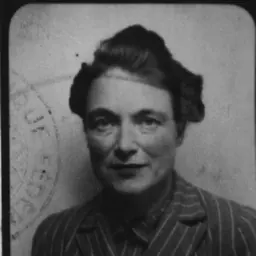
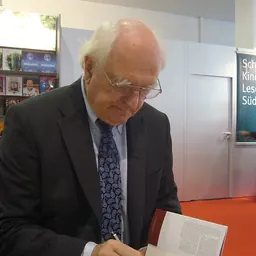


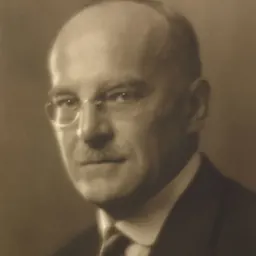
Contemporaries
People whose lives overlapped Joseph Wulf's






Frequently asked questions
Who was Joseph Wulf?
German biographer and Holocaust survivor (1912–1974)
When was Joseph Wulf born?
Joseph Wulf was born on 22 December 1912 in Chemnitz.
When did Joseph Wulf die?
Joseph Wulf died on 10 October 1974 in Charlottenburg.
What was Joseph Wulf's occupation?
Joseph Wulf was a historian of Modern Age, historian, biographer and opinion journalist.
What was Joseph Wulf known for?
Joseph Wulf was known for Wannsee House.
What nationality was Joseph Wulf?
Joseph Wulf was German and Polish.
Sources & further reading
Cite this page
APA: Biography.guide. (2026). Joseph Wulf. https://biography.guide/joseph-wulf/
MLA: "Joseph Wulf." Biography.guide, https://biography.guide/joseph-wulf/.
Chicago: "Joseph Wulf." Biography.guide. https://biography.guide/joseph-wulf/.
Data last updated: 2026-09-22 · Spot an error? Report a correction.
Page generated 2026-09-27 05:12 UTC