
About Joseph Vaz
Lived 1651 – 1711 (aged 59). Joseph Vaz was an Indian catholic priest.
Joseph Vaz CO (21 April 165116 January 1711) was a Oratorian priest and missionary in Dutch Ceylon (now Sri Lanka). Originally from Sancoale in Portuguese Goa, Vaz arrived in Ceylon during the Dutch occupation, a time when the Dutch had banned Catholicism in Ceylon and imposed Calvinism as the official religion after taking control from the Portuguese Empire.
He travelled throughout the island bringing the Eucharist and the Sacraments to clandestine groups of crypto-Catholics. Later in his mission, he found shelter in the Kingdom of Kandy where he was able to work freely. By the time of his death, Vaz had managed to rebuild the Catholic Church on the island.
As a result of his labors, Vaz is known as the Apostle of Ceylon. On 21 January 1995, he was beatified by Pope John Paul II in Colombo. He was canonized on 14 January 2015 by Pope Francis in an open-air Mass ceremony at the Galle Face Green in Colombo.
Early life The third of six children, Vaz was born in 1651 at Benaulim, his mother's village in Goa, then known as Portuguese India. His parents, Cristóvão Vaz and Maria de Miranda, were devout Catholics. Cristóvão belonged to a prominent Naik family of Sancoale. He was baptised on the eighth day at the Parish Church of St. John the Baptist, Benaulim by its pastor, Jacinto Pereira.
Vaz attended the elementary school in Sancoale. He learned Portuguese in Sancoale and Latin in Benaulim. He was a bright pupil and respected by his teachers and fellow students. He also set up small schools in some of the villages with the co-operation of their residents.
The men had conspired to slay the priest, due to his tireless missionary activities. When they reached the top of the Hill, the men tried to kill him. The serene Vaz knelt down on the rock and held his stick straight on the ground. A light flashed in their midst and the men could see water gushing from the spots where he knelt. Owing to this miracle, the men fled from the scene and Vaz returned to the parish unharmed. A shrine dedicated to him was constructed at that very site at Mudipu. It is visited annually by thousands of pilgrims and devotees, seeking blessings and cures for various ailments. He stopped in the Keladi Kingdom in 1686–1687 for a few months on his way to Ceylon, where helped by his companions, he attended to the spiritual needs of the local Christians. Disguised as a mendicant, he reached the port of Tuticorin on Easter Sunday 1687.
Mannar Joseph Vaz and his servant John embarked, with great trepidation as, in keeping with their disguise as labourers, they carried no baggage and the sacred vessels for Mass and an altar stone were concealed about their person. At that time the journey took 3 or 4 days and never more than a week but a very severe storm which burst soon after the ship put to sea delayed its progress and compelled the Captain to take shelter in Mannar. As Joseph Vaz and his servant did not have a stock of foodstuffs and therefore depended on the charity of their fellow passengers who were themselves in short supply, they were put on shore in a state of exhaustion, famished, thirsty and penniless. They remained in the town of Mannar for some days begging from door to door and as soon as they regained sufficient strength sailed for Jaffna on the strength of the passports issued to them at Tuticorin. As they had embarked from Mannar they escaped all scrutiny on arrival at Jaffna.
Jaffna mission On landing at Jaffna, Vaz found a strong Calvinist presence. As Catholic priests were banned by the Dutch authorities, he had to travel under the guise of a mendicant and to work in secret.
Smallpox in Kandy Towards the middle of 1697 when Vaz returned to Kandy from a visit to Colombo he found a violent outbreak of smallpox in the city. This is a highly infectious disease and looked up in Sri Lanka as a dreaded disease. The first sufferers, mostly slaves and beggars, had been removed and left to die in deserted spots and jungles. Dead bodies were thus found in forests and even on the road sides, thereby, spreading the disease. St.Joseph Vaz and his nephew sought out those abandoned in the woods, accommodated them in huts erected for the purpose, and tended them twice a day carrying food, medicine and clothing collected by them. Each time they washed the patient, cleansed his pustules, administered medicines, fed and clothed him and cleaned up the place, rendering the most menial services for which no persons could be found anywhere either for money or for love. Later, as the work increased, some devout Catholics assisted them. When the number of cases multiplied greatly the King and his Court left the city. The Chiefs and the well-to-do also did the same. Even the common people left as soon as a family member or a neighbour fell a victim to the disease. Before long the city was almost deserted. St.Joseph Vaz then went from house to house attending to the abandoned patients in their own homes, and he accommodated the others in vacant houses close to the church which he rented out one by one until there were altogether four such houses full of patients. When this became known every patient sought the aid of the two priests who treated all patients alike irrespective of their race or creed and brought to the hospital the homeless, the abandoned and the helpless. Very often the patients were moved to tears and could scarcely believe what they saw with their own eyes. Eventually the patients overcame the fear of public opinion which has been the greatest obstacle to the spread of the Catholic faith in Sri Lanka and many of them begged St.Joseph Vaz to receive them into the religion of the God who taught such manner of charity and gave him the strength and courage to practice it in such circumstances. Thus, there were many conversions both among those who died and those who survived. When at the height of the pestilence there were as many as 10 to 12 deaths a day and sufficient men were not available for the work, the two priests had often to dress the corpses, carry the coffins, dig the graves and bury the dead with their own hands. When the dead happened to be persons baptized during their illness the Catholics followed the funeral procession at St.Joseph Vaz's request. It took 12 months for the smallpox epidemic to abate in Kandy and the King openly declared that were it not for Vaz's charity, the streets would have been full of corpses.
Hanwella The first Portuguese town visited by Vaz was Hanwella. He found that the descendants of the Portuguese and the local people who were Catholics were strong in their faith. So after administering the sacraments to them, he proceeded on his way to Colombo.
Malwana The next place visited by Vaz was Malwana. It was then a very important post, and had a church. The Catholic population was faithful, so he did not have to tarry long here.
Colombo Most of the Catholics were in the Pettah named Old City, so Vaz had no need to enter the Fort or The Castle as it was called, where there were very few Catholics. The number and influence of the Catholics in the Pettaha enabled Vaz to remain for some time, unknown to the Dutch, in different parts of the city and in the suburbs to carry out his ministry by night and to make several conversions. By the time his presence became known and arrangements were made to hunt him Vaz was safely on his way to Negambo.
Negombo Here, there was a very large Catholic population who could not be easily tamed by persecution then or afterwards. The chief Catholic who was in the service of the Dutch but was greatly respected by the king of Kandy was the Mudaliyar of Negambo. He was in consequence appointed Muhuppu. Due to his influence and that of other Catholics Vaz was able to increase the fervour of the Catholic population. Thereafter he returned to Kandy to find that a young Kandyan nobleman was waiting to be instructed and baptized by him. Shortly afterwards he left for Puttalam and thence to Mantota.
Manthota This was an important Catholic village situated in the centre of a large Catholic population scattered over the district and extending to the Vanni. He ministered for some time, caused chapels to be set up, and Muhuppus and Annavis to be appointed before making his way to Jaffna, which he was re-visiting after an absence of four years. During this period he had visited practically the whole of the west coast of Sri Lanka from Jaffna to Colombo which area was then as it is now the most Catholic part of Sri Lanka.
Punarim, Kottiyar, Trincomalee, Batticaloa and Sammanturai Before returning to Kandy Vaz visited all these places and at the last four places which belonged to the King of Kandy he set up chapels. During these first visits he limited himself to administering the Sacraments to the Catholics who had retained their faith. On his return to Kandy he had the most welcome news that his Congregation in Goa had sent two priests and that they had already arrived at Puttalam. They were Joseph de Menezes and his own nephew Joseph Carvalho who had been his constant companion in Kanara. So he rushed down to Puttalam to welcome them.
Crossing the flooded Deduru Oya on foot On the way to Puttalam he had to wade across the Deduru Oya but due to floods it could not be crossed on foot; and several parties of merchants had been waiting for several days until the floods subsided. With a prayer on his lips and confidence in his heart he stepped into the rushing waters with staff in hand and bade his companions to follow him, to the great amusement of the onlookers. He advanced to the middle of the river without mishap and halting there asked his attendants to go across without fear. They did so along with some other travellers and reached the other side safely while Vaz waited till all had crossed and followed only then.he
Batticaloa mission Joseph Vaz visited Batticaloa in 1710 in order to revive the Catholic faith during the time of Dutch persecution against Catholics. He visited a church in Thandavenveli, now known as Church of Our Lady of Presentation, where he was tied to a tree and beaten. Again, he made a second visit to Batticaloa for reviving the Catholic faith and returned to Kandy.
Death King Vimaldharna Surya II, Vaz's patron, died in 1707, but Vira Narendra Sinha, his successor, proved to be an even greater supporter. New missionaries arrived in 1708. In 1710, despite health problems, Vaz took another apostolic trip. On his return, he fell ill. He recovered from a series of infections and fevers, but was left weakened. He undertook eight days of spiritual exercises prescribed by the Oratorian Rule, but before the seventh day he died at Kandy on 16 January 1711, aged 59.
Vaz's work was carried forward by Jacome Gonsalves.
Veneration The subject of his beatification was first urged upon the consideration of the Holy See about 1737 by Francisco de Vasconcellos, Bishop of Cochin, who also claimed jurisdiction over Ceylon. The process was begun in Goa, and a number of miracles were registered. But the non-fulfilment of certain essential formalities led Pope Benedict XIV to cancel the proceedings, with an order, however, that they should be re-instituted. The Apostolic Delegate of the East Indies, Ladislaus Zaleski (1852–1925), who was resident in Kandy, kept hearing reports. He was a great admirer of Joseph Vaz, did his own research, and published a multi-issued biography of him.
The formal process was resumed later and completed in 1953 by the Archdiocese of Goa and Daman. On 21 January 1995, he was beatified by Pope John Paul II in Colombo, Sri Lanka.
In October 2013, a Diocesan Inquiry of a miracle attributed to Vaz took place. In November 2013, Patriarch Filipe Neri Ferrao stated that the cause for Vaz's canonisation had reached a 'crucial stage'. The pope approved the vote by the Ordinary Session of Cardinals and Bishops in favor of canonization of the Indian-born priest and decided to summon a consistory shortly after.
Pope Francis waived the requirement for a second miracle, generally a requirement for canonization. The pope used the same process he used to canonize Pope John XXIII—without a second miracle attributed to his intercession. On 17 September 2014, Pope Francis approved the decision of the Congregation for the Causes of Saints, to canonise Joseph Vaz and the Vatican announced that "the Apostle of Sri Lanka", would be canonised during Pope Francis' visit to Sri Lanka in January 2015.
Joseph Vaz was canonized by Pope Francis on 14 January 2015 in Colombo at Galleface, Sri Lanka. Joseph Vaz is the first saint to have been canonised in Sri Lanka, the first saint of Sri Lanka (having died there) and first originally from the area of Goa, India.
Legacy So far the only school named in honor of Vaz is the Joseph Vaz College of Wennappuwa, Sri Lanka, which was founded in January 1935 by the Marist Brothers (initiated 1933).
In the state of Goa there is a school, at Sancoale as well as a science college in Cortalim named St. Joseph Vaz.
In Karnataka, there is a parish dedicated to Vaz in Mudipu and in Sri Lanka, there is a chapel under his patronage in a remote village called Aluthwewa, about 10 miles off Galewela, in the Parish of Wahakotte. There is a small community of Christians who are migrant farmers from Wahakotte there who brought the devotion to him.
British current and former Labour MP's Valerie & Keith Vaz; the Parliament's longest-serving Asian member, are distant relatives of Joseph.
Don’t just read it —
keep it.
Full-length biographies made to live with: read them, listen on the way to work, watch them tonight.
- E-book
- Audio
- Video
Instant download · yours to keep · every purchase keeps this site free
Important facts
People in Joseph Vaz's life
Named in this biography and alive at the same time
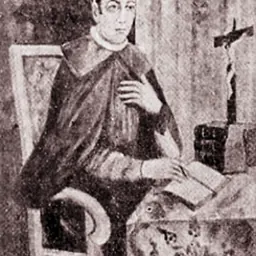
Related people
Same field, nearest in time

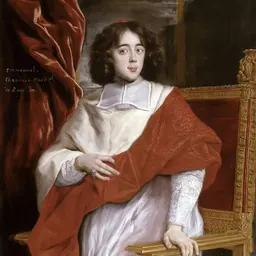


Contemporaries
People whose lives overlapped Joseph Vaz's




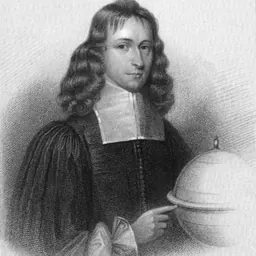
Frequently asked questions
Who was Joseph Vaz?
Oratorian priest and missionary in Sri Lanka
When was Joseph Vaz born?
Joseph Vaz was born on 21 April 1651 in Benaulim.
When did Joseph Vaz die?
Joseph Vaz died on 16 January 1711 in Kandy.
What was Joseph Vaz's occupation?
Joseph Vaz was a catholic priest.
What nationality was Joseph Vaz?
Joseph Vaz was Indian.
Sources & further reading
Cite this page
APA: Biography.guide. (2026). Joseph Vaz. https://biography.guide/joseph-vaz/
MLA: "Joseph Vaz." Biography.guide, https://biography.guide/joseph-vaz/.
Chicago: "Joseph Vaz." Biography.guide. https://biography.guide/joseph-vaz/.
Data last updated: 2026-09-20 · Spot an error? Report a correction.
Page generated 2026-09-27 05:31 UTC