
About Joseph Stratton
Lived 1839 – 1917 (aged 77). Joseph Stratton was a cleric, humanitarian, writer and activist.
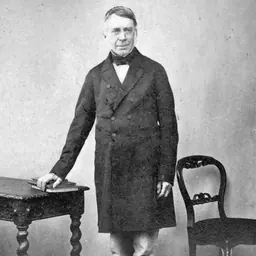
Joseph Stratton (1 May 1839 – 11 January 1917) was an English clergyman, humanitarian, writer, and activist. After serving in various church roles, he became Master of the Henry Lucas Hospital in Wokingham. A dedicated animal rights advocate, he campaigned successfully against the Royal Buckhounds, opposed vivisection, blood sports, and hunting, and was active in the Humanitarian League and London and Provincial Anti-Vivisection Society. Stratton also authored a number of books and pamphlets on these issues and published two poetry collections.
Biography
Early life and education Stratton was born in Clifton Campville on 1 May 1839. He was the second son of John and Anne Statton. He was educated at Appleby Grammar School and Worcester College, Oxford. He obtained his B.A. in 1862 and M.A. in 1867.
Ecclesiastical career Stratton was ordained in 1870 and was a curate in Swansea, Burton upon Trent, New Barnet. He left the church on theological grounds in 1878, but returned in 1886 as curate of Winchfield. He was presented with a public testimonial in 1901. He was a member of the Humanitarian League's campaign against hunting and was honorary secretary of their Sports Department. Sidney Trist noted that threats against Stratton's life had been made by those who opposed his anti-hunting views.
Stratton was an anti-vivisectionist and member of the Berkshire branch of the London and Provincial Anti-Vivisection Society. Stratton became critical of the Church Society for the Promotion of Kindness to Animals for not condemning vivisection. He was described as a "warm-hearted and tender-hearted man, who loves not only his fellow-men, but also his fellow-creatures".
Poetry Stratton published his first collection of poetry in 1901, Fireside Poems. In 1915, he published Ethelfleda and Other Poems, initially written for the Millenary celebration of Tamworth Castle in 1913. The collection received praise, including commendation from G. W. E. Russell. He received a floral tribute from the Committee of the British Union for the Abolition of Vivisection for his "admiration and affection to the memory of a fearless and untiring champion of the rights of animals". Stratton's will and testament was written in verse form. Vivisection and Anti-Vivisection: Which Side Must I Take? (1898) Sports: Legitimate and Illegitimate (1898) Cruel Sport at Eton College (1899)
Don’t just read it —
keep it.
Full-length biographies made to live with: read them, listen on the way to work, watch them tonight.
- E-book
- Audio
- Video
Instant download · yours to keep · every purchase keeps this site free
Important facts
People in Joseph Stratton's life
Named in this biography and alive at the same time


Related people
Same field, nearest in time



Contemporaries
People whose lives overlapped Joseph Stratton's

Frequently asked questions
Who was Joseph Stratton?
English clergyman, humanitarian, writer, and activist (1839–1917)
When was Joseph Stratton born?
Joseph Stratton was born on 1 May 1839 in Clifton Campville.
When did Joseph Stratton die?
Joseph Stratton died on 11 January 1917 in Wokingham.
What was Joseph Stratton's occupation?
Joseph Stratton was a cleric, humanitarian, writer and activist.
Sources & further reading
· DBpedia: Joseph Stratton (clergyman)
Cite this page
APA: Biography.guide. (2026). Joseph Stratton. https://biography.guide/joseph-stratton-cleric/
MLA: "Joseph Stratton." Biography.guide, https://biography.guide/joseph-stratton-cleric/.
Chicago: "Joseph Stratton." Biography.guide. https://biography.guide/joseph-stratton-cleric/.
Data last updated: 2026-09-20 · Spot an error? Report a correction.
Page generated 2026-09-27 05:19 UTC