
About Joseph Starik
Lived 1902 – 1964 (aged 62). Joseph Starik was a Russian chemist.
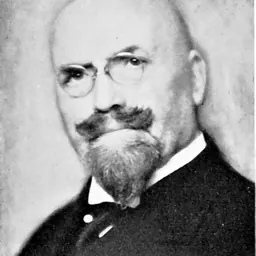
Joseph Yevseyevich Starik (; 23 March 1902, Saratov – 27 March 1964, Leningrad) was a Soviet radiochemist, a representative of the Russian radiochemical school, a close associate and a friend of Vitaly Khlopin, for the first time began systematic studies of ionic and colloidal forms of the state of radionuclides in ultra-diluted solutions. Corresponding member of the Academy of Sciences of the Soviet Union, recipient of three Stalin Prizes (1949, 1951, 1953).
Biography In 1924, he graduated from the Department of Chemistry, Faculty of Physics and Mathematics of Moscow University. He worked at the V. G. Khlopin Radium Institute in Leningrad, taught at Leningrad State University (now Saint Petersburg State University). Participant in the nuclear weapons test at the Semipalatinsk Test Site.
The author of the pioneering fundamental work "Fundamentals of Radiochemistry," which summarized all modern ideas about physics, physico-chemistry of sorption processes, methods for determining the forms of the state of radionuclides in extremely dilute state in solutions, gases and solids, the author of works on radioanalytical methods for determining the age of rocks, chemistry of nuclear reactors, chemistry of plutonium.
Scientific papers Old I. E. On the question of the colloidal properties of polonium// Proceedings of the State Radium Institute. Leningrad. NHTI, 1930, vol. 1, pp. 29–75; 1933, vol.2, pp. 91–103; Starik I. E. Radioactive methods for determining geological time. Leningrad — Moscow. Chief Editor. chemical lit. 1938. 176 p. Old I. E. Fundamentals of radiochemistry. Moscow — Leningrad. USSR Academy of Sciences.1959. 460 p.; 2nd ed. Moscow — Leningrad. Science. 1969. 647 p.; translations into English, German. and Japanese. languages, published in the USA under the inaccurate title: Starik I.E. Principles of readiochemistry. LLNL.1985. Monthly Catalog of United States Government Publications, entry No.8050). Starik I. E. Nuclear geochronology. Moscow — Leningrad, USSR Academy of Sciences, 1961. 630s.
Awards and honours Three Orders of Lenin (29 October 1949; 1951; 1953) Two Orders of the Red Banner of Labour (10 June 1945; 21 March 1947) Order of the Badge of Honour (1962) Three Stalin Prizes (1949, 2nd class – for leading the development of the technological process of chemical separation of plutonium at the plant No. 817; 1951; 1953) V. G. Khlopin Prize, for the monograph "Fundamentals of Radiochemistry", 1959
Don’t just read it —
keep it.
Full-length biographies made to live with: read them, listen on the way to work, watch them tonight.
- E-book
- Audio
- Video
Instant download · yours to keep · every purchase keeps this site free
Important facts
People in Joseph Starik's life
Named in this biography and alive at the same time

Related people
Same field, nearest in time


Contemporaries
People whose lives overlapped Joseph Starik's





Frequently asked questions
Who was Joseph Starik?
Soviet radiochemist (1902–1964)
When was Joseph Starik born?
Joseph Starik was born on 10 March 1902 in Saratov.
When did Joseph Starik die?
Joseph Starik died on 27 March 1964 in Saint Petersburg.
What was Joseph Starik's occupation?
Joseph Starik was a chemist.
What nationality was Joseph Starik?
Joseph Starik was Russian.
Sources & further reading
Cite this page
APA: Biography.guide. (2026). Joseph Starik. https://biography.guide/joseph-starik/
MLA: "Joseph Starik." Biography.guide, https://biography.guide/joseph-starik/.
Chicago: "Joseph Starik." Biography.guide. https://biography.guide/joseph-starik/.
Data last updated: 2026-09-20 · Spot an error? Report a correction.
Page generated 2026-09-27 05:09 UTC