
About Joseph Smith
Lived 1670 – 1756 (aged 86). Joseph Smith was a British academic.
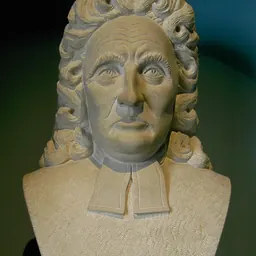
Joseph Smith (1670–1756) was an English churchman and academic, Provost of The Queen's College, Oxford, from 1730.
Early life The fifth son of William Smith, rector of Lowther, Westmorland, and younger brother of John Smith (1659–1715), he was born at Lowther, on 10 October 1670. On his father's death when he was five years old, his mother moved to Guisborough in Yorkshire, where he attended Guisborough grammar school. He went on to Durham School, and on 10 May 1689 he was admitted a scholar of The Queen's College, Oxford. In 1693 he was chosen a tabarder and graduated B.A. in 1694.
Smith proceeded M.A. by diploma in 1697, having accompanied Sir Joseph Williamson, his godfather, who was one of the British plenipotentiaries, to the negotiations for the Treaty of Ryswick as his private secretary. On 31 October 1698, in his absence, he was elected a fellow of the college. Soon after his return in 1700 he took holy orders and obtained from the Provost Timothy Halton the living of Iffley, near Oxford. In 1702 he was chosen to address Queen Anne on her visit to the university. In 1704 he was elected senior proctor, and dubbed "handsome Smith" to distinguish him from his colleague Thomas Smith of St John's College. In the same year Halton died, and friends proposed him as a candidate for Provost; but Smith backed William Lancaster, his former tutor, who was elected. Some Considerations offered to the Bishop of Bangor on his Preservative against the Principles of the Nonjurors, London, 1717. The Unreasonableness of Deism, London, 1720. Anarchy and Rebellion, 1720. A View of the Being, Nature, and Attributes of God, Oxford, 1756; besides several sermons.
To Smith has also been attributed The Difference between the Nonjurors and the Present Public Assemblies, 1716. It provoked the reply, Joseph and Benjamin; or Little Demetrius tossed in a Blanket, London, June 1717, an anonymous farce printed by John Morphew. In 1731 he drew up a statement of the architectural condition of Queens's with an ichnography, an expansion of a statement first issued in Provost Gibson's time; and ordered cuts of the buildings by Michael Burghers (died 1727) to be re-engraved in quarto.
Family In 1709 Smith married Mary Lowther, youngest daughter of Henry Lowther of Ingleton Hall in Yorkshire and of Lowther in Fermanagh, and niece of Timothy Halton. She died on 29 April 1745. By her he had three children:
Joseph, an advocate of Doctors' Commons; Anne, married, first, to Prebendary Lamplugh, a grandson of the archbishop Thomas Lamplugh, and, secondly, to Captain James Hargraves; and William, who died young.
Don’t just read it —
keep it.
Full-length biographies made to live with: read them, listen on the way to work, watch them tonight.
- E-book
- Audio
- Video
Instant download · yours to keep · every purchase keeps this site free
Important facts
People in Joseph Smith's life
Named in this biography and alive at the same time



Related people
Same field, nearest in time



Contemporaries
People whose lives overlapped Joseph Smith's



Frequently asked questions
Who was Joseph Smith?
English academic, 1670–1756
When was Joseph Smith born?
Joseph Smith was born on 10 October 1670.
When did Joseph Smith die?
Joseph Smith died on 23 November 1756 in The Queen's College.
What was Joseph Smith's occupation?
Joseph Smith was an academic.
What nationality was Joseph Smith?
Joseph Smith was British.
Sources & further reading
· DBpedia: Joseph Smith (academic)
Cite this page
APA: Biography.guide. (2026). Joseph Smith. https://biography.guide/joseph-smith-academic/
MLA: "Joseph Smith." Biography.guide, https://biography.guide/joseph-smith-academic/.
Chicago: "Joseph Smith." Biography.guide. https://biography.guide/joseph-smith-academic/.
Data last updated: 2026-09-20 · Spot an error? Report a correction.
Page generated 2026-09-27 05:27 UTC