
About Joseph Lee
Lived 1876 – 1949 (aged 72–73). Joseph Lee was a British poet, journalist and military personnel, known for War poet.
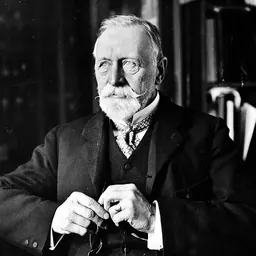
Joseph Johnston Lee (1876–1949) was a Scottish journalist, artist and poet, who chronicled life in the trenches and as a prisoner of war during World War I. He is also remembered for his dispute with then poet laureate Robert Bridges over the literary value of Robert Burns' work. He has been described as "Scotland's 'Forgotten' War Poet", as well as "Dundee's forgotten war poet."
Biography
Early life and career
Born in Dundee, in 1876 Joseph Johnston Lee was the grandson of Sergeant David Lee, who had fought in the Napoleonic Wars, and was one of nine siblings. Lee began his working life at the age of 14. After a spell of employment in the office of a local solicitor, he went to sea as a steamship's stoker.
While working in Dundee had taken art classes at the local YMCA and by 1904 was working as an artist in London drawing cartoons for the Tariff Reform League, and subsequently became a newspaper artist. While in London he also studied at Heatherley's School of Fine Art. He returned to Dundee in 1906 and started to write for, produce and edit several local periodicals, most notably The City Echo and The Piper O' Dundee. These works also featured many illustrations by Lee, sometimes produced under the pseudonym 'Crowquill', such as cartoons of the then Dundee MP Winston Churchill.
In 1909 he gained employment with the Dundee newspaper and periodical publishers John Leng & Co. He was soon a regular contributor of poetry to their weekly newspaper The People's Journal, a publication which he would go on to edit. This was Lee's second theatrical work after a one-act play called The Song: An Episode from Bohemia, which was performed in Dundee in 1913.
Matthew Jarron notes that Lee was also in demand as an illustrator, with his drawings featuring in books including Dundee from the Tramcars (1908) and Lochee as It Was and as It Is (1911) as well as in his own Tales o’ Our Town.
World War One Although he was aged almost 40 when World War I began, Lee enlisted in the 4th Battalion of the Black Watch, which was the territorial battalion for Dundee, in 1914 and eventually rose to the rank of Sergeant. He and eight other Dundee journalists who joined the battalion were dubbed 'Fighter-Writers'. Lee's enlistment was despite his age, health problems (he was suffering from asthma) and the fact many of his associates in the labour movement in Dundee strongly opposed the war. In fact Lee had been captured and became a prisoner of war in Germany where he was held at camps at Karlsruhe and Beeskow.
Later life In 1924 Lee married Miss Dorothy Barrie, who was a well-known viola player. The couple settled in Epsom and Lee became sub-editor on the News Chronicle. He returned to Dundee in 1944, and died there in 1949. A new musical version of Lee's poem 'The Listening Post', to a setting by Dallahan, was performed for the first time at a national commemorative event held in Dundee in 2015 to mark the 100th anniversary of the Battle of Loos.
Reputation as a poet
Lee's war poetry was widely praised when it was published during the Great War. His poem The Green Grass was acclaimed by John Buchan as one of the best war poems he had read. Lee's reputation as a war poet once ranked alongside those of Wilfred Owen, Siegfried Sassoon and Rupert Brooke. However, as the works of Owen and Sassoon grew in popularity, Lee's fame waned, and his poetry became neglected.
Lee's biographer Bob Burrows suggests that one reason why Lee's poetry failed to achieve the lasting recognition of that of his more famous contemporaries was because he did not have the backing of an influential supporter. He also notes that Lee came through the War relatively unscathed and returned to his old work as a journalist after his release from captivity in Germany. Burrows also suggests that Lee had no ambition to be a great literary figure and thus did little to push his work. In addition he puts forward the view that Lee's working class origins would have made it difficult for his work to achieve widespread acclaim.
Keith Williams notes that Lee's work is difficult to categorise as he was not explicitly anti-war, but nor was he 'a naive patriot'. He argues this is a key factor in explaining why Lee's poetry came to disappear from the 'post-Great War canon'.
Reputation as an artist
Jarron argues that Lee was the artist who dominated Dundee's newspapers and magazines before the Great War. He also highlights the importance of Lee's war illustrations, drawn at the front and published with his poems, contenting that they were 'a major part of... [Ballads of Battle's] powerful sense of authenticity'. In 1915 Lee's art works were the subject of a full-page section in the People's Journal entitled "'Dundee's Own' Artist at the Front". During the War some of his sketches which were sent home were exhibited in the Albert Institute (now the McManus Galleries) in Dundee.
When in London after the First World War Lee is known to have sketched many famous figures that he encountered including Edward Elgar, Max Beerbohm and Edith Sitwell.
Legacy
Joseph Lee's papers are now held by Archive Services at the University of Dundee. They include Lee's correspondence with Robert Bridges as well as material relating to his time as a prisoner of war. The collection also features copies of Lee's publications and material relating to them, including a letter from Keir Hardie. Over 250 of Lee's drawings (including ones sketched while a prisoner of war in Germany) are held by the University of Dundee Museum Services. An exhibition devoted to Lee was held at the University of Dundee in 2005 and was opened by his great niece. In 2011 materials from Lee's papers, including extracts from the diary he wrote during his spell as a prisoner of war, were featured in an exhibition held by Archive Services to mark Remembrance Day. Another major exhibition of Lee's work was held in the university from August to November 2016.
A biography of Lee, by Bob Burrows, was published in 2004. and a 1913 lithograph portrait by Stewart Carmichael. Another portrait of Lee, by David Foggie is held by the Dundee Art Galleries and Museums Collection.
Publications Lee's first major collection of poetry, Tales o’ Our Town (Dundee: George Montgomery, 1910), features around sixty poems, most of which relate to people, places and events in his native Dundee. The volume also contains illustrations drawn by Lee. His first collection of war poetry, Ballads of Battle (London: John Murray, 1916), contains 38 poems and 17 illustrations drawn by Lee. Work-A-Day Warriors (London: John Murray, 1917) contains 39 poems, including four which had previously been published in The Spectator and one, "The Carrion Crow", which had earlier been published in The Nation. As with his earlier works, this volume also contains drawings by Lee. The New York Times regretted Lee's choice of title for this volume, as it felt it failed "to convey the real depth of Mr. Lee’s work". A new volume of Lee's War poetry was launched at the University of Dundee in October 2014.
Don’t just read it —
keep it.
Full-length biographies made to live with: read them, listen on the way to work, watch them tonight.
- E-book
- Audio
- Video
Instant download · yours to keep · every purchase keeps this site free
Important facts
People in Joseph Lee's life
Named in this biography and alive at the same time




Related people
Same field, nearest in time

Contemporaries
People whose lives overlapped Joseph Lee's

Frequently asked questions
Who was Joseph Lee?
Scottish journalist, artist and poet
When was Joseph Lee born?
Joseph Lee was born in 1876 in Dundee.
When did Joseph Lee die?
Joseph Lee died in 1949 in Dundee.
What was Joseph Lee's occupation?
Joseph Lee was a poet, journalist and military personnel.
What was Joseph Lee known for?
Joseph Lee was known for War poet.
What nationality was Joseph Lee?
Joseph Lee was British.
Sources & further reading
Cite this page
APA: Biography.guide. (2026). Joseph Lee. https://biography.guide/joseph-lee-poet/
MLA: "Joseph Lee." Biography.guide, https://biography.guide/joseph-lee-poet/.
Chicago: "Joseph Lee." Biography.guide. https://biography.guide/joseph-lee-poet/.
Data last updated: 2026-09-22 · Spot an error? Report a correction.
Page generated 2026-09-27 05:10 UTC