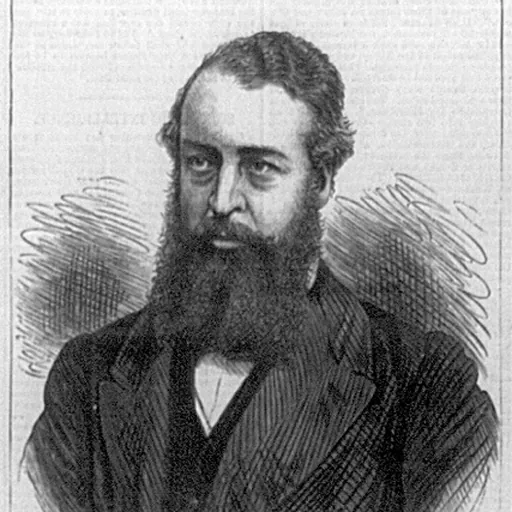
About Joseph Fry
Lived 1826 – 1873 (aged 47). Joseph Fry was a military personnel.
Joseph Fry (June 14, 1826 – November 7, 1873) was a pre-Civil War U.S. Naval Officer, a Confederate Civil War veteran, and, post-war, commander of the ill-fated Cuban smuggling vessel Virginius.
Early life Joseph Fry was born on June 14, 1826, near Tampa Bay, Florida. According to a non-scholarly 19th century biography, which draws heavily on his personal journals, he moved about a great deal in his youth, spending time with relatives in Pensacola (Florida), Mobile (Alabama), and Albany (New York), and attending a boarding school at Ballston Spa, New York.
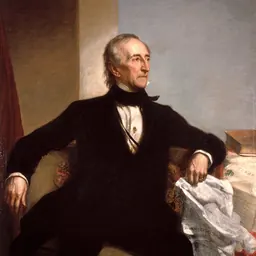
Service in the U.S. Navy Eager to join the US Navy, in 1841 he ostensibly managed to arrange a meeting with President John Tyler, who was impressed enough to personally grant him an appointment as a midshipman in the U.S. Navy. His biography, and other sources drawing from it, state that he was part of the second class to graduate (in 1847) from the "United States Naval School at Annapolis," but there was no naval school (or other presence) at Annapolis until 1845, and it is not clear how much of his formal training took place elsewhere and prior to that date. It is known that, as a midshipman, he lived for a time at the New York Navy Yard, aboard the receiving ship North Carolina, and went on training cruises on a number of other vessels, including one which ended with the burning of the sidewheeler USS Missouri off Gibraltar in 1843. In 1847 he was promoted to the rank of passed midshipman (precursor to the rank of ensign).
Fry's first experience in combat came in March 1847 while serving aboard USS Vixen, supporting the American landings at Veracruz during the Mexican-American War. Upon his return home, he served on vessels of the United States Coast and Geodetic Survey for several years, serving aboard the John Y. Mason, the Robert J. Walker, and, later, as commander of the schooner William A. Graham. In 1851 he returned to Navy duty, embarking on the sailing sloop-of-war Plymouth for a four-year voyage to the Far East. One source states that, shortly after his return, on 14 September 1855, Fry was promoted to Master and, on the following day, to Lieutenant. He then spent the next two years at the Pensacola Navy Yard before again drawing sea duty, this time aboard USS Vandalia, again headed for the Pacific. This voyage did not go well for Fry: departing the Portsmouth (New Hampshire) Navy Yard at the end of November, 1857, while at sea he was diagnosed with a heart condition that left him unable to continue with his duties, and in June 1858 he was put ashore at Panama Bay, with orders to return home, and a recommendation that he be put on the retired list. Returning home, he received an appointment to the Lighthouse Department of the Gulf Coast, a post he held until January 1861, when the secession of Louisiana from the Union caused him to resign his commission.
Confederate Service After leaving the U.S. Navy Fry joined the Confederate States Army, the nascent navy not yet having absorbed all the officers who had already become available. This soon changed, however, and in March 1861 he was commissioned a Lieutenant in the Confederate States Navy, serving on the lower Mississippi, first as an aide to the aging Commodore Lawrence Rousseau, and later commanding a small steamer, CSS Ivy. This vessel served largely as a dispatch boat and observer during the October 1861 battle at the Head of the Passes, in the Mississippi Delta. Later, in March 1862, Fry was sent upstream to the vicinity of New Madrid, Missouri and given a new command, CSS Maurepas. In March and April Confederate naval forces, including Maurepas, participated in the unsuccessful defenses of New Madrid and Island No. 10. In June, after the capture of those locations by Union forces, several Confederate ships (under Fry's command, according to his biographer) retired up the White River to oppose Union Navy penetration into territory west of the Mississippi, ultimately sinking the ships to close the channel and creating a short-lived defensive position using their guns. Fry was wounded and then captured during these last operations; he was, however, soon exchanged and sent to Georgia to convalesce with his family.
Upon regaining his health, Fry was placed in command of the government blockade runner Eugenie.
The expedition was led under the direction of Mambí general Bernabé Varona; and rebel leaders Jesús del Sol, W.A.C. Ryan, and Pedro de Céspedes were among the passengers. While in port, the Virginius was repaired and coaled at the expense of the Cubans. On October 24, 1873, the vessel left Kingston Harbor under Fry's command. On 30 October the Spanish consul in Kingston reported the vessel to Spanish authorities in Cuba for its suspicious movements. On the following day the Spanish corvette Tornado, having been dispatched by Spanish General Juan N. Burriel to investigate, spotted Fry's vessel and gave chase, forcing Fry to flee back towards Jamaica. Fry instructed Ryan and Varona to throw the heavy ammunition, horses, artillery, and gun carriages overboard to lighten the load of the steamer during the pursuit, but the Spanish vessel was nonetheless able to close with Virginius. Twelve miles from the safety of British waters, Tornado fired a blank shot as a warning; and when Fry failed to respond, the Spanish captain followed up by firing several live shells, which whistled over the Virginius. At that point, Fry realized he could not escape and stopped his vessel between Cabo Cruz and Santiago; the Spanish captain then dispatched two armed boats carrying boarding parties to demand Fry's surrender. Presenting his documentation to the boarding officer, Fry questioned the legality of his ship's seizure. The Spanish nonetheless seized the vessel and sailed it to Santiago de Cuba, arriving on November 1. Over the next few days, over the objections of local United States and British consular officials, all aboard the Virginius--the crew members, the insurgent leaders, and all other passengers--were tried as pirates by a tribunal on board the Tornado and then confined to the city jail.
Death On November 7, 1873, Joseph Fry was executed by firing squad along with 36 members of the Virginius crew. With four other individuals having already been executed, and another dozen to follow, this brought the overall count to 53 dead.
Don’t just read it —
keep it.
Full-length biographies made to live with: read them, listen on the way to work, watch them tonight.
- E-book
- Audio
- Video
Instant download · yours to keep · every purchase keeps this site free
Important facts
People in Joseph Fry's life
Named in this biography and alive at the same time

Related people
Same field, nearest in time
Contemporaries
People whose lives overlapped Joseph Fry's


Frequently asked questions
Who was Joseph Fry?
confederate officer (1826–1873)
When was Joseph Fry born?
Joseph Fry was born on 14 June 1826.
When did Joseph Fry die?
Joseph Fry died on 7 November 1873.
What was Joseph Fry's occupation?
Joseph Fry was a military personnel.
Sources & further reading
· DBpedia: Joseph Fry (captain)
Cite this page
APA: Biography.guide. (2026). Joseph Fry. https://biography.guide/joseph-fry-military-personnel/
MLA: "Joseph Fry." Biography.guide, https://biography.guide/joseph-fry-military-personnel/.
Chicago: "Joseph Fry." Biography.guide. https://biography.guide/joseph-fry-military-personnel/.
Data last updated: 2026-09-26 · Spot an error? Report a correction.
Portrait: Wikimedia Commons · author & licence
Page generated 2026-10-04 11:23 UTC