
About Joseph Diggle
Lived 1849 – 1917 (aged 68). Joseph Diggle was a politician.
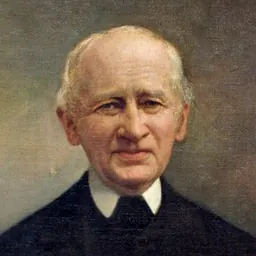
The Reverend Joseph Robert Diggle JP (12 May 1849 – 16 June 1917) was a British Anglican clergyman, politician and public servant. He is notable for his campaign to change the law to allow clergymen to take seats in the House of Commons (although he was unable to win a seat himself), and for his chairmanship of the London School Board. His combative approach to political debate was the key to his career, helping him to run the Board for nine years but denying him any higher office.
Early life and family Diggle was born in Pendleton, Lancashire, the youngest son of William Diggle, a warehouseman and his wife Nancy Ann née Chadderton. The election had been a bitter and hard-fought, even sectarian, campaign. It was clear that Diggle, who had been a highly partisan chairman and campaigner, was too divisive a figure to head the finely balanced board. Accordingly, he stood aside at the new board's first meeting on 4 December, instead nominating the less controversial Lord George Hamilton to the post.
Moderate split and departure form the school board Using his experience of administering the Board, Diggle wrote a manifesto suggesting ways of reducing expenditure. He opposed the Moderate Group leadership's support for voluntary schools set up by nonconformists and formed a faction within the Moderate group in equal opposition to the administration of Lord George Hamilton and to the Progressive group. In the 1897 election, Diggle was the leading personality, leading his own group into the elections. He was largely blamed for the Moderate split and saw his vote drop by nearly two-thirds from over 31,000 to less than 10,500, losing his own seat by 4,000 votes. He was nominated as a candidate in the 1900 elections but withdrew before the poll.
Later life Kent Diggle had moved to St Michael's Grange, Tenterden in Kent, of which he was mayor in 1895–1896 and 1901–1902. In 1898 he was elected to Kent County Council, and was appointed chairman of the county council's Elementary Schools Education Committee in 1908. On 23 November 1909 he was adjudicated bankrupt with debts of £12,763 3s 7d; two years later his creditors had received 1s 3d in the pound.
Public health In addition to his educational interests Diggle became an honorary Fellow of the British Institute of Public Health. He had attended many international conferences on public health while at the School Board and was a corresponding member of the Belgian Société Royale de Médecine Publique de Belgique from 1891. He served as President of Section V of the International Congress of Hygiene and Demography at London in 1892 and of Section VI at Budapest in 1894.
He served as Chairman of the Council of the Royal Botanic Society in 1907, and was Chairman of the Council of the Ragged School Union and Shaftesbury Society from 1906 to 1908.
Retirement and death In 1910 Diggle moved to Oxford, where he died aged 69 in January 1917.
Don’t just read it —
keep it.
Full-length biographies made to live with: read them, listen on the way to work, watch them tonight.
- E-book
- Audio
- Video
Instant download · yours to keep · every purchase keeps this site free
Important facts
People in Joseph Diggle's life
Named in this biography and alive at the same time


Related people
Same field, nearest in time




Contemporaries
People whose lives overlapped Joseph Diggle's



Frequently asked questions
Who was Joseph Diggle?
British politician and clergyman
When was Joseph Diggle born?
Joseph Diggle was born on 12 May 1849.
When did Joseph Diggle die?
Joseph Diggle died on 16 June 1917.
What was Joseph Diggle's occupation?
Joseph Diggle was a politician.
Sources & further reading
Cite this page
APA: Biography.guide. (2026). Joseph Diggle. https://biography.guide/joseph-diggle/
MLA: "Joseph Diggle." Biography.guide, https://biography.guide/joseph-diggle/.
Chicago: "Joseph Diggle." Biography.guide. https://biography.guide/joseph-diggle/.
Data last updated: 2026-09-20 · Spot an error? Report a correction.
Page generated 2026-09-27 05:20 UTC