
About Joseph D. Beck
Lived 1866 – 1936 (aged 70). Joseph D. Beck was an American politician and businessperson.
Joseph David Beck (March 14, 1866 – November 8, 1936) was an American farmer, labor reform advocate, and progressive Republican politician from Vernon County, Wisconsin. He served four terms in the United States House of Representatives, representing Wisconsin's 7th congressional district from 1921 to 1929. He was a close ally of Wisconsin governor and U.S. senator Robert M. "Fighting Bob" La Follette. Working for La Follette's administration earlier in his career, Beck contributed significantly to the crafting of Wisconsin's worker's compensation laws through his work on the Bureau of Labor and Industrial Statistics. He was then one of the initial appointees to the Wisconsin Industrial Commission (serving from 1911 through 1917) and was chairman of the commission from 1915 through 1917.
His name was often abbreviated Throughout his life, he was also sometimes incorrectly referred to as Due to his role in the Industrial Commission, he was the editor for the Wisconsin Blue Book for 1907, 1909, and 1911.
Early life Joseph D. Beck was born on his family's farm in the town of Webster, Vernon County, Wisconsin, near Bloomingdale. After his early schooling, he went to work as a farmhand in the town of Magnolia, Rock County, Wisconsin. During that time, he began teaching school and studying in his spare time. He finally entered Stevens Point Normal School in the 1890s, graduating in 1897. After four more years teaching and serving as a principal in Westby, Wisconsin, and later Cashton, Wisconsin, he entered the University of Wisconsin at age 35, graduating in 1903. Two years later, La Follette appointed Beck succeeded Halford Erickson as labor commissioner. For the remainder of his life, Beck was considered part of La Follette's inner circle of progressive allies in the state.
He was also one of the authors of the bill which abolished the Bureau of Labor Statistics and replaced it with the Wisconsin Industrial Commission in 1911. When the industrial commission was created, Beck was appointed one of the first three commissioners, along with Charles H. Crownhart and John R. Commons. Beck succeeded Crownhart as chairman of the commission in the fall of 1915.
In 1917, Governor Emanuel L. Philipp declined to renominate Beck for another term on the Industrial Commission. At the time, newspapers speculated that it was because Philipp feared Beck was planning a run for Governor of Wisconsin in 1918. Philipp's fears initially seemed well-founded, by January 1918, La Follette allies were preparing the ground for Beck to challenge Philipp in the Republican primary, and Beck began touring the state meeting with voters. But Beck ultimately did not enter the gubernatorial race, instead endorsing the farmers campaign of James N. Tittemore.
Beck did run for office in 1918 though, he attempted a primary challenge against conservative Republican state senator J. Henry Bennett in the 31st Senate district. Bennett ultimately prevailed by about 350 votes in the Republican primary.
U.S. Congress
A year later, Beck was again rumored as a potential candidate for governor in 1920. Beck announced in April 1920 that he would not run for governor and immediately raised speculation that he was instead planning a primary challenge against Republican U.S. representative John J. Esch. Within days, Beck formally launched his campaign for congress, challenging Esch in the Republican primary for Wisconsin's 7th congressional district. At the time, the 7th congressional district comprised Adams, Clark, Jackson, Juneau, La Crosse, Monroe, Sauk, and Vernon counties, in western Wisconsin. Esch suffered from populist backlash against the railroad re-privatization act which bore his name, the Esch–Cummins Act. Beck ultimately prevailed by 3,700 votes. Beck faced only Prohibition and Socialist opponents in the general election, and prevailed with 78% of the vote. Beck won three more terms in Congress, serving from March 4, 1921, to March 3, 1929. A key issue in that primary was prohibition. Beck ran in 1928 as a vehement opponent of prohibition, but his run was complicated by past support for the prohibition amendment. With the incumbent, Zimmerman, floundering however, conservative Republicans threw their support behind popular Sheboygan businessman Walter J. Kohler. Beck was extensively aided in his campaign by both of Wisconsin's U.S. senators, Robert M. La Follette Jr. and John J. Blaine. Kohler ultimately prevailed in the primary, receiving 44% of the vote; Beck placed second with 40%; Zimmerman came in a distant third.
After the primary, a lawsuit was filed by prominent Madison attorney Fred M. Wylie, seeking to remove Kohler from the ballot due to alleged violations of state campaign finance rules. The move, if allowed by the Wisconsin Supreme Court, would have left Beck as the Republican gubernatorial nominee as the runner up in the primary. The Wisconsin Supreme Court, however, rejected the complaint; Kohler was allowed to proceed as the Republican nominee and went on to win the general election. In turn, a John Doe investigation was launched into the finances of the progressive faction in the 1928 Republican primary. The two factions continued to lob accusations about campaign finance violations into the next year. The controversy eventually led to the legislature launching an investigation into the finances of the previous six state elections. The investigation stretched on for another year, as witnesses for either faction publicly aired their various accusations.
Later years Beck did not run for office again, but supported Philip La Follette in the 1930 gubernatorial election. La Follette defeated Kohler in the primary and became the 27th governor of Wisconsin. After taking office, La Follette appointed Beck to serve on the three-member commission of the Wisconsin Department of Agriculture and Markets.
Beck was a strident advocate during his years with the Agriculture commission, leading to more public disputes and litigation.
In 1933, with dairy prices still depressed due to the Great Depression, the state milk pool—a cooperative of state dairy producers—called for a strike to shock the dairy market. Beck was a vocal opponent of the strike, saying that actions of the milk pool were hurting all of Wisconsin's farmers; he suggested that other initiatives undertaken by the agriculture department would be more effective to boost the dairy price. After reports of violence around the strikes, Beck attacked the milk pool president Walter M. Singler in a radio interview on WTMJ. Singler responded by suing Beck and WTMJ's parent company, the Milwaukee Journal, for slander.
Beck died of a heart attack in his apartment in Madison on November 8, 1936. He sat down to write a letter to his wife, complaining in the letter about his pounding heart and anxiety about his health, but left the letter incomplete when the heart attack became severe. After calling the hospital, he commented to neighbors "My father went this way, too." He died before medical assistance could arrive.
Wisconsin Governor (1928)
Published works
Don’t just read it —
keep it.
Full-length biographies made to live with: read them, listen on the way to work, watch them tonight.
- E-book
- Audio
- Video
Instant download · yours to keep · every purchase keeps this site free
Important facts
People in Joseph D. Beck's life
Named in this biography and alive at the same time

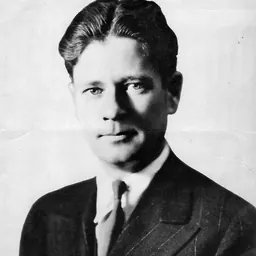
Related people
Same field, nearest in time





Contemporaries
People whose lives overlapped Joseph D. Beck's



Frequently asked questions
Who was Joseph D. Beck?
American politician (1866-1936)
When was Joseph D. Beck born?
Joseph D. Beck was born on 14 March 1866 in Bloomingdale.
When did Joseph D. Beck die?
Joseph D. Beck died on 8 November 1936 in Madison.
What was Joseph D. Beck's occupation?
Joseph D. Beck was a politician and businessperson.
What nationality was Joseph D. Beck?
Joseph D. Beck was American.
Sources & further reading
Cite this page
APA: Biography.guide. (2026). Joseph D. Beck. https://biography.guide/joseph-d-beck/
MLA: "Joseph D. Beck." Biography.guide, https://biography.guide/joseph-d-beck/.
Chicago: "Joseph D. Beck." Biography.guide. https://biography.guide/joseph-d-beck/.
Data last updated: 2026-09-25 · Spot an error? Report a correction.
Page generated 2026-09-27 05:11 UTC