
About Joseph Brooks
Lived 1938 – 2011 (aged 73). Joseph Brooks was an American screenwriter, film producer, composer, songwriter, film director and actor.
Joseph Brooks (born Joseph Kaplan; March 11, 1938 – May 22, 2011) was an American songwriter, composer, filmmaker and rapist. He was a successful author of commercial jingles during the 1960s, before pivoting to a filmmaking career. His 1977 romantic drama You Light Up My Life, which he wrote, directed, produced, and scored; spawned the hit song of the same name, earning Brooks an Academy Award, Golden Globe Award, and a Grammy Award.
Brooks became the subject of an investigation after being accused of a series of rapes. He was indicted in 2009, but killed himself on May 22, 2011, before his trial.
Early life and singing career Brooks was born Joseph Kaplan In later interviews, he claimed to have started playing piano at age 3 and writing plays at age 5, following his parents' divorce. He later attended five different colleges, including Juilliard, but did not graduate from any. (later changed to "Joe Brooks" or "Joseph Brooks" When his singing career failed, he drifted into advertising and occasional songwriting work, Credited as "Joey Brooks", he also wrote the song "My Ship Is Comin' In", a Top Ten UK hit in 1966 for the Walker Brothers.
In the 1970s, after becoming wealthy from his advertising work (at one point claiming to have 150 commercials on the air), He wrote "Blue Balloon (The Hourglass Song)", sung by Robby Benson as the theme song for the film Jeremy (1973), and claimed to have written, cast, and directed most of Jeremy, although Arthur Barron is the sole writer and director of record. New York Times film critic Roger Greenspun recognized Brooks's claim, writing, "it seems fair to suggest that, in whatever proportion, both men were involved in the authorship of the film."
Brooks next developed his own film project, You Light Up My Life, which he wrote, produced, directed, and scored on a budget of about $1 million. The romantic drama about an aspiring singer, starring Didi Conn, was a box-office success despite poor reviews. Brooks's title song for the film was an even bigger success; a cover version by Debby Boone reached #1 on the U.S. Billboard Hot 100 chart and held that position for 10 consecutive weeks, at that time tied for the longest Number One reign in the chart's history. With sales of over five million copies, the song was the biggest hit of the 1970s and earned Brooks a Grammy Award for Song of the Year, an Academy Award for Best Original Song, a Golden Globe Award, and an American Society of Composers, Authors and Publishers (ASCAP) award.
Brooks attempted to follow up his success with a similar romantic drama, If Ever I See You Again (1978), which he not only co-wrote, produced, directed, and scored, but also starred in, as a composer of TV commercial jingles much like himself, despite no significant acting experience. which was never released. Robert Simonson wrote in Brooks's Playbill obituary that In My Life was "generally regarded as one of the strangest shows ever to have graced a Broadway stage." When it was panned by critics, including Ben Brantley of The New York Times, who called it "jaw-dropping moments of whimsy run amok", His career was curtailed in 2008 by a stroke.
Sexual assault indictment In June 2009, Brooks was arrested on charges of raping or sexually assaulting 11 women lured to his East Side apartment from 2005 to 2008. His assistant, Shawni Lucier, was charged with helping him.
"She picked the victims, set up travel arrangements, and reassured them", said Lisa Friel, chief of the district attorney's sex crimes unit. At times, she said, Lucier also reassured mothers worried about sending their daughters alone to New York on flights Brooks paid for. And, she said, Lucier was sometimes present in the apartment when the women arrived, but left before the assaults. At least four of the women accused Brooks of sexual assault. He allegedly lured the women to his apartment to audition for movie roles. According to Manhattan District Attorney Robert Morgenthau, the women responded to a notice Brooks had posted on Craigslist seeking attractive women to star in movie roles, and flew to New York from Pacific Coast states or Florida, usually at Brooks's expense.
Brooks was indicted on June 23, 2009. He was to be tried in the state Supreme Court for Manhattan (a trial-level court) on 91 counts of rape, sexual abuse, criminal sexual act, assault, and other charges. In December 2009, prosecutors said they would ask the grand jury to consider adding even more charges, in part because "additional victims" had come forward. Brooks committed suicide on May 22, 2011, before he could be tried.
Personal life Brooks was the older brother of Gilbert Kaplan, the founder of Institutional Investor magazine.
Brooks was married four times, but was single at the time of his death.
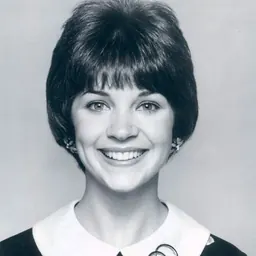
In 1975, Brooks had a relationship with actress Cindy Williams, who was starring at the time in the movie The First Nudie Musical, written and co-directed by her friend Bruce Kimmel. Brooks became an investor in the film. He originally planned for her to star in You Light Up My Life, but he and Williams were already having relationship issues and he asked Kimmel to direct You Light Up My Life, saying he couldn't control Williams. He broke up with Williams before the film was made, and the role went to Didi Conn. In 2009, Brooks sued a 22-year-old ex-fiancée, claiming that he had spent $2 million on her before learning she was already married.
Brooks had four children: Amanda (born 1981) and Nicholas (born 1986) (both with Susan Paul), Amanda has said that Brooks abused her as a child and that she and Nicholas had a difficult relationship with him. He was sentenced to 25 years to life in prison in September.
Death On May 22, 2011, Brooks was found dead in his apartment on the Upper East Side of Manhattan, with a plastic bag over his head near a hose attached to a helium tank. A suicide note was nearby. According to a law enforcement source, Brooks wrote in the note that he would be exonerated of the charges against him, but complained about his failing health and a woman he claimed had abused him and taken his money.
Partial list of credits
Film The Lords of Flatbush (1974) – Conductor, music arranger You Light Up My Life (1977) – Producer, director, writer and composer (1977) If Ever I See You Again (1978) – Producer, director, co-writer, composer and actor (1978) Headin' for Broadway (1980) – Director, co-writer Eddie and the Cruisers (1983) -- Producer Invitation to the Wedding (1985) – Director
Stage Metropolis (1989), West End musical – Composer, co-lyricist In My Life (2005), Broadway musical – Director, writer, composer and lyricist
Don’t just read it —
keep it.
Full-length biographies made to live with: read them, listen on the way to work, watch them tonight.
- E-book
- Audio
- Video
Instant download · yours to keep · every purchase keeps this site free
Important facts
People in Joseph Brooks's life
Named in this biography and alive at the same time



Related people
Same field, nearest in time





Contemporaries
People whose lives overlapped Joseph Brooks's



Frequently asked questions
Who was Joseph Brooks?
American director and composer (1938-2011)
When was Joseph Brooks born?
Joseph Brooks was born on 11 March 1938 in New York City.
When did Joseph Brooks die?
Joseph Brooks died on 22 May 2011 in New York City.
What was Joseph Brooks's occupation?
Joseph Brooks was a screenwriter, film producer, composer, songwriter, film director and actor.
What nationality was Joseph Brooks?
Joseph Brooks was American.
Sources & further reading
· DBpedia: Joseph Brooks (songwriter)
Cite this page
APA: Biography.guide. (2026). Joseph Brooks. https://biography.guide/joseph-brooks-screenwriter/
MLA: "Joseph Brooks." Biography.guide, https://biography.guide/joseph-brooks-screenwriter/.
Chicago: "Joseph Brooks." Biography.guide. https://biography.guide/joseph-brooks-screenwriter/.
Data last updated: 2026-09-20 · Spot an error? Report a correction.
Page generated 2026-09-27 05:15 UTC