
Joseph Bridger
Virginia politician
About Joseph Bridger
Lived 1631 – 1686 (aged 54–55).
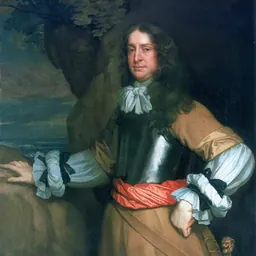
Joseph Bridger (1632 April 15, 1686) was an English-born military officer, merchant, planter and politician. He emigrated from England to the colony of Virginia, where Bridger became wealthy and well-known for supporting Governor William Berkeley and his successors. As would his namesake grandson and several other descendants, Bridger served in the House of Burgesses representing Isle of Wight County. Bridger also served in the legislature's upper house, the Virginia Governor's Council, and led troops against the rebels during Bacon's Rebellion in 1676 as well as in 1682, when he helped suppress the tobacco cutters (although he had sympathetized with a similar solution nearly two decades earlier).
Early life and education Born in Woodmancote manor in Gloucestershire, England in the winter of 1631/2 and baptized in Dursley parish in late February, he was the third son of Samuel Bridger, auditor for the College of Gloucester, who died in 1650. His grandfather, Rev. Lawrence Bridger, served as the rector of Slimbridge parish for 55 years and was a fellow of Magdalen College, Oxford University. However records of the location of the education of this man have been lost.
Career
Bridger was a merchant who imported wine and other products for sale in Virginia, possibly even before he emigrated to the colony. Although landless when he emigrated, Bridger accumulated more than 9500 acres of land in the colony, which he distributed among most of his children upon his death, as discussed below. During the interval, Bridger also commanded the colony's militia in the southern counties. He led government troops against the rebels and was one of Berkeley's intimates most loathed by the rebels. Bridger temporarily fled to Maryland because of the many threats against him, and rebels occupied his plantation. He returned and according to an official report "was very active & Instrumental" in "Reducinge to their obedience the south part of James River" despite plundering of his own property "to a good value." The custom of the time made the council's longest serving member the acting governor during the royal governor's absence.
Personal life Around 1654, Joseph Bridger married Hester Pitt, daughter of Colonel Robert Pitt who had emigrated to Isle of Wight County from Bristol, England. Their children were: Capt. Joseph II (ca. 1654 - by 1713/4) who married Elizabeth Norsworthy Martha (ca. 1658 - 1714), married Thomas Godwin Col. Samuel (ca. 1663 - by 1713), married Elizabeth Godwin Col. William (ca. 1668 -1730), married Elizabeth Allen Caufield Elizabeth (ca. 1665 - 1717), married Thomas Lear Mary (ca 1667 - ), married Capt. Richard Tibboth Hester (1665 - ca. 1722), married George Williamson
Death and legacy
Bridger died in mid-April 1686, on his plantation in Isle of Wight County, about a year after executing a codicil to his will which disinherited his namesake eldest son for his profligate lifestyle. ) He was interred on his property, but in 1894 family members reburied some of his remains (and gravestone shown above) near the altar of St. Luke's Church in Smithfield, Virginia. That church is now Virginia's oldest church building (and a museum, although also used occasionally as a place of worship by various denominations). Although local legend dates the parish to 1632, research now indicates the building was completed in the late 1680s. Bridger had helped finance the church and also imported artisans from England).
In 1738, a slave unearthed a cache of money minted during the reigns of Elizabeth I, James I and Charles I on what had been Bridger's former plantation. The printer of the Williamsburg Gazette (slightly upriver) speculated that the money had either been hidden during Bacon's Rebellion or that Bridger had confiscated it and kept it for himself and his family.
In 2007, descendants gave permission to the Smithsonian Institution to unearth Bridger's grave and examine his remains. Only about one-fifth of the corpse was unearthed, so in 2023, family members gave permission for another exhumation, this time of Anne Randall, who was originally buried next to Joseph Bridger on his plantation. Her body was also moved to St. Luke's at the same time that Bridger's body was moved. Anne Randall was the aunt by marriage of Joseph Bridger's wife Hester Pitt Bridger. It is likely that the ledger stone originally intended for Hester was used for Anne Randall because she died ten years after Joseph Bridger died. Bridger's bones contained seven times the amount of lead in modern corpses, which scientists attributed to him eating using pewter tableware, pewter containing lead which could leach out and produce lead poisoning.
Don’t just read it —
keep it.
Full-length biographies made to live with: read them, listen on the way to work, watch them tonight.
- E-book
- Audio
- Video
Instant download · yours to keep · every purchase keeps this site free
Important facts
People in Joseph Bridger's life
Named in this biography and alive at the same time


Contemporaries
People whose lives overlapped Joseph Bridger's





Frequently asked questions
Who was Joseph Bridger?
Virginia politician (1631–1686)
When was Joseph Bridger born?
Joseph Bridger was born in 1631.
When did Joseph Bridger die?
Joseph Bridger died in 1686.
Sources & further reading
Cite this page
APA: Biography.guide. (2026). Joseph Bridger. https://biography.guide/joseph-bridger/
MLA: "Joseph Bridger." Biography.guide, https://biography.guide/joseph-bridger/.
Chicago: "Joseph Bridger." Biography.guide. https://biography.guide/joseph-bridger/.
Data last updated: 2026-09-20 · Spot an error? Report a correction.
Page generated 2026-09-27 05:03 UTC